

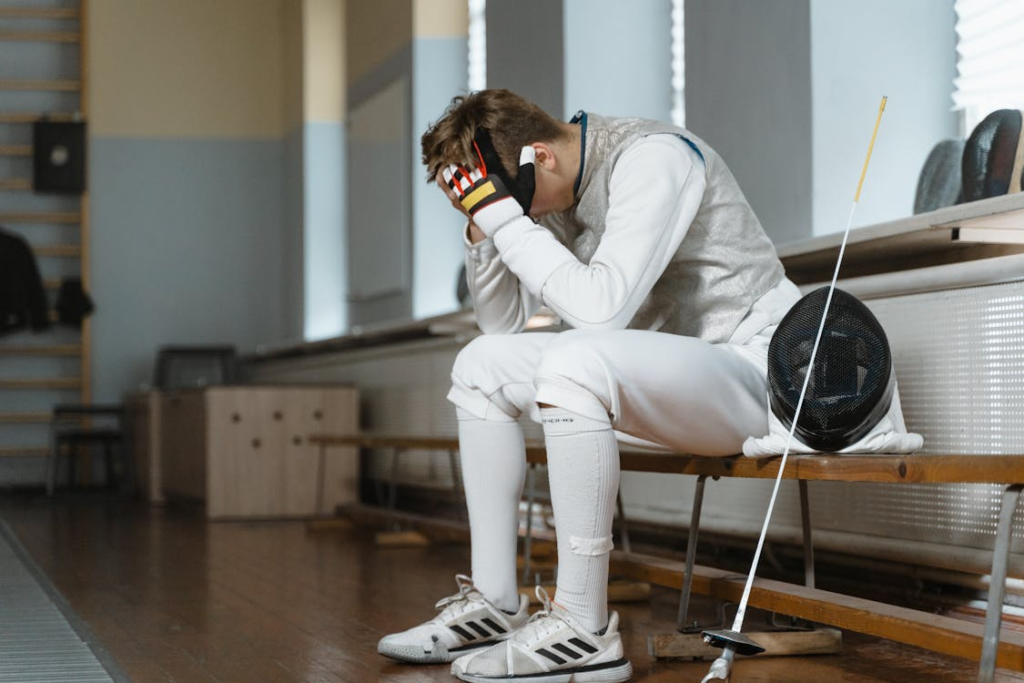
Some Athletes Are Carrying More Than Training
This week feels appropriate to talk about stress.
Not because of workouts.
Because of life.
Mother’s Day always reminds me of something important:
Some of the strongest athletes are not the fastest ones.
They are the people carrying responsibility, emotional load, family pressure, work stress, exhaustion—and still showing up consistently.
Today I shared a picture of my mom, my heroine. She’s 83 years old now and still carries elegance and strength. In her youth she was a professional shooter, just like my father, who was even an Olympic medalist.
I grew up around discipline.
Not loud discipline.
Quiet discipline.
The kind built through repetition, responsibility, and composure.
And honestly, that is what many athletes are doing every day right now.
Not training in perfect conditions.
Training under stress.
The Science: Your Body Does Not Separate Stress Sources
This is one of the most misunderstood principles in endurance training.
Your physiology does not distinguish between:
- Hard workouts
- Emotional stress
- Financial pressure
- Parenting fatigue
- Lack of sleep
- Relationship tension
To your nervous system, stress is stress.
The body responds through the activation of systems like the hypothalamic-pituitary-adrenal axis (HPA axis), increasing cortisol production (McEwen, 2007).
Cortisol itself is not bad.
It helps:
- Mobilize energy
- Increase alertness
- Respond to demands
The problem is chronic elevation without adequate recovery.
Over time, excessive stress can impair:
- Sleep quality
- Hormonal balance
- Immune function
- Recovery capacity
- Training adaptation
This is why athletes sometimes feel:
“I’m training hard, but I’m getting worse.”
It may not be the training alone.
It may be the total stress load.
Adaptation Requires Recovery Capacity
Training only works if your body can absorb it.
Every session creates stress.
Adaptation happens afterward.
If life stress is already high:
- Your recovery window shrinks
- Fatigue accumulates faster
- Motivation becomes unstable
This is why smart coaching is not just about prescribing workouts.
It’s about managing total load.
(Kellmann, 2010)
Why This Matters (Especially for Everyday Athletes)
Elite athletes often structure life around recovery.
Most everyday athletes do the opposite.
They train around:
- Meetings
- School schedules
- Parenting
- Shift work
- Emotional stress
- Financial pressure
And then they judge themselves using elite expectations.
That creates frustration.
You are not weak because you feel tired.
You may simply be overloaded.
Female Athletes: Stress Has Additional Layers
Female athletes often carry invisible stress loads:
- Emotional labor
- Caregiving roles
- Hormonal fluctuations
- Social pressure around body image and performance
Chronic stress combined with insufficient recovery or fueling can contribute to:
- Hormonal disruption
- Poor sleep
- Increased injury risk
- Low energy availability
This is why women especially need adaptive—not rigid—training systems.
The goal is not perfection.
The goal is sustainable performance.
Practical Application: How to Train Through Stress Intelligently
1. Stop Thinking Only About Training Load
Start thinking about total life load.
Ask yourself weekly:
- How is my sleep?
- How stressed am I mentally?
- Is motivation stable or forced?
- Am I recovering between sessions?
This awareness changes everything.
2. Adjust Before Breakdown Happens
One of the biggest coaching mistakes is waiting too long.
You do not need to “earn” recovery by collapsing first.
Sometimes the best adjustment is:
- Reducing intensity
- Shortening volume
- Replacing intervals with easy aerobic work
- Taking one extra recovery day
That is not weakness.
That is strategic adaptation.
3. Protect Easy Runs
When stress is high, easy runs matter more.
They support:
- Blood flow
- Nervous system regulation
- Aerobic development
- Emotional stability
Not every season requires aggressive fitness gains.
Some seasons require preservation.
4. Prioritize Sleep Aggressively
Sleep is your primary recovery tool.
Not supplements.
Not gadgets.
Sleep.
If stress is elevated:
- Protect bedtime consistency
- Reduce stimulation late at night
- Respect recovery signals
Many athletes try to out-train exhaustion.
You cannot.
5. Redefine Success During Hard Seasons
This is maturity.
Some weeks success means:
- Showing up consistently
- Maintaining routine
- Avoiding burnout
- Training without resentment
Not every season is for peak performance.
Some are for resilience.
Coaching Insight
I’ve seen athletes destroy themselves trying to maintain “perfect training” during chaotic life seasons.
That approach rarely ends well.
The strongest athletes are not the ones who never adjust.
They are the ones who know how to adapt without losing identity.
That’s real toughness.
Key Takeaways
- Your body processes all stress together, not separately
- Chronic stress elevates cortisol and impairs recovery
- Adaptation requires recovery capacity
- Everyday athletes often carry high total life stress
- Female athletes may experience additional recovery demands
- Smart athletes adapt training instead of forcing it
- Consistency during difficult seasons is still progress
Closing
Life will not always create perfect conditions for training.
But discipline is not about controlling every circumstance.
It is about responding wisely inside the reality you’ve been given.
Train with awareness.
Recover with intention.
And remember: sustainable athletes last longer than obsessive ones.
References
Kellmann, M. (2010). Preventing overtraining in athletes in high-intensity sports and stress/recovery monitoring. Scandinavian Journal of Medicine & Science in Sports, 20(Suppl. 2), 95–102. https://doi.org/10.1111/j.1600-0838.2010.01192.x
McEwen, B. S. (2007). Physiology and neurobiology of stress and adaptation: Central role of the brain. Physiological Reviews, 87(3), 873–904. https://doi.org/10.1152/physrev.00041.2006
Meeusen, R., Duclos, M., Foster, C., Fry, A., Gleeson, M., Nieman, D., … Urhausen, A. (2013). Prevention, diagnosis and treatment of the overtraining syndrome. European Journal of Sport Science, 13(1), 1–24. https://doi.org/10.1080/17461391.2012.730061