

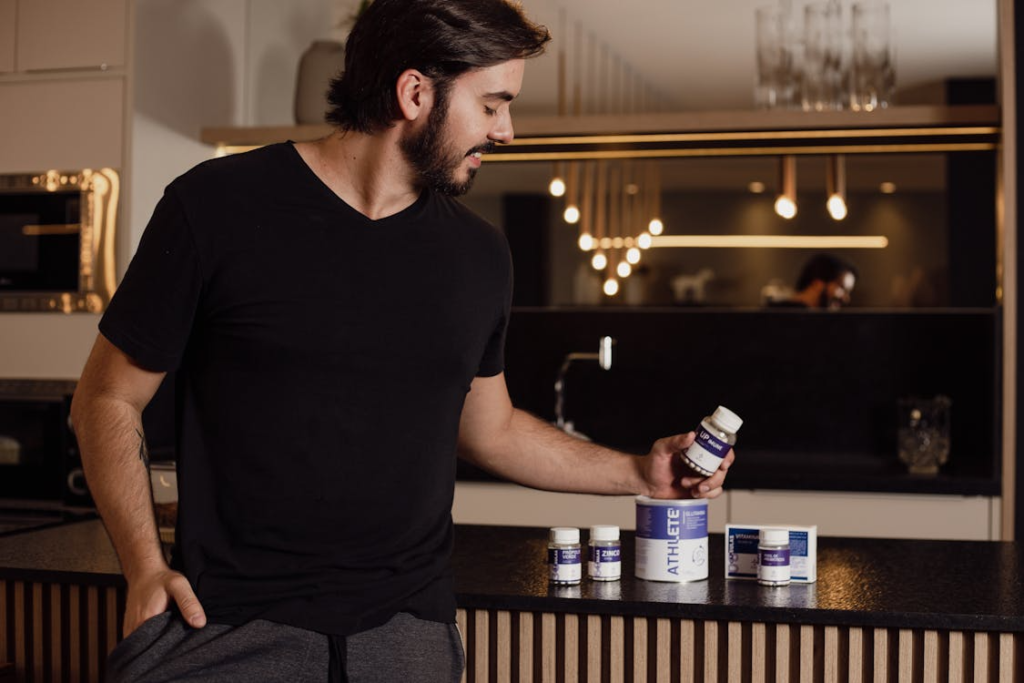
Yesterday, the 130th Boston Marathon reminded the running world what real performance looks like: over 30,000 runners from 123 countries, one of the sport’s most historic courses, and Sharon Lokedi defending her title in 2:18:51.
And right after a race like that, the same cycle starts again.
People ask what the elites are taking.
Brands push formulas with aggressive claims.
Athletes start wondering whether they are one supplement away from a breakthrough.
Let me save you time:
You are probably not one supplement away from your next PR.
You are more likely one layer of better execution away.
That does not mean supplements are useless. It means they need to be put in the right place. The evidence says a small number of supplements can improve performance in specific settings, but the supplement industry is much larger than the evidence base behind it. (Maughan et al., 2018)
That is the tension.
A few things work.
Many things are overhyped.
And most athletes are not taught how to tell the difference.
The Science
A supplement should not be judged by how often it appears on social media. It should be judged by four questions:
- Is there good evidence it works?
- For what type of event or athlete?
- At what dose and timing?
- Is the benefit worth the cost, side effects, and risk?
The IOC consensus on supplements makes the point clearly: supplements can play a role in high-performance sport, but only a limited number have good evidence for direct performance enhancement, and even then their use should be individualized and tested in training first. (Maughan et al., 2018)
The AIS Sports Supplement Framework is useful because it separates products by evidence level rather than by marketing energy. Its framework supports only a relatively small set of sports foods and performance supplements for targeted use.
That is already a needed perspective shift.
The real question is not, “Do supplements work?”
The real question is, “Which ones work, for what, and under what conditions?”
What has the best support
Caffeine is the strongest place to start for endurance athletes. The ISSN position stand reports consistent ergogenic benefits across many types of exercise, with aerobic endurance showing some of the clearest gains. Common effective ranges are around 3–6 mg/kg, though some athletes respond to lower doses. Higher doses are more likely to increase side effects without improving results. (Guest et al., 2021)
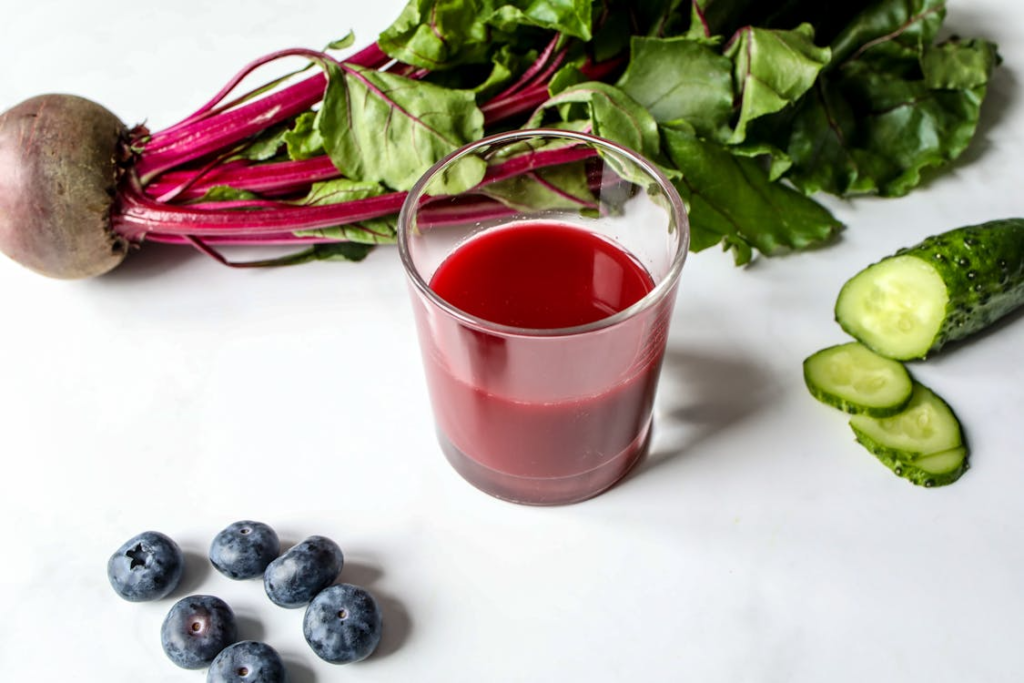
Nitrate / beetroot juice has support in some endurance contexts, especially where improved exercise efficiency may matter. But the effect is not universal, and it is not magic. It tends to be more useful when dosing protocols are correct and when the athlete actually responds. The IOC and AIS both include nitrate among the better-supported performance supplements. (Maughan et al., 2018; AIS, 2021)
Sodium bicarbonate can help in events with a greater anaerobic or high-intensity component because it buffers acidity. That can matter more for repeated hard efforts, track work, or shorter events than for steady marathon pace. The problem is that even when it works, gastrointestinal distress can make poor execution erase the benefit. (Maughan et al., 2018)
Beta-alanine may be useful in events where buffering high-intensity work matters, but it is not a first-line supplement for most distance runners training for a half marathon or marathon. It is more context-specific than the market usually admits. The AIS framework includes it among evidence-based options, but that is not the same as saying every runner needs it.

Creatine absolutely works for increasing high-intensity work capacity and strength adaptations. That matters more for sprinters, power athletes, and some hybrid athletes, but distance runners can still benefit indirectly if they are doing meaningful strength training, speed development, or trying to protect lean mass. Still, creatine is not a direct “run faster in your next marathon” supplement. It is a support tool, not a miracle. The IOC and AIS both recognize it as one of the better-supported options in the right setting. (Maughan et al., 2018; AIS, 2021)

Why This Matters
This matters because endurance athletes waste money and attention on the wrong things.
I see the same pattern constantly:
An athlete under-sleeps, under-fuels, skips strength work, trains inconsistently, and then asks about mushroom blends, ketones, BCAAs, or the newest pre-workout.
That is backwards.
Supplement strategy should sit on top of a solid system, not replace one.
If your basics are weak, supplements mostly become expensive optimism.
The evidence-based order is usually this:
- Adequate energy intake
- Carbohydrate availability for the work required
- Sufficient protein across the day
- Hydration and sodium strategy when needed
- Sleep and recovery
- Then targeted supplementation
That hierarchy is not flashy, but it is honest.
Female athletes need even more caution
Female athletes should be especially careful with supplement culture because performance problems are often rooted in under-fueling, low energy availability, and poor recovery rather than lack of products. A supplement can never fix a system that is chronically under-resourced.
That is why a “fat burner,” appetite suppressant, or stimulant-heavy pre-workout can look productive while actually making the deeper problem worse.
For many female athletes, the smarter question is not “What should I add?” but “What am I missing in the foundation?” That often means energy availability, iron status, recovery patterns, carbohydrate timing, and strength support before chasing trendy powders.
This is where discipline matters.
Discipline is not taking more things.
Discipline is refusing to outsource responsibility to products.
Practical Application
Here is the practical framework I would use with almost any runner or triathlete.
1. Solve the problem before buying the product
Name the actual issue:
- Low energy before workouts
- Poor tolerance during long runs
- Repeated late-race fade
- Trouble hitting quality on interval days
- Strength work not progressing
- Excess soreness or poor recovery
If you cannot name the problem, you should not buy the supplement.
2. Use a “food first, supplements second” filter
The IOC consensus stresses that many needs can be met through a well-designed nutrition plan, and supplements should not distract from that. (Maughan et al., 2018)
For runners, that usually means:
- Carbs before and during long or hard sessions
- Protein distributed through the day
- Electrolytes when sweat losses justify them
Before you buy another product, ask whether the answer is simply better fueling.
3. If you use caffeine, use it precisely
This is the supplement most endurance athletes can actually benefit from.
But precise does not mean excessive.
A solid starting range is often around 3 mg/kg, trialed in training, not first used on race day. Some athletes do well with less. Some respond badly. The point is not to copy a pro. The point is to know your own response. (Guest et al., 2021)
4. Put nitrate and bicarbonate in the “maybe, if justified” category
These are not everyday defaults.
They belong in a more deliberate conversation:
- What event are you training for?
- What intensity profile matters?
- Have you tested GI tolerance?
- Is the expected gain even meaningful for you?
That is how adults use supplements.
Not by impulse.
5. Use creatine for the right reason
If you are doing real strength work, sprint development, or want support for lean mass and training quality, creatine may make sense. If your expectation is “this will drop 10 minutes from my marathon,” your expectation is weak.
6. Be skeptical of broad claims
When a supplement claims to improve endurance, recovery, focus, immunity, metabolism, and body composition all at once, that is usually not a sign of range. It is a sign of marketing.
The IOC consensus also highlights a real risk beyond wasted money: contamination and anti-doping violations can occur with poorly regulated products. (Maughan et al., 2018)
So even when a supplement has potential value, the sourcing matters.
7. Test in training, never in blind faith
This is one of the most important rules.
No supplement deserves race-day trust until it has earned it in training.
That includes:
- Dose
- Timing
- GI response
- Sleep impact
- Interaction with fueling
Execution is always the final filter.
What Mostly Doesn’t Deserve the Hype
Without pretending every product is equally useless, here is the blunt version:
Most runners do not need a shelf full of powders.
Most runners need a better system.
Products in the “be careful” or “probably overhyped for your needs” category often include:
- Fat burners
- Testosterone boosters
- Exotic hormone “support” blends
- BCAA products sold as if they replace a good diet
- Multi-ingredient formulas with proprietary dosing
- “Detox” products
- Expensive recovery drinks that duplicate what normal food can do
The AIS framework is valuable here because it treats many popular products as unsupported or inappropriate, rather than pretending every ingredient belongs in a serious performance plan.
That does not mean every unsupported product is fraudulent. It means the evidence is weak, irrelevant, poorly matched to endurance performance, or not strong enough to justify routine use.
That distinction matters.
Key Takeaways
- A few supplements work. Most are over-marketed.
- Caffeine has the strongest and most consistent support for endurance performance. (Guest et al., 2021)
- Nitrate, bicarbonate, beta-alanine, and creatine can help in the right context, but none is universal. (Maughan et al., 2018; AIS, 2021)
- Supplements should solve a defined problem, not satisfy curiosity.
- Female athletes should be especially careful not to use supplements to cover up under-fueling or poor recovery.
- Never trust a supplement more than your training, sleep, fueling, and consistency.
Closing
Stewardship is not about buying more. It is about managing your body with honesty.
So before you add another product, ask whether it is truly supporting the work—or distracting you from it.
Build your performance on what is tested, proven, and aligned. That is how disciplined athletes think.
References
Australian Institute of Sport. (2021). AIS Sports Supplement Framework position statement. Australian Sports Commission.
Guest, N. S., VanDusseldorp, T. A., Nelson, M. T., Grgic, J., Schoenfeld, B. J., Jenkins, N. D. M., Arent, S. M., Antonio, J., Stout, J. R., Trexler, E. T., Smith-Ryan, A. E., Goldstein, E. R., Kalman, D. S., & Campbell, B. I. (2021). International society of sports nutrition position stand: Caffeine and exercise performance. Journal of the International Society of Sports Nutrition, 18(1), 1.
Maughan, R. J., Burke, L. M., Dvorak, J., Larson-Meyer, D. E., Peeling, P., Phillips, S. M., Rawson, E. S., Walsh, N. P., Garthe, I., Geyer, H., Meeusen, R., van Loon, L. J. C., Shirreffs, S. M., Spriet, L. L., Stuart, M., Vernec, A., Currell, K., Ali, V. M., Budgett, R. G., Ljungqvist, A., … Engebretsen, L. (2018). IOC consensus statement: Dietary supplements and the high-performance athlete. British Journal of Sports Medicine, 52(7), 439–455.