Enric Mas and the 2026 Vuelta a España Mark a Milestone for Spanish Cycling
October 4, 2026
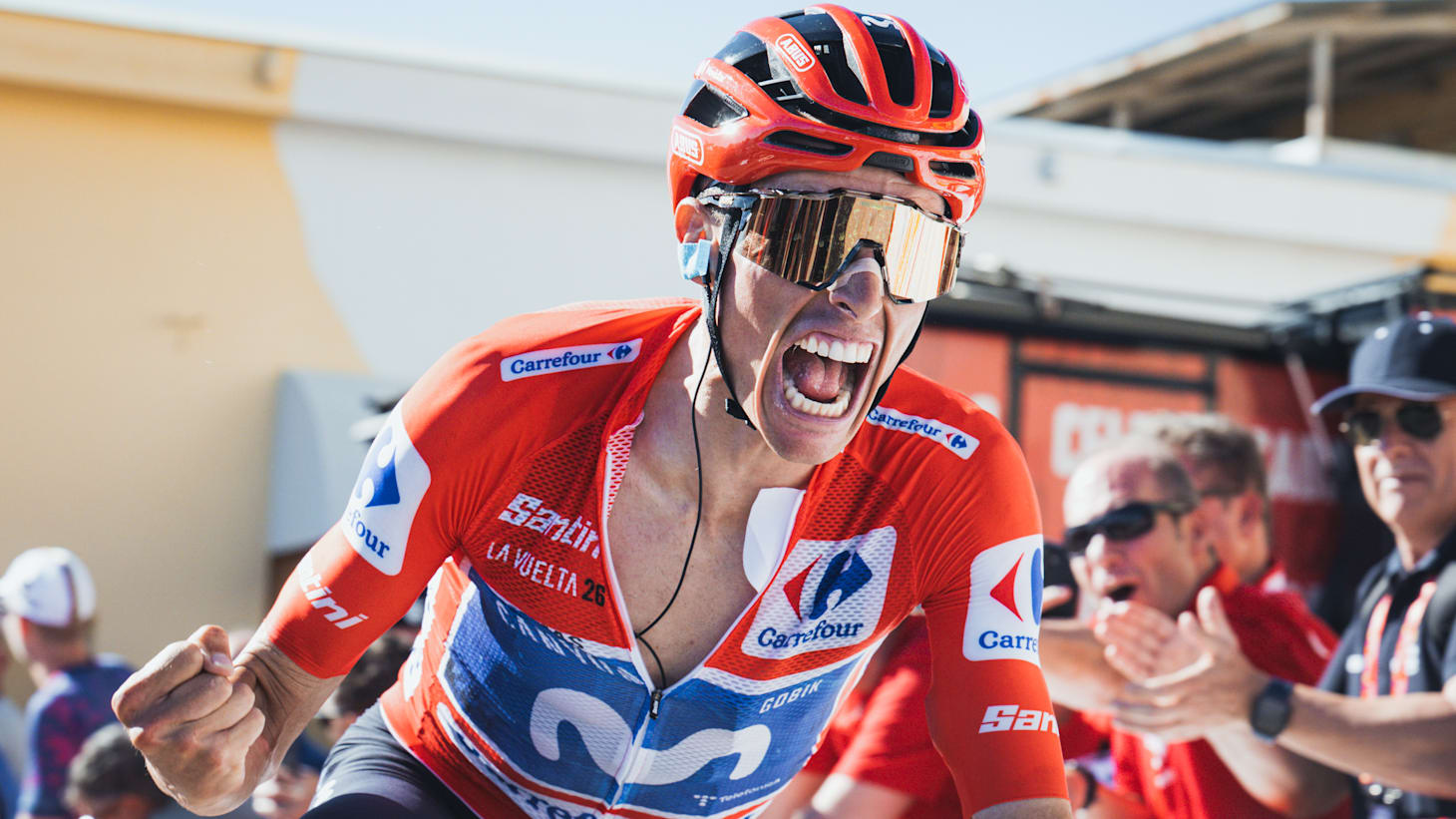
Foto por: Cxcling
There are names that become etched in the collective memory of a sport for reasons that transcend the result itself. Enric Mas has just inscribed his in that book: with the red jersey of the 2026 Vuelta a España on his shoulders, the Majorcan cyclist becomes the first Spaniard to win his own Grand Tour since Alberto Contador did it more than a decade ago. And he did it in an edition that had everything: the unexpected withdrawal of the great favorite, Tadej Pogačar, after a crash on stage 8, and a podium of the highest level completed by Primož Roglič and Felix Gall. For any cycling enthusiast—or simply anyone who understands endurance sports properly—this story is a reminder of something we know but forget: the elite is not measured only in watts and VO2 max, it is measured in the capacity to sustain the margin between control and chaos for three weeks.
The Context
The Vuelta a España is one of the three "Grand Tours" of world cycling, alongside the Giro d'Italia and the Tour de France: 21 stages, more than 3,000 kilometers, brutal mountains, and accumulated fatigue that turns each day into a negotiation between body and mind. Winning it is not winning a race, it is surviving twenty-one.
That Enric Mas has claimed it carries enormous symbolic weight for Spanish cycling, which has spent years watching its riders fight for podiums without sealing the deal. The fact that Contador is the last reference point is not anecdotal: it speaks to entire generations of Iberian cyclists who competed at the highest level without achieving that "red jersey" at home.
The other major headline is Pogačar's withdrawal. The Slovenian arrived as the clear favorite after dominating the Tour de France, and a crash on stage 8 took him out of contention. It is the harsh reality of road cycling: no matter how powerful the engine, the body remains vulnerable to external factors—the pavement, a rival, a fraction of a second of bad luck. Roglič, a veteran of a thousand battles in the Vuelta, and Austrian Felix Gall, completing the podium, confirmed that this was a year of the highest level, not a void left by the absence of the favorite.
What the Science Says
Sustaining performance over three weeks of racing demands physiological management that goes far beyond race day. Fatigue in prolonged endurance efforts is not a linear phenomenon: it is a constant interaction between peripheral signals from the muscle and central regulation of perceived effort, something the literature describes as a dynamic process of performance self-regulation rather than simply "running out of fuel" (Azevedo et al., 2021).
In stage races, nutrition becomes a variable as decisive as training itself. Recent evidence in elite endurance sports underscores the importance of personalized carbohydrate strategies to sustain intensity day after day without glycogen becoming the true rival to overcome (Cao et al., 2025). Add to this continuous glucose monitoring, a tool that more and more professional cycling teams use to adjust intake in real time and avoid the energy crashes that ruin entire stages (Flockhart & Larsen, 2024).
There is also the component of individualized nutrition beyond carbohydrate: electrolytes, hydration, and recovery between stages are the terrain where a Vuelta is won or lost, especially during the extreme heat stages that the Spanish race typically features (Shirreffs & Sawka, 2011; Sutehall & Pitsiladis, 2025).
What It Means for You
You are not going to run a Vuelta a España, but the principles that sustain Mas over three weeks are exactly the same ones you need for your next marathon or long training block:
- Think in blocks, not individual days. Fatigue accumulates; your nutrition and hydration plan must account for that accumulation, not just the effort of the day.
- Train your carbohydrate tolerance during racing. Practice the intake you are going to use on race day, just like cyclists test their gels and drinks during training stages.
- Listen to early signs of fatigue. Recognizing when to dial back intensity one day is what allows you to perform on the day that really matters.
- Recovery is part of training, not a luxury. Sleep, hydration, and electrolytes are not accessories: they are the difference between sustaining your level or collapsing in week three.
References
- "Fatigue development and perceived response during self-paced endurance exercise: state-of-the-art review." — Azevedo RA, Silva-Cavalcante MD, Lima-Silva AE, Eur J Appl Physiol 2021. https://pubmed.ncbi.nlm.nih.gov/33389141/
- "A Review of Carbohydrate Supplementation Approaches and Strategies for Optimizing Performance in Elite Long-Distance Endurance." — Cao W, He Y, Fu R, Nutrients 2025. https://pubmed.ncbi.nlm.nih.gov/40077786/
- "Continuous Glucose Monitoring in Endurance Athletes: Interpretation and Relevance of Measurements for Improving Performance and Health." — Flockhart M, Larsen FJ, Sports Med 2024. https://pubmed.ncbi.nlm.nih.gov/37658967/
- "Fluid and electrolyte needs for training, competition, and recovery." — Shirreffs SM, Sawka MN, J Sports Sci 2011. https://pubmed.ncbi.nlm.nih.gov/22150427/
Original source
Olympics.com ↗Never miss an edition.
Get the running news brief and analysis straight to your inbox. No spam, unsubscribe anytime.