Kenneth Bednarek Claims World Lead in 200m at Diamond League Finale in Zurich
September 1, 2026
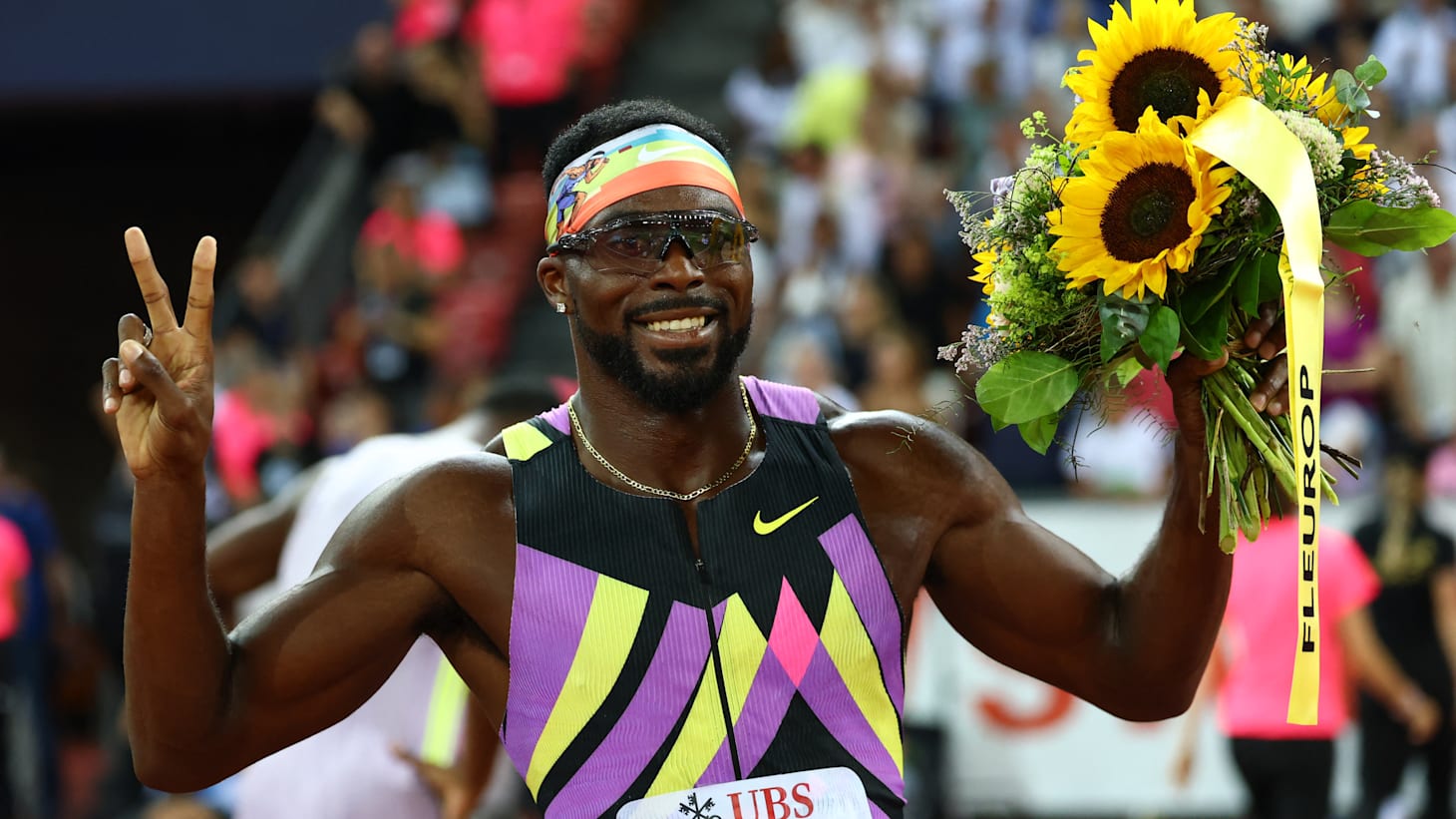
Picture by REUTERS/Denis Balibouse
When the clock hit 19.62 at the Letzigrund in Zurich, Kenneth Bednarek didn't just win a race: he claimed the year's best mark in the 200 meters and sent a clear message heading into the season-closing championships. The American, historically overshadowed by names like Noah Lyles, defeated Sinesipho Dambile and veteran Andre de Grasse at the final regular-season Diamond League meet, on a night that also saw victories for Miltiadis Tentoglou in long jump and Rumesh Pathirage in javelin. If you're passionate about track and field or simply wondering what makes a sprinter run faster when it matters most, this race holds several lessons.
The Context
The Diamond League is, in essence, the Champions League of track and field: a series of elite meets spread around the world (Doha, Shanghai, Rome, London, Lausanne, Zurich, among others) where the planet's best athletes compete for points throughout the season. Zurich, along with Brussels, typically closes the regular calendar and serves as the grand dress rehearsal before that year's World Championships or Olympic Games. Arriving with the year's world-leading mark at this stage is no minor detail: it's a psychological statement. It tells the rest of the field that, whoever the paper favorite may be, there's someone running in a form no one else has shown yet.
For Bednarek, a two-time Olympic silver medalist in 200 meters (Tokyo 2020 and Paris 2024), this result carries extra symbolic weight: competing and winning with authority over rivals of De Grasse's caliber—the Olympic 200m champion from Tokyo—in the final stretch of the season suggests that his peak form is arriving at exactly the right moment, not before or after.
What the Science Says
Running a 19.62 isn't just a matter of raw talent: it's the result of preparation that manages accumulated fatigue during months of competition with millimeter precision. The science of elite sports performance has made clear that an elite athlete's performance isn't static: it fluctuates based on how training load, recovery, and even nutrition are managed in the weeks leading up to a key race.
One area that has gained strength in recent years is personalized nutrition for elite athletes. The review by Sutehall and Pitsiladis (2025) suggests that generic feeding protocols are no longer sufficient: individual factors—from genetics to each athlete's metabolic response—determine how to optimize the available fuel for explosive efforts like a 200 meters. Although this event lasts only 19-20 seconds and relies mainly on the phosphocreatine system and the anaerobic pathway, the quality of recovery between rounds and meets—where glycogen replenishment and electrolytes come into play—can be the difference between matching a mark or surpassing it.
Along those lines, Shirreffs and Sawka (2011) documented how fluid and electrolyte management directly impacts the ability to sustain intensity in successive competitions, something crucial for sprinters who run heats, semifinals, and finals on the same weekend, often under different temperatures in each city on the circuit. Added to this is the classic finding by Lorenzo, Halliwill, and Sawka (2010) on heat acclimatization: athletes who better manage their thermal exposure during the season arrive at decisive races with more efficient cardiovascular capacity, a detail that's hardly trivial when competing in cities with climates as different as Doha and Zurich in the same European summer.
What It Means for You
You don't need to run 200 meters in 20 seconds to learn from this. The central lesson is that peak performance is built, not improvised: Bednarek didn't arrive at his year's best mark by chance at the final meet, but because his entire season—training, recovery, nutrition, and load management—was designed to converge at that point.
If you're training for a target race (a 10K, a half marathon, a marathon), apply the same logic: don't chase your best version in every workout or every race on the calendar. Plan performance peaks, respect taper weeks, and pay attention to small details—hydration, electrolytes, sleep—that seem trivial but that, accumulated, are what separate a good race from a memorable one.
References
- "Fluid and electrolyte needs for training, competition, and recovery." — Shirreffs SM, Sawka MN, J Sports Sci 2011. https://pubmed.ncbi.nlm.nih.gov/22150427/
- "Heat acclimation improves exercise performance." — Lorenzo S, Halliwill JR, Sawka MN, J Appl Physiol 2010. https://pubmed.ncbi.nlm.nih.gov/20724560/
- "Personalized Nutrition for the Enhancement of Elite Athletic Performance." — Sutehall S, Pitsiladis Y, Scand J Med Sci Sports 2025. https://pubmed.ncbi.nlm.nih.gov/40164953/
Original source
LetsRun.com ↗Never miss an edition.
Get the running news brief and analysis straight to your inbox. No spam, unsubscribe anytime.