Nike Launches the Pegasus Plus 2, a New Middle Ground Between Training and Racing
August 23, 2026
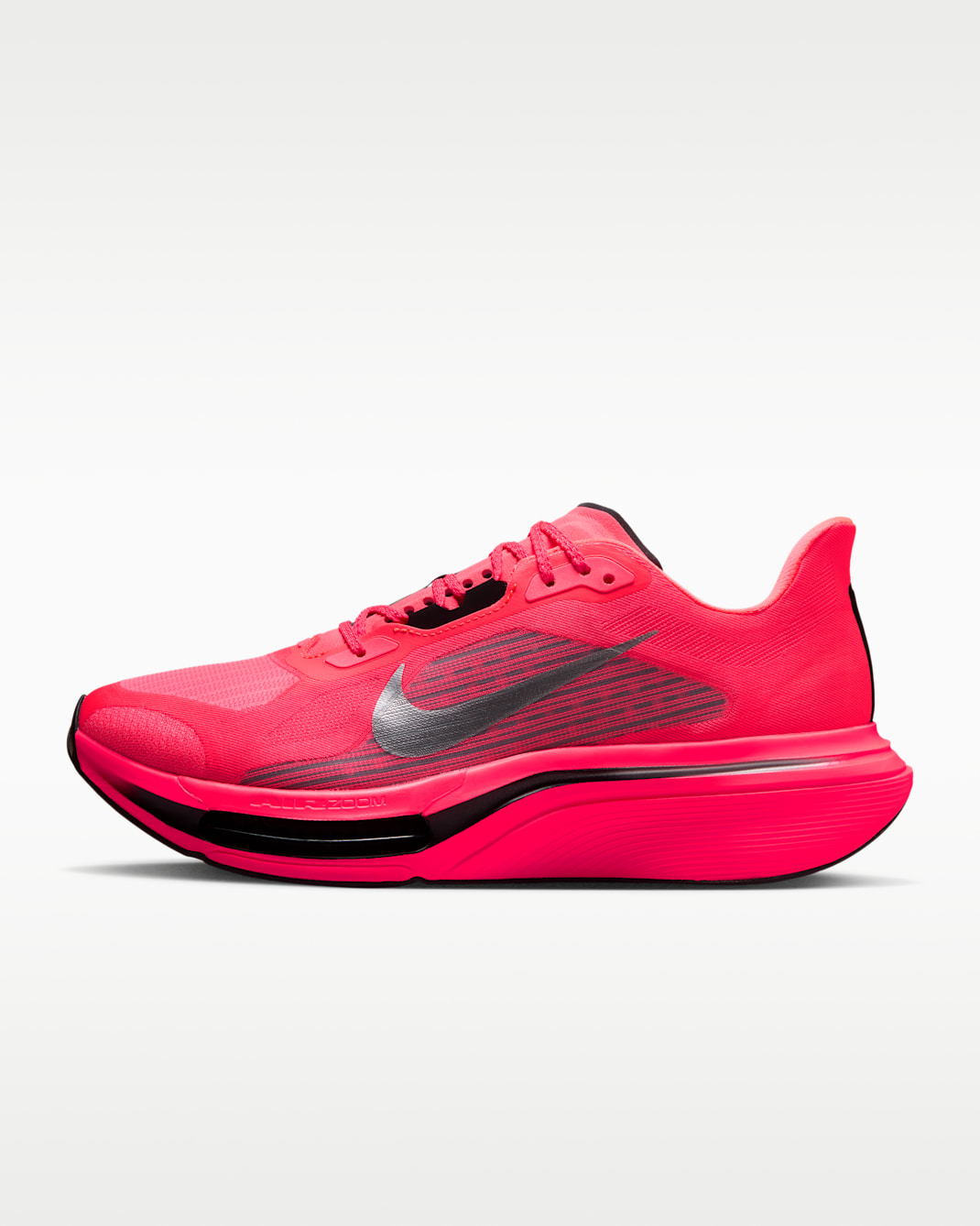
Pic nike.com
It's 2024, and running shoes have stopped being "just shoes": they're mobile laboratories of foam, carbon fiber plates, and air chambers engineered with rocket-like precision. Nike just added a new piece to that puzzle: the Pegasus Plus 2, a model that promises to blur the line between your daily training and your competitive marathon. And it's not just talk: more than 30 elite track and road athletes tested it before it hit the market.
The Context
To understand why this matters, you need to understand the hierarchy Nike built over the last decade. At the top are the Vaporfly and Alphafly: pure racing shoes, ultralight, with aggressive carbon plates and ultra-high energy-return foams, designed to run fast over specific distances and not last long. At the bottom are the classic Pegasus: the workhorse of daily training, durable, comfortable, without as much technological "magic."
The Pegasus Plus 2 slots right in the middle. It's the evolution of an experiment Nike has been refining: bringing racing shoe technology (like the Air Zoom unit, that pressurized air bladder that acts like a spring) to a shoe you can wear every day without it falling apart after 200 kilometers. The novelty of this second version is the air pressure adjustment specific to shoe size: not all feet weigh or strike the same, and Nike adjusts how much pressure that chamber has based on shoe size, seeking more consistent responsiveness across runners of different sizes.
This isn't a minor detail. The running industry has been in an arms race of shoe innovation for years, and "hybrid" models like this respond to real demand: runners who want to feel some of that racing shoe "boost" in their quality workouts without spending $250-300 on a shoe that lasts 100 km.
What the Science Says
Here's where we need to be honest: footwear science advances faster than peer-reviewed evidence on each specific model. There isn't (yet) a peer-reviewed study on the Pegasus Plus 2—logically, it's just hitting stores. But there is solid scientific framework to understand why these technologies matter.
Running economy (how much energy you spend to maintain a pace) is one of the strongest predictors of performance in trained runners, and the interaction between shoe, surface, and running technique modifies that economy in measurable ways. Additionally, a recent study on strength training in well-trained runners showed that the "durability" of running economy—that is, how well your efficiency holds up when you're already fatigued, not just at the start of effort—is a key factor in distance performance (Zanini et al., Med Sci Sports Exerc, 2025). This is relevant because the true value of a shoe like the Pegasus Plus isn't measured at kilometer 1, but in how your technique and economy sustain at kilometer 30.
It's also worth remembering that technological innovation in elite sport doesn't come without friction: an analysis on technology and innovation in high-performance sport argues that we need "guardrails" so that technology doesn't distort competition or create unfair gaps between those who have access to it and those who don't (Guppy et al., Sports Med, 2023). It's a debate we already went through with the Vaporfly in 2017-2019, and will likely repeat with each new hybrid.
⚖️ PMP Verdict
Good for: serious runners who do quality workouts (tempo runs, long intervals, fartlek) and want to feel some of that racing shoe propulsion without sacrificing durability or spending on a racing model you'll only use 2-3 times. Also for those looking for a bridge to carbon-plated shoes without the abrupt stability shift that Vaporfly/Alphafly sometimes create for less experienced runners.
Not for: the recreational runner who trains 3 times a week at easy pace. There, a classic Pegasus or any standard training shoe works perfectly, and there's no evidence that the extra technology translates to real benefit at low intensities. It's also not a "race day" shoe for someone chasing maximum performance in a marathon: for that, Vaporfly/Alphafly remain the specific tool.
What It Means for You
If you're thinking about adding the Pegasus Plus 2 to your arsenal, think of it as a quality workout shoe, not as a replacement for your daily trainer or your racing shoe. Rotating shoes based on session type—something that evidence in stress fracture injury prevention also supports, since varying loads and surfaces helps distribute mechanical stress (Warden et al., JOSPT, 2014)—remains the smartest strategy. Before spending on the new thing, ask yourself: do my quality workouts justify a specialized shoe, or should my priority be strength and consistency? Because no air foam is going to make up for weeks of inconsistent training.
References
- Zanini M, Folland JP, Wu H. "Strength Training Improves Running Economy Durability and Fatigued High-Intensity Performance in Well-Trained Male Runners: A Randomized Control Trial." *
Original source
Corredor Promedio ↗Never miss an edition.
Get the running news brief and analysis straight to your inbox. No spam, unsubscribe anytime.