The Moving Letter from a Cyclist After a Surprise Doping Control on the Day of Her Mother's Death
October 15, 2026
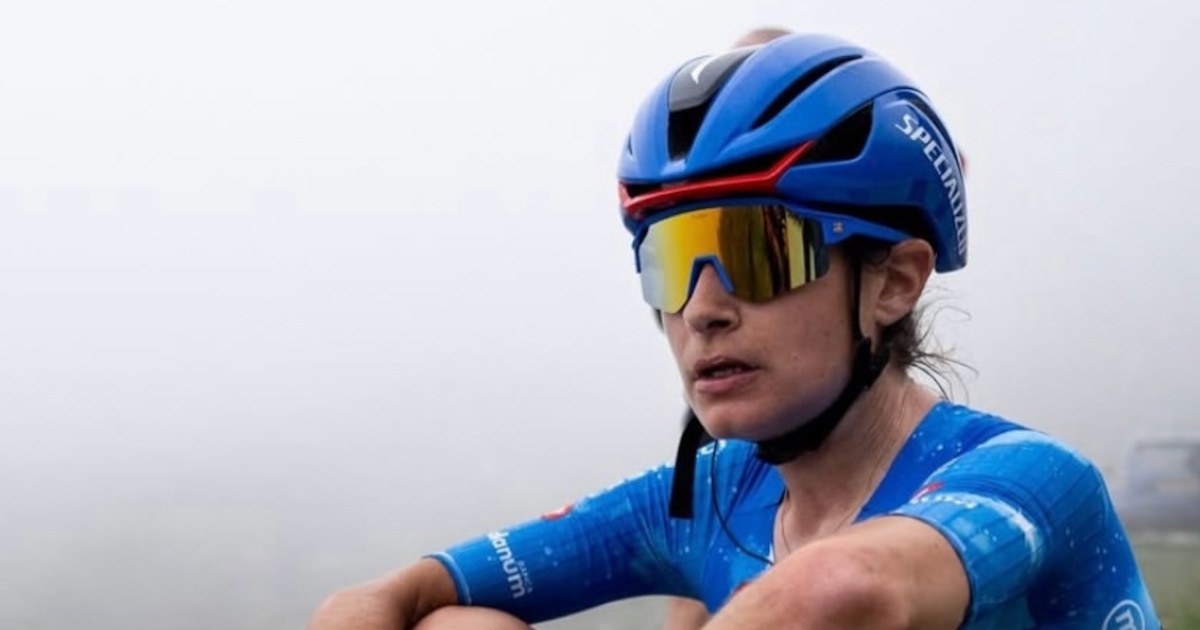
Foto vía Infobae
There are stories that hit your chest before they hit your head. Valentina Cavallar, an Austrian cyclist and ninth place overall in the 2026 Giro d'Italia, published a letter that doesn't talk about performance, or watts, or race positions. It talks about a doping control that came to her door hours after her mother died, with her body still in the next room. Cavallar complied with the protocol—as the system demands—while traversing the most devastating moment of her life. The story is not an isolated case of "bad luck": it exposes a real crack in how elite sport treats athletes when they stop being, for an instant, machines built to compete.
The Context
The global anti-doping system functions, in large part, thanks to so-called out-of-competition testing: surprise testing, without prior notice, that can occur at any time and place where the athlete has declared their location (the famous "whereabouts" of the World Anti-Doping Agency, WADA). This tool is key to detecting prohibited substances that wouldn't show up in a test done only on competition day. It is, in theory, one of the most important achievements in the fight against doping.
The problem is that the system is designed to be inflexible by definition: if you give notice, you lose the surprise effect; if you allow room for "personal emergencies," you open a door to abuse. But that absolute rigor clashes head-on with human reality. An athlete doesn't stop being an athlete for 24 hours of the day—they are also a daughter, a sibling, a parent, a grieving person. Cavallar didn't ask for special treatment or question the legitimacy of the system; she simply recounted what it feels like to be trapped between two roles that are impossible to reconcile in the same moment.
What sparked the debate is not whether the control should have existed, but whether there was any protocol of human sensitivity for cases like this: a window for rescheduling, support, a minimum of institutional humanity. The answer, apparently, was no.
What the Science Says
There's no physiology study here that explains a doping control, but there is solid evidence of something the Cavallar case illustrates brutally: severe acute stress impacts the body and performance directly, far beyond the emotional. Research on fatigue and self-paced exertion regulation (Azevedo et al., 2021) shows that perceived fatigue is not just a muscular phenomenon, but an integrated construction that involves the central nervous system, emotional state, and the athlete's allostatic load. A traumatic event like losing a parent alters that equation profoundly, even if the body is "healthy" in purely physiological terms.
Furthermore, work on personalized nutrition in elite sports (Sutehall & Pitsiladis, 2025) highlights something that usually takes a back seat: an elite athlete's performance depends on an ecosystem of factors—sleep, stress, social environment, emotional state—that interact with pure physiology. No anti-doping protocol, however rigorous, can ignore that testing someone in acute emotional shock is not only ethically questionable, but probably alters the very conditions in which the sample is taken.
What It Means for You
Not all of us will face a doping control, but all of us will, at some point, have to train or compete carrying something heavy inside: grief, heartbreak, news that tears you in half. Here are three things you can take from this story:
Give yourself permission to stop. The body of an elite athlete responds to emotional stress just like yours does. There is no training session or race worth more than processing grief or a major setback. Postponing a session is not weakness, it's judgment.
Tell your training circle what's going on. If you train with a team, coach, or group, let them know when you're going through something difficult. The running and cycling community tends to be more empathetic than we think—but only if it knows what's happening.
Question the systems, not just your performance. Cavallar's story matters because it makes visible that sports institutions, at all levels, need protocols for humanity as much as technical protocols. If you ever find yourself on the other side of a rigid rule, your voice can also create change.
References
- Azevedo RA, Silva-Cavalcante MD, Lima-Silva AE. "Fatigue development and perceived response during self-paced endurance exercise: state-of-the-art review." Eur J Appl Physiol, 2021. https://pubmed.ncbi.nlm.nih.gov/33389141/
- Sutehall S, Pitsiladis Y. "Personalized Nutrition for the Enhancement of Elite Athletic Performance." Scand J Med Sci Sports, 2025. https://pubmed.ncbi.nlm.nih.gov/40164953/
Original source
Infobae ↗Never miss an edition.
Get the running news brief and analysis straight to your inbox. No spam, unsubscribe anytime.