Duplantis vs. Karalis: the final that could break another world record in Brussels
September 4, 2026
Golazo
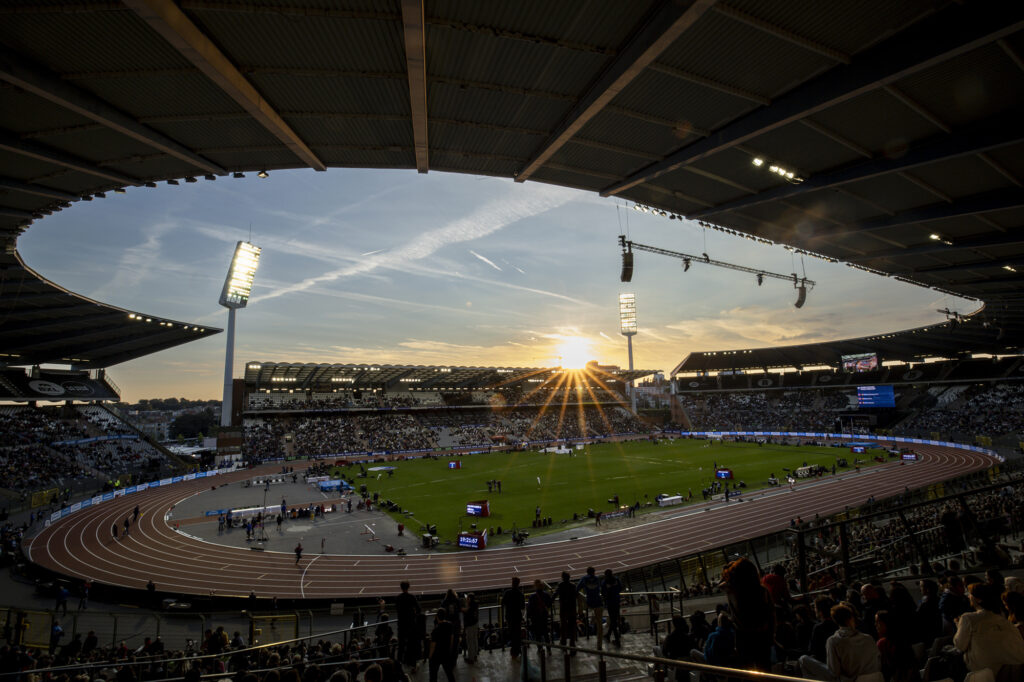
This weekend, the King Baudouin Stadium in Brussels becomes the center of the athletic universe. The Diamond League closes its 50th season with the Allianz Memorial Van Damme, and while there are 32 titles on the line, all eyes are pointing upward: literally, toward the pole vault. Mondo Duplantis is going for his sixth consecutive title, but this time the Swede admits something that's unusual for him: Manolo Karalis, the Greek who has grown as a competitor with each meet, is going to make him sweat like never before.
If you're the type who runs with the Diamond League playing on your phone while doing intervals, this matters. Not just for the spectacle, but because these finals are the most visible laboratory of human performance at its limit — and there are lessons for any runner, whether elite or neighborhood.
The context
The Diamond League is, in essence, the Champions League of track and field. Fourteen meets around the world during the season, points that accumulate, and a grand final where only the best in each event compete for the title and prize money. There's no repechage or rematch: you win in Brussels or you go home empty-handed, regardless of what you did in April in Doha or in July in Monaco.
This edition is special for two reasons. First, the anniversary: 50 years of history at the Memorial Van Damme, one of the most traditional meets on the European calendar. Second, the level of competition in pole vault. Duplantis has rewritten the world record more than a dozen times since his dominance streak began, and it seemed no one could challenge his throne. But Karalis comes off a season where he came closer than ever to 6 meters, and Duplantis himself publicly acknowledged it: "he's going to make me work harder than ever."
That statement, coming from the most dominant athlete of his generation, is a signal. In elite sport, when the champion starts talking about the rival before talking about himself, something is changing.
What the science says
What separates Duplantis from Karalis — or any elite athlete from the one chasing closely behind — is no longer measured only in raw talent. It's measured in details. Sports science from high-performance athletics has been showing that the difference between first and second place is frequently decided by fine-tuning optimization: personalized nutrition, fatigue management, and monitoring technology.
A recent review on personalized nutrition in elite athletes (Sutehall & Pitsiladis, 2025) raises something that applies perfectly to this kind of final: generic carbohydrate or hydration protocols no longer suffice — maximum performance depends on adjusting every variable to the individual, from the time of day to the athlete's particular metabolic response. In explosive disciplines like pole vault, where a jump is decided in hundredths of a second of technical execution, that marginal optimization can be the difference between 6.00 and 6.02 meters.
Accumulated fatigue throughout a 14-meet season also comes into play. The literature on fatigue development in self-paced exercise (Azevedo et al., 2021) describes how perceived effort and central fatigue shift as competitions accumulate — something that explains why arriving "fresh" to a Diamond League final, after months on the circuit, is itself a planning achievement. Duplantis isn't just competing against Karalis: he's competing against the wear of an entire season.
And we can't ignore technology: elite technical teams now use sensors, wearables, and biomechanical analysis to fine-tune every detail of the jump, from approach run speed to takeoff angle (Guppy et al., 2023). That frontier between science and sport is what's pushing world records further every time.
What it means for you
You're probably not going to pole vault, but the logic applies the same to your running training:
- Details win races. If you train "generally" without adjusting nutrition, hydration, or rest to your own individual response, you're leaving performance on the table. You don't need a laboratory: start by keeping simple records of how you feel based on what you eat before training.
- Accumulated fatigue is real and predictable. If you're coming off months of training without structured rest, don't expect to perform at 100% in your next important race. Plan real tapering.
- Watch these finals as case studies. Observe how elite athletes manage pressure, pacing, and technical execution under fatigue — they're lessons applicable to your next 10K or half marathon.
The Brussels final runs and jumps this Friday and Saturday. Duplantis starts as the favorite, but for the first time in years, his rival's science and fitness make the outcome not completely written.
References
- Sutehall S, Pitsiladis Y. "Personalized Nutrition for the Enhancement of Elite Athletic Performance." Scand J Med Sci Sports, 2025. https://pubmed.ncbi.nlm.nih.gov/40164953/
- Azevedo RA, Silva-Cavalcante MD, Lima-Silva AE. "Fatigue development and perceived response during self-paced endurance exercise: state-of-the-art review." Eur J Appl Physiol, 2021. https://pubmed.ncbi.nlm.nih.gov/33389141/
- Guppy F, Muniz-Pardos B, Angeloudis
Original source
Wanda Diamond League ↗Never miss an edition.
Get the running news brief and analysis straight to your inbox. No spam, unsubscribe anytime.