Busang Collen Kebinatshipi Breaks Three Records in the 400m at the Diamond League Final
September 26, 2026
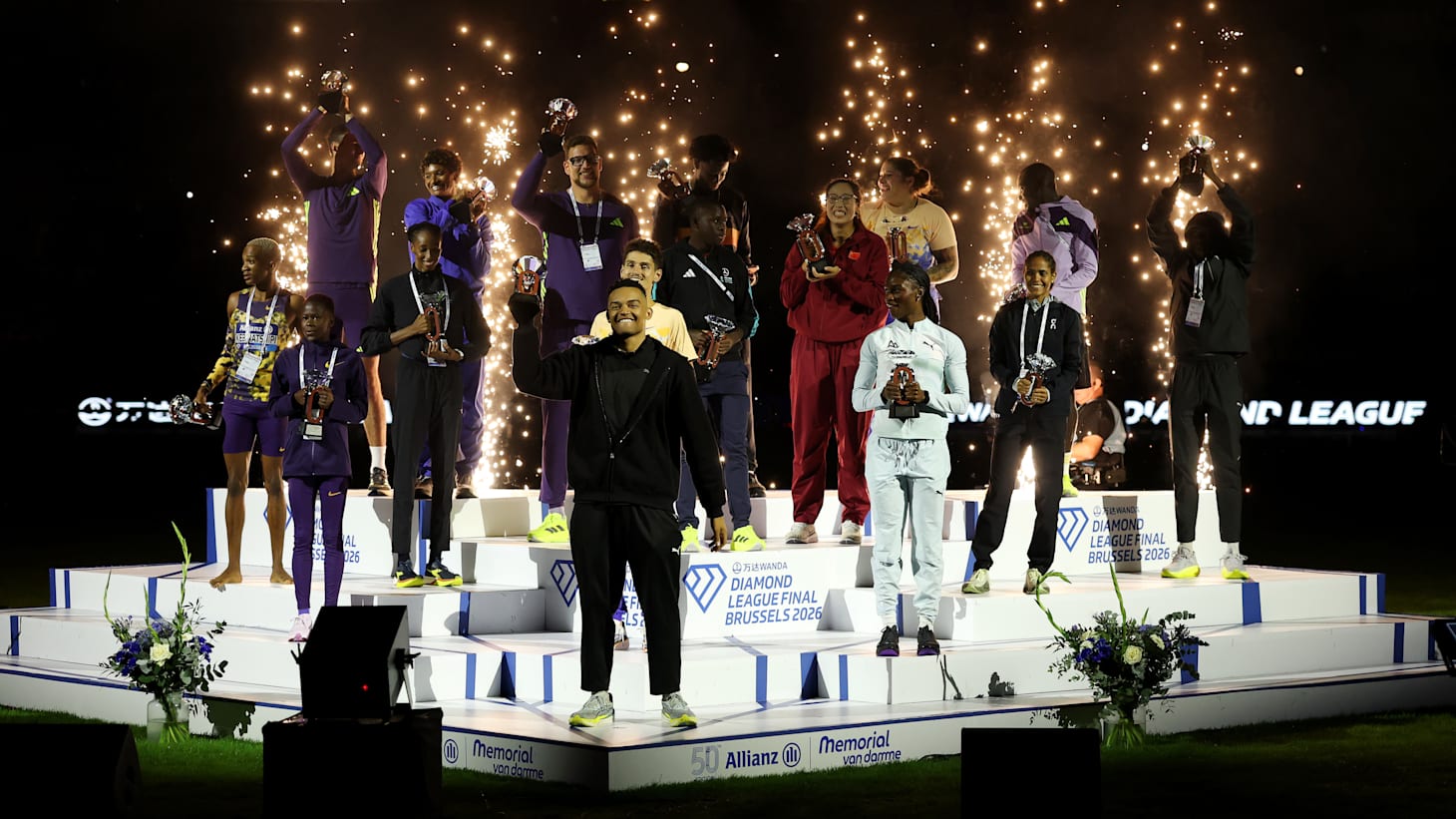
Picture by Richard Heathcote/Getty Image
Just meters from the finish line and it was already clear that something special was happening. Busang Collen Kebinatshipi, a 21-year-old from Botswana, crossed the finish in 43.40 seconds and in doing so shattered three records at once: Botswana's national record, the Diamond League record, and his first Diamond Trophy in the premier long-sprint category. It all happened in Brussels, during the first day of a Final that this year celebrated nothing less than the 50th edition of the historic Memorial Van Damme. If you love track and field, this is one of those performances that stays with you: not every day does a runner enter the select club of those who have dipped below 43.5 in the 400 meters flat.
The Context
The Diamond League is, in essence, the Champions League of track and field. It runs across 14 meets around the world throughout the season, and the best athletes in each discipline accumulate points leading to the Final, where it's decided who takes home the "Diamond Trophy"—the most coveted trophy of the circuit outside of the Olympics and World Championships. Winning the Final isn't just another result: it's the crowning achievement of an entire season of consistency, health, and sustained performance under pressure.
That this year's edition coincided with the 50th anniversary of the Memorial Van Damme—one of Europe's most traditional and respected meets—gave it extra symbolic weight. Over two days of competition, 32 champions were crowned, but few times resonated as much as Kebinatshipi's. Botswana had already been building a strong tradition in the quarter mile (recall the Olympic team gold in the 4x400 relay at Tokyo 2020), and this individual result confirms that the African nation is establishing itself as a genuine power in the distance, not just a supporting player.
Dropping below 43.5 seconds in the 400 meters requires a brutal combination of pure speed and the ability to tolerate metabolic fatigue accumulation in the second half of the race, where most runners "shut down." A Diamond League record—which historically brings together the best times from the circuit throughout its entire history—is a signal that we're witnessing an athlete who breaks through the ceiling of what was thought possible in the short term.
What the Science Says
A 400 meters at this level isn't explained by talent alone: behind it is cutting-edge sports science operating in real time. Fatigue in events of this duration and intensity has both a central and peripheral component—the brain regulates perceived effort to prevent total collapse, while the muscle deals with acidosis and phosphocreatine depletion. The literature on fatigue development in self-regulated exercise explains precisely why sustaining velocity in the final 100 meters is the true differentiator between a good runner and a historic record (Azevedo et al., 2021).
Moreover, environment matters more than it seems. Brussels at this time of year doesn't offer extreme conditions, but any variation in ambient temperature affects the ability to sustain maximum power: evidence on heat acclimatization shows how the body optimizes blood flow and thermoregulation when properly prepared for race-day conditions (Lorenzo, Halliwill & Sawka, 2010).
Finally, don't underestimate the role of technology and personalized nutrition in the fine margin that separates a good time from a circuit world record. Elite programs today adjust every variable—from electrolytes to recovery protocols—on an individualized basis, backed by constant monitoring (Sutehall & Pitsiladis, 2025; Guppy et al., 2023).
What It Means for You
You don't run 400 meters at Olympic level, but the principles that took Kebinatshipi to this record apply to any serious runner:
- Train fatigue tolerance, not just speed. If your final kilometers (or final 100 meters) are where you fall apart, that's your real opportunity for improvement.
- Don't leave hydration and electrolytes to chance, especially in demanding races or changing climates: fluid balance directly affects your performance (Shirreffs & Sawka, 2011).
- Add strength work to your routine. Recent evidence confirms that strength training improves running economy and performance under fatigue, even in already well-trained runners (Zanini et al., 2025).
- Pay attention to your acclimatization if you're going to compete in conditions different from your usual training environment: your body needs time to adapt.
The next time you watch a Diamond League final, don't just watch it as spectacle: it's a live laboratory of what the science of human performance can achieve.
References
- "Heat acclimation improves exercise performance." Lorenzo S, Halliwill JR, Sawka MN, J Appl Physiol, 2010. https://pubmed.ncbi.nlm.nih.gov/20724560/
- "Fluid and electrolyte needs for training, competition, and recovery." Shirreffs SM, Sawka MN, J Sports Sci, 2011. https://pubmed.ncbi.nlm.nih.gov/22150427/
- "Personalized Nutrition for the Enhancement of Elite Athletic Performance." Sutehall S, Pitsiladis Y, Scand J Med Sci Sports, 2025. https://pubmed.ncbi.nlm.nih.gov/40164953
Original source
Olympics.com ↗Never miss an edition.
Get the running news brief and analysis straight to your inbox. No spam, unsubscribe anytime.