Garmin Presents the Enduro 4, Its New Watch for Ultra Trail and Long-Distance Expeditions
October 10, 2026
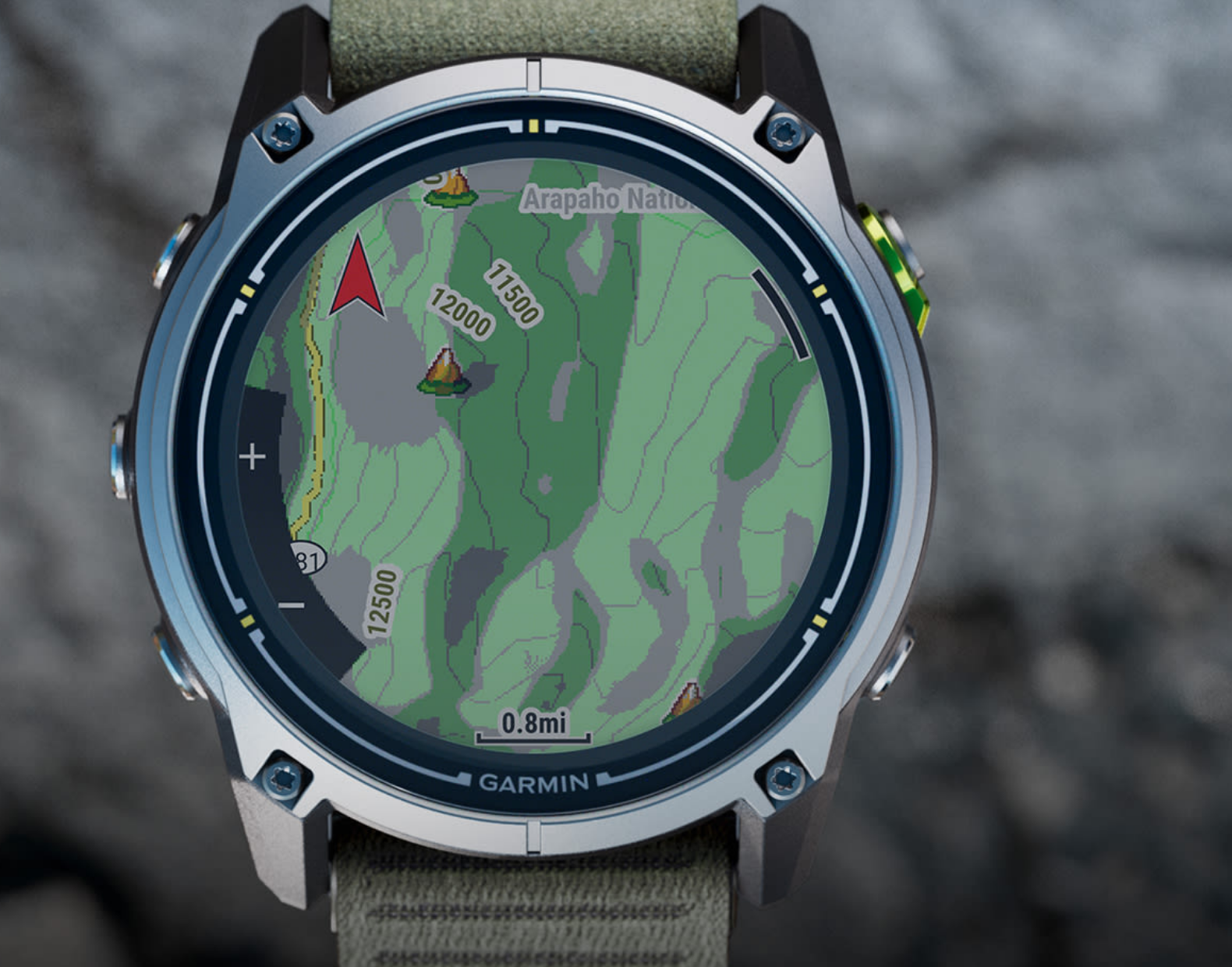
Foto vía Carreras de Montaña
Imagine being at the 20-hour mark of a mountain ultra, with thick fog, battery at 15%, and still 30 kilometers to go back. That extreme scenario is exactly what Garmin had in mind when designing the Enduro 4, its new flagship watch for ultraendurance runners, available starting October 6. It's not a cosmetic update: it's a statement that equipment can also be part of your race survival strategy.
The Context
The "ultra watches" segment is relatively new but growing fast alongside the boom in trail running and ultramarathons. Unlike a conventional running watch, these devices prioritize three things: battery autonomy (because a race can last more than 24 hours), navigation precision (because getting lost in the mountains is a real risk, not just an inconvenience), and durability under extreme conditions of cold, heat, rain, and impact.
The Enduro 4 arrives with a combination of specifications designed exactly for that niche: multiband GPS (which improves satellite signal accuracy in canyons, dense forests, or areas with signal bounce, typical of trail running), 64 GB of memory with preloaded TopoActive maps so you don't depend on internet connection in remote areas, and an MIP screen—memory-in-pixel—technology that consumes far less battery than an OLED and remains perfectly readable under direct sun, something critical when running all day at high altitude. Add an integrated LED flashlight, designed for those night-to-dawn transitions where carrying an extra headlamp is weight nobody wants to haul. All of this in just 66 grams with strap, a notably low weight for the amount of hardware it packs.
The real question, however, isn't whether the watch is technically impressive—it is—but whether that technology translates into better performance or safety for the person using it.
What Science Says
Here it's worth separating two things: what wearable technology can measure well, and what actually changes your race.
Evidence on wearables in high-performance sports is consistent on one point: their value isn't in the raw data, but in how it's interpreted and used to make decisions during effort (Guppy et al., Sports Med, 2023). More precise multiband GPS doesn't make you faster, but it does reduce navigation error margin, something directly relevant in mountain ultras where deviating a few hundred meters can mean kilometers of unnecessary accumulated fatigue.
On the other hand, the science of fatigue in ultraendurance shows that performance in these events is governed largely by self-regulation processes of effort: the body constantly adjusts pace according to internal and contextual signals (Azevedo et al., Eur J Appl Physiol, 2021). Having reliable and visible data—battery that doesn't die, screen readable in sun, precise navigation—reduces the extra cognitive load of worrying about your equipment, leaving more mental capacity to manage that real fatigue.
It's also worth mentioning that continuous physiological monitoring (heart rate, variability) has demonstrated utility for adjusting intensity and preventing overtraining (Singhal & Cowie, Curr Heart Fail Rep, 2020), although that evidence comes mainly from clinical contexts and should be taken with caution when extrapolated to recreational trail running.
⚖️ PMP Verdict
The Enduro 4 makes sense for a very specific profile: runners who actually compete or train in mountain ultras of 50K and beyond, where battery autonomy and offline navigation are real needs, not whims. If your longest race of the year is an urban 10K, this watch is a waste of money and features you'll never get the most out of.
For the serious ultrarunner, however, it's a risk-reduction tool just as valid as a good waterproof jacket: it doesn't make you run faster, but it does get you out of tight spots when conditions get tough.
What It Means for You
- If you run mountain ultras, evaluate whether your current watch has actually failed you on battery or navigation before upgrading. The price jump only justifies itself with real use.
- Practice offline map navigation in long training runs, don't debut it in a race.
- Remember that no watch replaces nutrition and hydration strategy: evidence on fluid and electrolyte needs during prolonged effort (Shirreffs & Sawka, J Sports Sci, 2011) remains as relevant as any GPS.
- Technology helps you execute the plan, but doesn't replace it: strength training and pace management remain the factors that most impact your performance at long distances (Zanini et al., Med Sci Sports Exerc, 2025).
References
- Guppy F, Muniz-Pardos B, Angeloudis K. "Technology Innovation and Guardrails in Elite Sport: The Future is Now." Sports Med, 2023. https://pubmed.ncbi.nlm.nih.gov/37787844/
- Azevedo RA, Silva-Cavalcante MD, Lima-Silva AE. "Fatigue development and perceived response during self-paced endurance exercise: state-of-the-art review." Eur J Appl Physiol, 2021. https://pubmed.ncbi.nlm.nih.gov/33389141/
- Singhal A, Cow
Original source
Carreras de Montaña ↗Never miss an edition.
Get the running news brief and analysis straight to your inbox. No spam, unsubscribe anytime.