New Balance Presents Special Collection for 50th Anniversary of New York Marathon
September 8, 2026
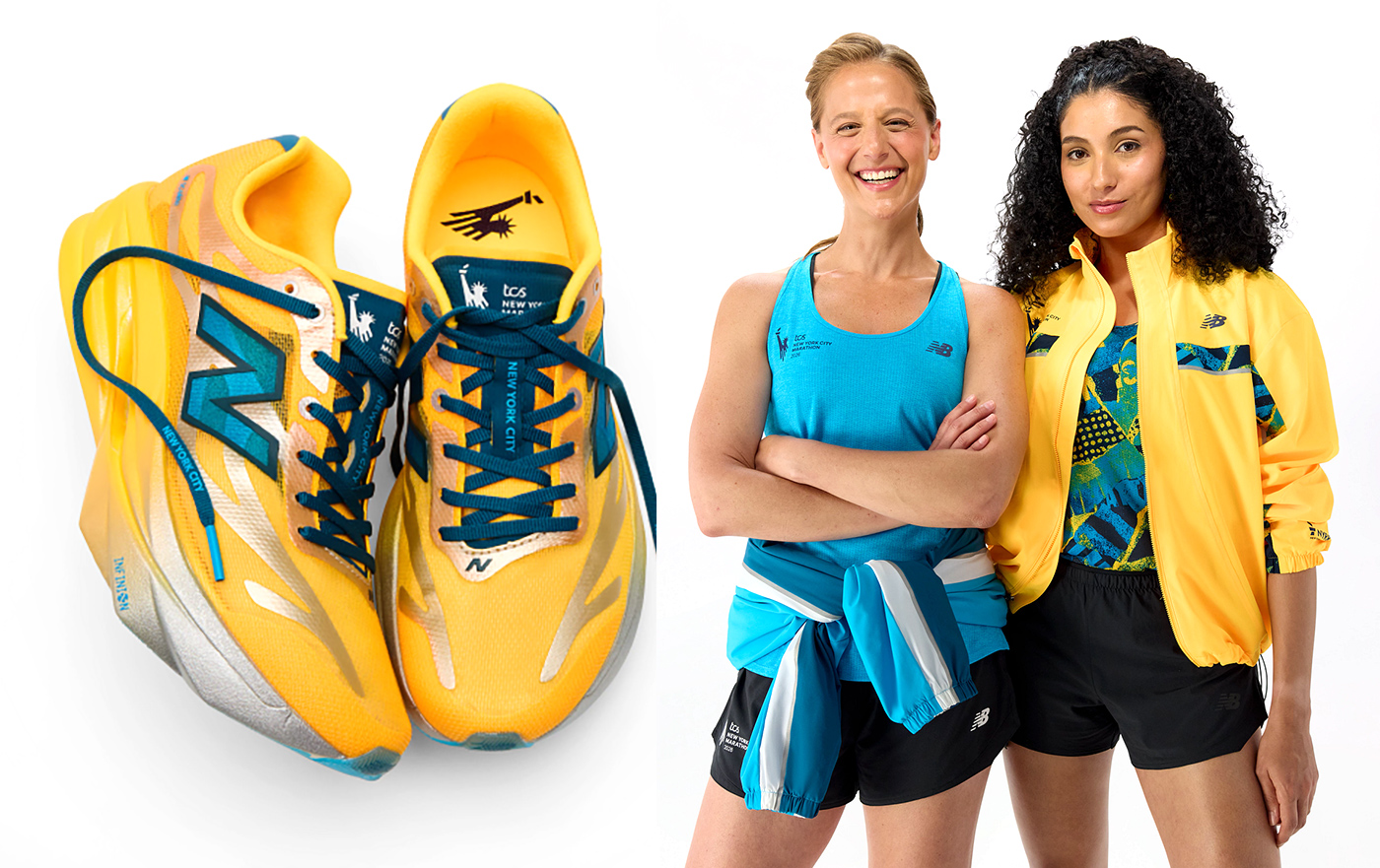
Foto vía La Bolsa del Corredor
It's months away before the cannon fires in Staten Island, but New Balance has already unveiled one of the most anticipated announcements for road running enthusiasts: a special collection honoring the 50th anniversary of the TCS New York City Marathon, with the SuperComp Elite v6 as the star. The shoe, dressed in the race's official colors, goes on sale September 10, and it's not just another seasonal launch: it's a direct nod to the history of one of the planet's most important marathons.
The Context
The New York Marathon was born in 1970 with just 127 runners circling Central Park. In 1976 it transformed into the five-borough course we know today—Staten Island, Brooklyn, Queens, the Bronx, and Manhattan—and since then it's established itself as one of six World Marathon Majors, alongside Boston, Chicago, Berlin, London, and Tokyo. In 2026 it will mark 50 years of that iconic format, and the running industry is already mobilizing for the occasion.
New Balance has been a technical partner of the race for years, and this commemorative collection is no accident: it's a classic brand strategy in the marathon world, where "super shoes"—those with carbon fiber plates and high energy-return foam—have become objects of desire for both performance and collecting. The SuperComp Elite v6 is the brand's flagship for distance racing, the one used by its elite athletes, and dressing it in NYC colors makes it an almost museum-worthy piece for those who run (or dream of running) that marathon in its golden edition.
What Science Says
Beyond marketing and nostalgia, it's worth asking: does it really matter which shoe you wear in a marathon? The answer is yes, but with important nuances.
Super shoes with carbon plates have been shown to improve running economy—that is, how much energy you burn to maintain a given pace—in several field studies. But that benefit doesn't replace solid training. The evidence on fatigue and self-regulated performance in endurance tests (Azevedo et al., 2021) shows that neuromuscular and metabolic wear in a marathon depends mainly on the runner's aerobic and strength preparation, not just the footwear.
In fact, a recent study in well-trained runners found that strength training improves running economy durability and high-intensity performance when fatigue sets in (Zanini et al., 2025)—a reminder that the shoe helps you squeeze more out of your engine, but doesn't build it. And regarding pace variability in marathons, the science of pacing (Cuk et al., 2024; Nikolaidis et al., 2019) continues to show that the most common mistake among recreational runners is starting too fast, something no cutting-edge foam can fix.
⚖️ PMP Verdict
Who is this collection for? For runners who already use the SuperComp Elite line and want a model with sentimental value for their dream marathon, and for running sneaker collectors who value limited-edition design. It also makes sense for anyone planning to run NYC 2026 and wants the full experience, from the expo to the start line.
Who is it not for? For beginner or low-intermediate runners looking for just "the fastest shoe." Super shoes demand a certain level of lower body strength and running technique to take advantage of the carbon plate without getting injured; if your mileage base and strength aren't built up, the marginal benefit dilutes—and the injury risk from overuse, especially bone-related (Warden et al., 2014; George et al., 2024), increases if you jump straight into hard training with unfamiliar footwear.
What It Means for You
If you have the New York Marathon 2026 in your sights—whether it's the 50th anniversary edition or any future one—take this as an excuse to plan ahead, not as a shortcut:
- Test the shoe on long runs before the race. Never debut new shoes on race day.
- Add strength to your plan. The evidence is clear: strength work sustains your running economy when fatigue hits, at kilometer 32, not at 5.
- Watch your pacing. No foam corrects too ambitious a start.
- If the commemorative edition appeals to you, enjoy it for what it is: a piece of running history, but not a substitute for real preparation.
References
- Azevedo RA, Silva-Cavalcante MD, Lima-Silva AE. "Fatigue development and perceived response during self-paced endurance exercise: state-of-the-art review." Eur J Appl Physiol, 2021. https://pubmed.ncbi.nlm.nih.gov/33389141/
- Zanini M, Folland JP, Wu H. "Strength Training Improves Running Economy Durability and Fatigued High-Intensity Performance in Well-Trained Male Runners: A Randomized Control Trial." Med Sci Sports Exerc, 2025. https://pubmed.ncbi.nlm.nih.gov/40016936/
- Cuk I, Markovic S, Weiss K. "Running Variability in Marathon-Evaluation of the Pacing Variables." Medicina (Kaunas), 2024. https://pubmed.ncbi.nlm.nih.gov/38399506/
- Nikol
Original source
La Bolsa del Corredor ↗Never miss an edition.
Get the running news brief and analysis straight to your inbox. No spam, unsubscribe anytime.