Matthew Hudson-Smith wins gold in 400m in his native Birmingham and makes history
August 14, 2026
Picture by Getty Images
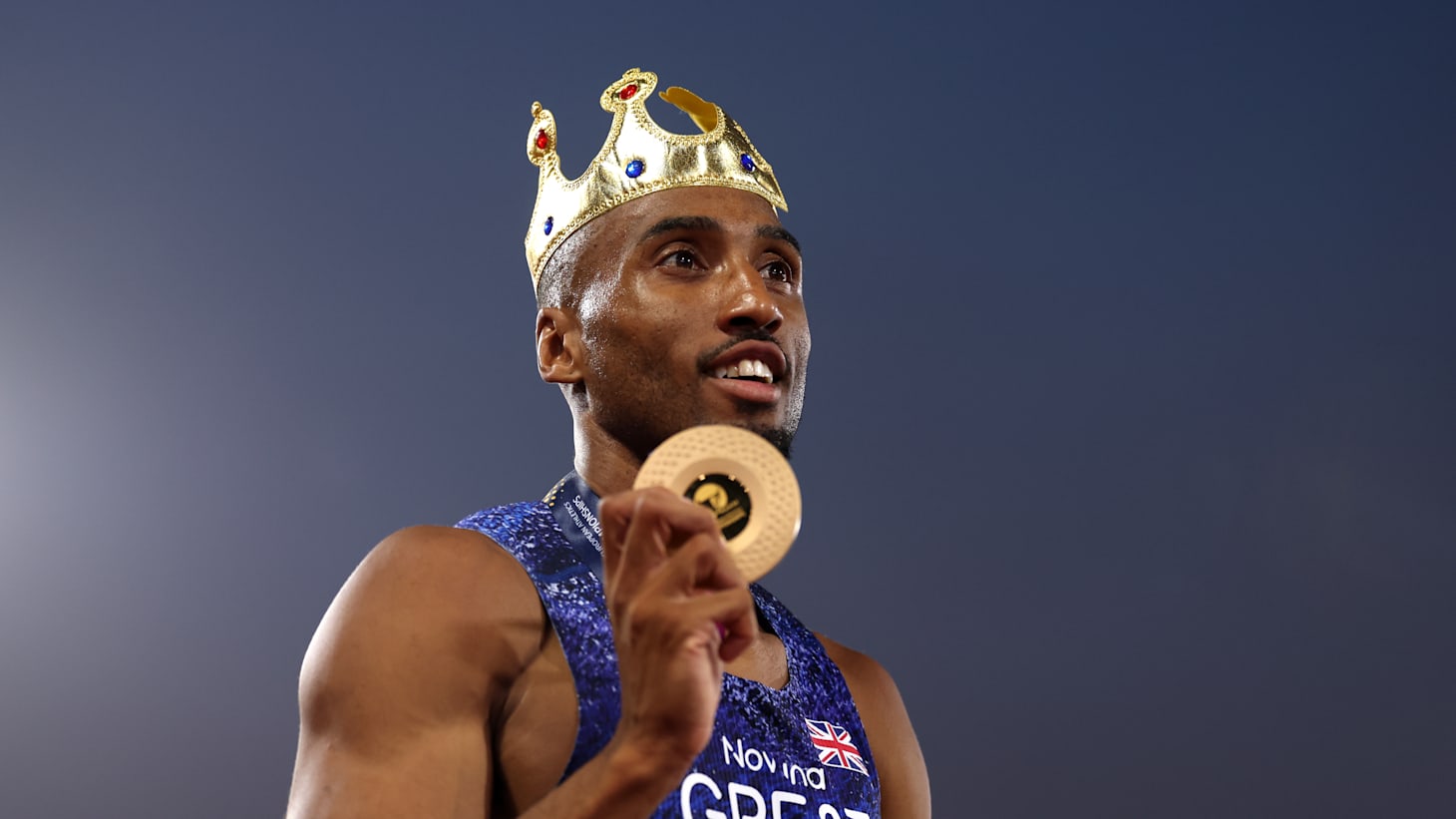
There's something almost poetic about winning a European title ten minutes from your house. Matthew Hudson-Smith did it in Birmingham, clocking 44.17 seconds to take gold in the 400m ahead of Frenchman Muhammad Abdallah Kounta and Dutchman Jonas Phijffers. It wasn't just another medal: with this victory, the British runner tied the historic record for individual men's titles in the event at the European Championships, now sharing the crown with legendary Frenchman Christophe Lemaitre. Three individual 400m golds is something not everyone achieves, and certainly not while doing it in front of your own people.
For those of us who follow track and field, this is a lesson in consistency, resilience, and how an elite career is built over years, not in a single magical season.
The context
The European Athletics Championships is, after the Olympic Games and the World Championships, the most important showcase for athletes on the continent. It takes place every two years and brings together the very best of Europe in track and field, with a brutal level of competition: there's no continental qualification system that "opens" the field here, everyone is a rival of the highest caliber.
The 400m is, without exaggeration, one of the most demanding events in athletics. It's neither a pure speed event like the 100m, nor a classic endurance race: it's a battle against the accumulation of metabolic fatigue in real time. The first 200 meters are run at near-maximum speed, and the last 100 are a brutal struggle against muscle acidosis and the collapse of technique. Winning this event three times at the European level, across different cycles, against different rivals and contexts, speaks to an athlete who has known how to reinvent himself and stay at the top for years—something that is enormously difficult in elite athletics.
That he achieved it in Birmingham, his hometown, with local fans pushing him through every meter, adds an emotional layer that is rarely seen in sport.
What the science says
Running a 400m at the highest level isn't just talent: it's precision physiology and a race against fatigue. Research on fatigue development during self-paced exercise explains that the body constantly adjusts effort based on peripheral and central signals, a phenomenon that becomes critical in events like the 400m, where the athlete must "manage" the impending collapse in the final meters without catastrophically losing speed (Azevedo et al., 2021).
Staying competitive at the highest elite level across multiple Olympic cycles, as Hudson-Smith has done, also depends on factors that go far beyond race day. Personalized nutrition for elite athletes—tailored to each athlete's individual needs based on their genetics, training load, and recovery—is now a central piece in how the world's best manage to perform sustainably year after year (Sutehall & Pitsiladis, 2025). It's no longer about following a generic formula, but rather optimizing every possible variable: from electrolyte and fluid management during competition (Shirreffs & Sawka, 2011) to constant monitoring of physiological indicators that wearable technology now allows us to track with increasing precision (Guppy et al., 2023).
What it means for you
We don't run 400m at the European level, but there are lessons here that apply directly to your training:
Consistency beats raw talent. Hudson-Smith didn't win his first European title and stop there: he built a nearly decade-long career at the elite level. That translates, in your case, to understanding that running results don't come from one intense training season, but from years of well-planned work.
Fatigue is trained, not avoided. Just as 400m runners specifically train to tolerate muscle acidosis in the final meters, you can train your fatigue tolerance with interval work at demanding paces, learning to maintain technique when your body starts to fail. This applies just as much to a 5K as it does to a marathon.
Recovery is invisible training. If something sets athletes apart who stay at the top for years, it's their meticulous management of nutrition, hydration, and rest. Don't underestimate that part of your plan: it's not a luxury, it's the foundation that allows you to keep adding seasons without burning out.
References
- "Fatigue development and perceived response during self-paced endurance exercise: state-of-the-art review." — Azevedo RA, Silva-Cavalcante MD, Lima-Silva AE, Eur J Appl Physiol 2021. https://pubmed.ncbi.nlm.nih.gov/33389141/
- "Personalized Nutrition for the Enhancement of Elite Athletic Performance." — Sutehall S, Pitsiladis Y, Scand J Med Sci Sports 2025. https://pubmed.ncbi.nlm.nih.gov/40164953/
- "Fluid and electrolyte needs for training, competition, and recovery." — Shirreffs SM, Sawka MN, J Sports Sci 2011. https://pubmed.ncbi.nlm.nih.gov/22150427/
- "Technology Innovation and Guardrails in Elite Sport: The Future is Now." — Guppy F, Muniz-Pardos B, Angeloudis K, Sports Med 2023. https://pubmed.ncbi.nlm.nih.gov/37787844/
Original source
Olympics.com ↗Never miss an edition.
Get the running news brief and analysis straight to your inbox. No spam, unsubscribe anytime.