World Athletics Presents Broadcasting Innovations, with Sony as Technology Partner, for Ultimate Championship 2026
September 9, 2026
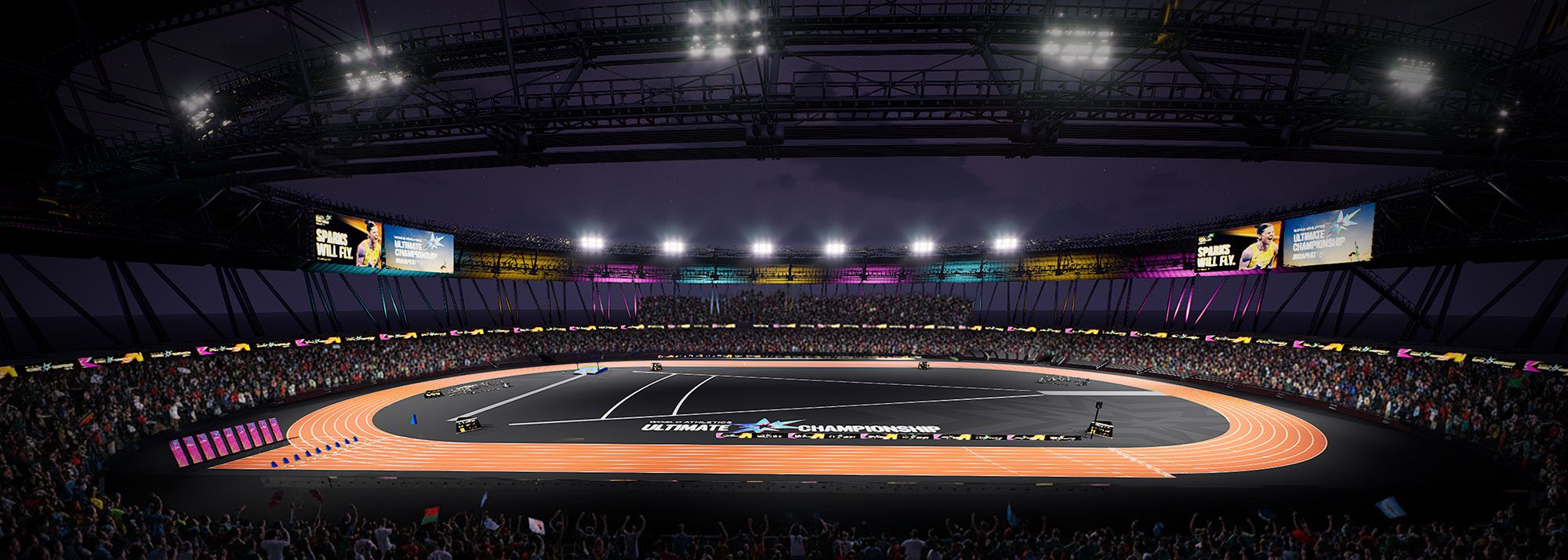
World Athletics Ultimate Championship
Imagine watching an 800-meter final with augmented reality graphics showing each athlete's pace in real time, post-race interviews tennis "centre-court" style, and a race clock that works perfectly on your phone while you're on the bus. That's exactly what World Athletics just announced for the inaugural Ultimate Championship, which will take place in Budapest September 11-13, 2026. And it's not just visual window dressing: it's a serious bet on transforming how we consume athletics, with Sony as technology partner and a record prize purse of 10 million dollars. If you love running and technology, this matters to you.
The Context
The Ultimate Championship is a completely new format within the World Athletics calendar: a condensed, high-intensity event designed to maximize spectacle and global audience. Unlike a traditional World Championships with dozens of events spread over more than a week, this format seeks to concentrate the action, attract more than 20 international broadcasters, and deliver an experience more like a premium entertainment event than a classic athletic competition.
Enter Sony, official partner of World Athletics Series from 2024 through 2026, which will deploy its latest-generation Alpha cameras and G Master lenses for broadcasting, along with officiating services from Hawk-Eye Innovations, its subsidiary specializing in sports decision technology (the same system used in tennis and football for line calls and offsides). The goal is twofold: improve officiating precision and radically elevate the narrative quality of broadcasts—something athletics has historically struggled with compared to sports like Formula 1 or tennis.
This isn't cosmetic whimsy. Athletics competes for attention in a saturated content market, and research on technology innovation in elite sport—like the work by Guppy and colleagues published in Sports Medicine in 2023—highlights that technology not only improves athlete performance, but redefines the spectator experience and competitive integrity, as long as it's implemented with the right "guardrails": transparency, equity, and ensuring technology doesn't distort the sport's essence.
What the Science Says
Though this news is more about broadcast than physiology, there's a real scientific thread connecting it to athletic performance: precision technology (high-speed cameras, sensors, automated officiating systems) has stopped being a cosmetic luxury and become integral to how elite sport is measured, validated, and transmitted.
The Guppy, Muniz-Pardos, and Angeloudis (2023) study in Sports Medicine examines precisely this phenomenon: technological innovation in elite sport advances faster than regulation, and the challenge isn't whether to adopt it, but how to do so without compromising competitive equity or athlete safety. Systems like Hawk-Eye, already used in other sports for millimeter-precision decisions, represent that balance: they provide objective certainty in moments where the human eye fails—crucial in speed events where differences are measured in thousandths of a second.
Moreover, the digitalization of experience—race clocks adapted to mobile, real-time graphics—responds to a broader trend in how live wearable data is changing the relationship between audience and sport, a phenomenon also seen in the rise of activity and health monitors (Biswas et al., Nature Communications, 2025), where accessible real-time data democratizes understanding of physical effort for both athletes and spectators.
⚖️ PMP Verdict
This bet serves athletics enormously as spectacle: it improves narrative, officiating precision, and accessibility for new audiences—something the sport desperately needed against competition from better-produced disciplines. It's also good news for recreational runners curious about sports technology, because what debuts in Budapest 2026 will eventually trickle down to tools we use in our daily training (watches, biomechanics analysis cameras, sensors).
Now, if you're hoping this changes elite athlete performance on the track, it won't: this innovation is 100% broadcast and officiating, not training or physiology. Don't confuse technology hype with advances in performance science—they're different things, though connected.
What It Means for You
You won't run faster because of this, but you will understand better the sport you love. Take advantage of these kinds of events to study pacing, technique, and strategy from the world's best with real-time data—something pacing science (Cuk et al., 2024; Nikolaidis et al., 2019) shows is key to understanding why an athlete blows up or manages their race well. Seeing live pace graphics is, literally, a free masterclass in race strategy applied to your next marathon.
References
- Guppy F, Muniz-Pardos B, Angeloudis K. "Technology Innovation and Guardrails in Elite Sport: The Future is Now." Sports Med, 2023. https://pubmed.ncbi.nlm.nih.gov/37787844/
- Biswas RK, Ahmadi MN, Bauman A. "Wearable device
Original source
World Athletics ↗Never miss an edition.
Get the running news brief and analysis straight to your inbox. No spam, unsubscribe anytime.