381 athletes confirmed for World Athletics Ultimate Championship debut in Budapest
September 9, 2026
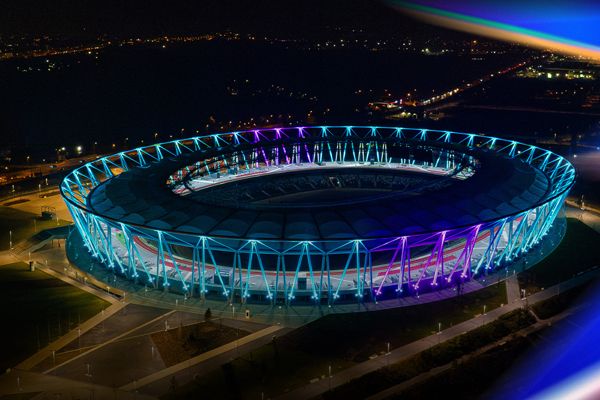
Foto vía World Athletics
From September 11–13, Budapest will be the stage for something track and field has never done: bringing together the cream of the crop of the sport in a single weekend, without endless heptathlons or marathon rounds of eliminations, in a compact format and with the largest prize purse in the history of the discipline. World Athletics confirmed the final lists: 381 athletes, 65 federations, and names that need no introduction—Mondo Duplantis, Keely Hodgkinson, Yaroslava Mahuchikh, Letsile Tebogo—competing for $150,000 to the individual champion. If you're passionate about elite track and field, this is not just another event: it's an experiment on how the sport should look in the future.
The context
The World Athletics Ultimate Championship is a new creature on the calendar, conceived as a direct response to a question the international federation has been asking itself for years: how do we make track and field more attractive, more profitable for its athletes, and easier for the public to follow? The formula they chose is concentration. Rather than a championship with dozens of events spread over more than a week (like the traditional Worlds), the Ultimate Championship condenses the event into three days, with fewer events per athlete and a format designed to maximize television impact and entertainment.
The 10-million-dollar purse is the strongest signal of where this is heading. For years, track and field has been criticized for offering modest prize money compared to other elite sports, even at its most important competitions. Here, each individual champion takes home $150,000, a figure that approaches what the best tennis players earn at a mid-level Grand Slam. That changes incentives: it attracts the biggest names, in their best form, motivated to compete against each other and not just to "fulfill the calendar."
That runners, jumpers, and throwers of the caliber of Duplantis (world record holder in pole vault), Hodgkinson (dominant in the 800m), or Tebogo (sprinter and now a leading figure in the 200m) confirm their presence validates the concept. For the fan, it means seeing the best in the world competing against each other, with everything on the line, in a concentrated and easy-to-follow weekend.
What the science says
An event like this, with so much at stake and in a condensed format, puts the focus on something that sports science has studied thoroughly: managing performance under pressure and in specific environmental conditions. Budapest in September can present variable temperatures, and the evidence is clear on this: heat acclimation improves exercise performance, even in athletes who don't habitually compete in warm climates (Lorenzo et al., 2010). The technical teams of these athletes are surely already working on thermal exposure protocols prior to competition.
It's also worth thinking about precision nutrition. When the margin between gold and fourth place is measured in hundredths or centimeters, personalized nutrition—tailored to the individual needs of each athlete and not to generic formulas—becomes a real differentiator, as documented in the recent review by Sutehall and Pitsiladis (2025). Added to this, proper fluid and electrolyte management remains the non-negotiable foundation for sustaining performance in high-demand competitions (Shirreffs & Sawka, 2011).
Finally, this "all or nothing" format over three days requires a different approach to managing fatigue than a traditional calendar. The review by Azevedo et al. (2021) on the development of fatigue in self-regulated exercise explains why perceived effort and race strategy become critical when there's no margin to recover between rounds: every race counts, and the body (and the mind) have to be calibrated for that.
What it means for you
You're not going to compete in Budapest, but there are lessons that do apply to your training. First: if you're racing in warm climates or traveling to a competition with temperatures different from your usual environment, start your heat acclimation at least 10–14 days in advance, even if it's just short sessions. Second: stop improvising your hydration on race day. Plan your fluid and electrolyte intake based on your actual sweat rate, not based on what your training partner does. And third: if you have an important race that demands you to perform over several consecutive days (a stage ultra, a triathlon with heats), practice managing your perceived effort in key workouts, don't leave it for competition day. Watching the best in the world compete under extreme pressure is inspiring, but the science that sustains them is within reach of any serious runner.
References
- "Heat acclimation improves exercise performance." — Lorenzo S, Halliwill JR, Sawka MN, J Appl Physiol 2010. https://pubmed.ncbi.nlm.nih.gov/20724560/
- "Fluid and electrolyte needs for training, competition, and recovery." — Shirreffs SM, Sawka MN, J Sports Sci 2011. https://pubmed.ncbi.nlm.nih.gov/22150427/
- "Personalized Nutrition for the Enhancement of Elite Athletic Performance." — Sutehall S, Pitsiladis Y, Scand J Med Sci Sports 2025. https://pubmed.ncbi.nlm.nih.gov/40164953
Original source
World Athletics ↗Never miss an edition.
Get the running news brief and analysis straight to your inbox. No spam, unsubscribe anytime.