New Balance Completely Overhauls Its Flagship 1080 Shoe with New Infinion Foam
September 7, 2026
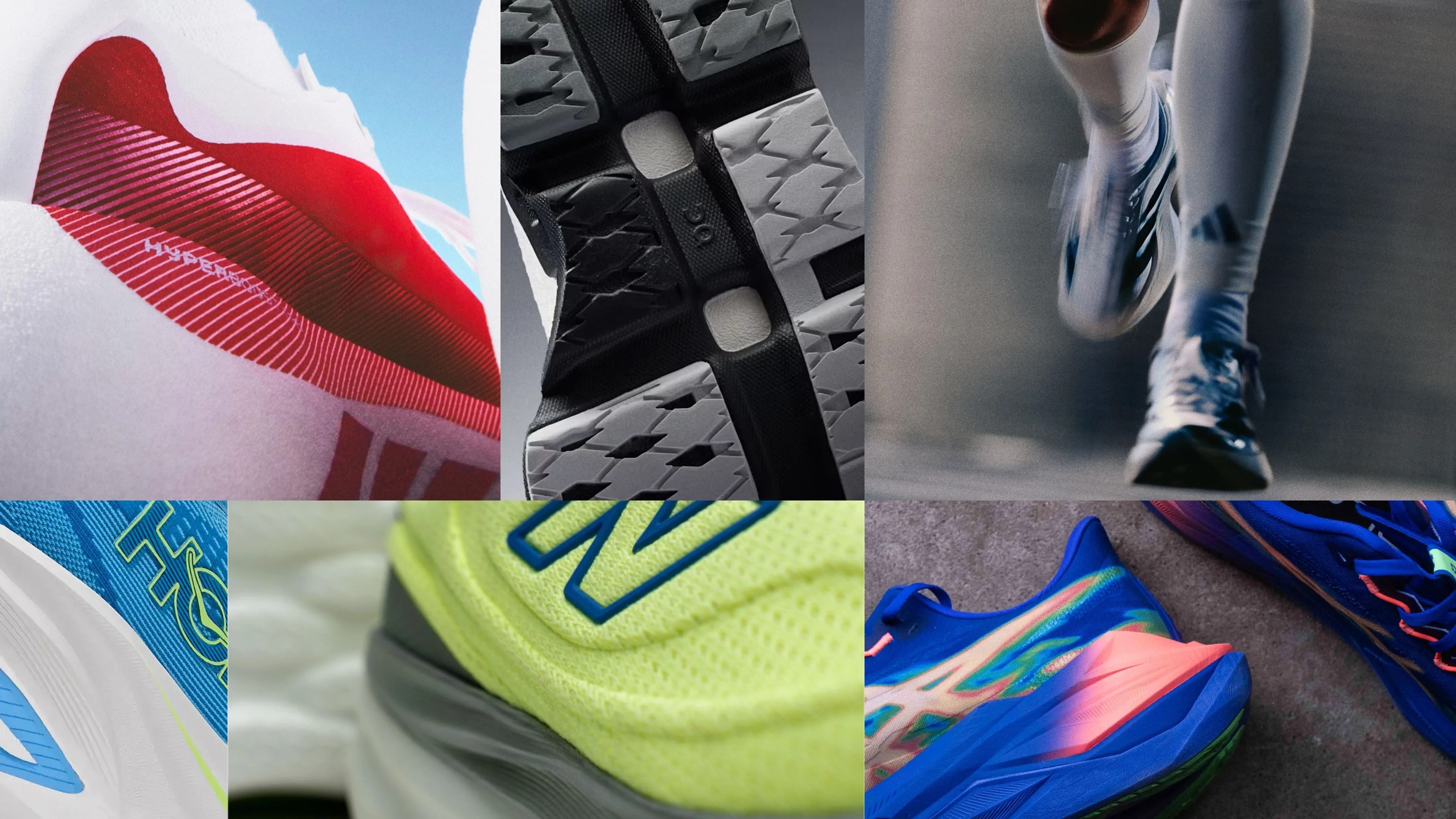
Foto de Jeka Demidov en Unsplash
Every three or four years, a "daily" model makes that quiet leap that changes how we run our base kilometers. New Balance just made it with the 1080v15: it said goodbye to Fresh Foam X, the foam that defined this line for nearly a decade, to adopt Infinion, a compound infused with supercritical nitrogen. It's not just marketing rebranding. It's a chemical formula change in the most important part of the shoe: the one that cushions each of the thousands of impacts your body absorbs in a week of training.
The Context
The 1080 is historically New Balance's best-selling "everyday shoe": designed for long runs, active recovery, and those days when you need comfortable kilometers without thinking too much about your foot. It's the equivalent of a Pegasus or a Glycerin: it doesn't aim for 5K race records, it aims to get you to day 300 of your training year healthy and consistent.
The jump from v14 to v15 isn't cosmetic. Fresh Foam X, while reliable, tends to compress and lose some bounce in high-mileage shoes. Infinion—already tested in the brand's racing models—uses supercritical nitrogen in the foam expansion process, which creates more uniform and lighter cells without sacrificing density. The technical result: less weight, better energy return, and a 40mm stack with 6mm drop that keeps the shoe within the "legal" limits for training (avoiding the exaggeration of racing carbon plates) while feeling more nimble at tempo paces, something that was previously the 1080's weak point.
What the Science Says
Here it's worth being honest: there's no specific study on "Infinion"—it's proprietary and recent technology—but there is solid literature on why the design of a daily training shoe matters more than it seems.
The key isn't marginal bounce, it's the durability of performance. A recent study by Zanini et al. (2025, Med Sci Sports Exerc) showed that strength training improves "durable running economy"—that is, how much your efficiency deteriorates when you've been running for 60-90 minutes. The foam in a shoe plays an analogous role: when the material compresses consistently kilometer after kilometer (instead of degrading quickly), your technique and economy suffer less cumulative fatigue in the final stretch of a long run.
Injury prevention is also relevant. Warden, Davis and Fredericson (2014, JOSPT) documented how load and impact management is central to preventing stress bone injuries in distance runners. Lighter foam with good impact absorption doesn't prevent injuries on its own, but it reduces one variable in the puzzle: less weight on the foot means lower metabolic cost per stride, which—accumulated over weeks of high volume—can translate to less structural fatigue.
⚖️ PMP Verdict
The 1080v15 makes sense for runners who prioritize volume and consistency over pure speed: those running 40-80 km weekly who need a shoe that handles long runs, recoveries, and the occasional tempo without constantly rotating models. If your training is mostly base aerobic work, this foam change is a real improvement, not cosmetic.
Who shouldn't get it? Very fast daily pace runners (sub 4:00/km sustained) looking for an "all-terrain" shoe for repeats and intervals—there are models with more aggressive plates for that. It's also not ideal if your priority is minimalism or low drop: 6mm and 40mm stack is clearly a maximalist profile.
For Your Training
If you're coming from the v14 and it served you well, there's no urgency to switch mid-cycle: any shoe transition, however slight, requires 2-3 weeks of progressive adaptation before an important race. Introduce the v15 first on short runs, then on your long run, and only after that on tempos. And remember: no foam replaces strength work. The evidence is clear that the combination of good shoes + strength training is what really sustains your running economy at kilometer 30, not the foam alone.
References
- Zanini M, Folland JP, Wu H, et al. "Strength Training Improves Running Economy Durability and Fatigued High-Intensity Performance in Well-Trained Male Runners: A Randomized Control Trial." Med Sci Sports Exerc 2025. https://pubmed.ncbi.nlm.nih.gov/40016936/
- Warden SJ, Davis IS, Fredericson M. "Management and prevention of bone stress injuries in long-distance runners." J Orthop Sports Phys Ther 2014. https://pubmed.ncbi.nlm.nih.gov/25103133/
Original source
Gear Patrol ↗Never miss an edition.
Get the running news brief and analysis straight to your inbox. No spam, unsubscribe anytime.