Spain Claims Eight Medals at the 2026 European Athletics Championships
September 2, 2026
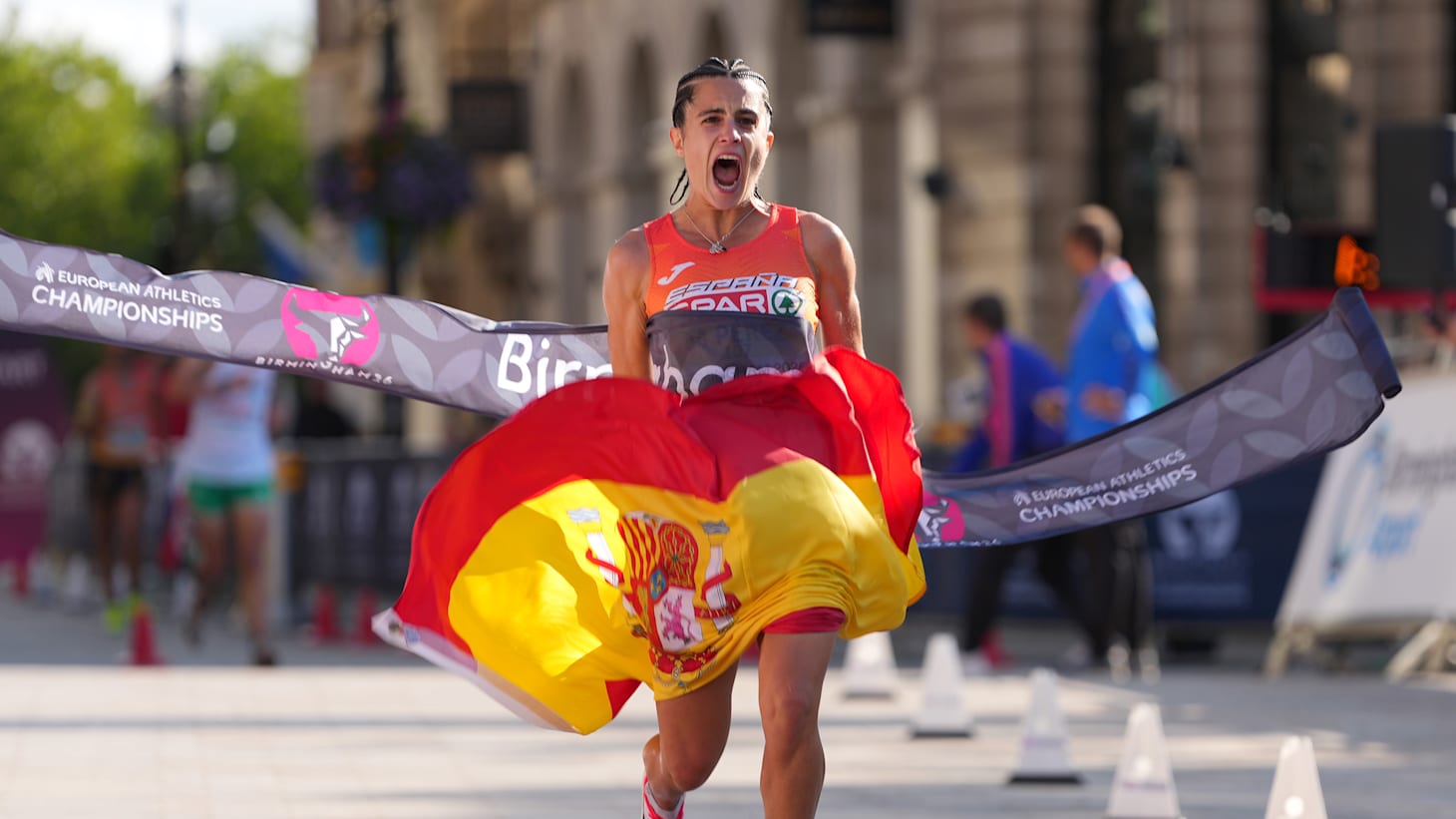
Foto por: 2026 Getty Images
Birmingham witnessed something that hardly surprises anymore but never fails to stir emotion: Spain shined once again in race walking. Eight medals total for the Spanish delegation, with the crown jewel delivered by María Pérez, who not only won gold in the new half-marathon race walk but also claimed the world record in the event. If you're a distance runner or simply follow the sport with passion, this matters to you: we're talking about a level of endurance and biomechanical efficiency that redefines what we believed possible in long-duration events.
The Context
The European Athletics Championship is the most important continental event outside the Olympic Games and World Championships. It brings together the best figures in European athletics on track, in the field, and in road events, and serves as a true barometer of each country's fitness level heading into major global competitions.
This year, the event featured a development that made history: the debut of the half-marathon race walk as an official event, replacing more traditional distances within the race walking calendar. It was precisely there that Spain found its goldmine. María Pérez, already established as one of the best race walkers in recent history, won the women's gold with a world record to boot, while Paul McGrath did the same in the men's category. Added to that were silver for Miguel Ángel López and bronze for Raquel González, confirming that Spanish race walking is not a streak—it's a school.
Eight medals at a single European Championship is an outstanding result for any federation, but what's remarkable is where they come from: most of them, from the endurance and race walking sector. This is no accident. It's the fruit of years of structured work in physiology, technique, and long-term load planning.
What the Science Says
A world record in an endurance event like the half-marathon race walk doesn't happen through raw talent alone. Behind it are decisions based on evidence that make the difference between competing and dominating.
First, precision nutrition. Recent research on carbohydrate supplementation strategies in elite endurance (Cao et al., 2025) shows that fuel optimization—type, amount, and timing—is decisive in events lasting more than an hour, where glycogen depletion can ruin any race plan. Race walkers at this level work individualized protocols, not generic formulas.
Second, total training personalization. A 2025 analysis on personalized nutrition for elite sports performance (Sutehall & Pitsiladis) suggests that the future of high performance lies in adapting every variable—from diet to recovery—to the athlete's individual genetic and metabolic profile. It's no longer about following a standard plan, but building one tailored to the individual.
Third, heat management and hydration. Long-distance race walk events are often contested under demanding environmental conditions. Classic evidence on heat acclimatization (Lorenzo et al., 2010) confirms that gradual exposure to elevated temperatures directly improves cardiovascular performance and the ability to sustain pace—something crucial in a new event like the half-marathon race walk, where effort management over more than 90 minutes is decisive.
What It Means for You
You don't need to be an Olympic race walker to apply these lessons to your running.
- Match your fuel to your race. If you're running half marathons or marathons, don't improvise carbohydrate intake on race day. Practice your fueling strategy during long training runs, just like elite athletes do.
- Train your heat tolerance. If you're going to compete in warm conditions, add sessions of progressive heat exposure in the weeks leading up to the race. Your body adapts, and that invisible training translates into minutes gained on race day.
- Individualize, don't copy. What works for your training partner may not work for you. Start paying attention to how your body responds to different paces, nutrition, and rest, and adjust accordingly.
Spain reminded us in Birmingham that well-trained endurance, grounded in science, can rewrite history. Yours begins at your next session.
References
- "A Review of Carbohydrate Supplementation Approaches and Strategies for Optimizing Performance in Elite Long-Distance Endurance." — Cao W, He Y, Fu R, Nutrients 2025. https://pubmed.ncbi.nlm.nih.gov/40077786/
- "Personalized Nutrition for the Enhancement of Elite Athletic Performance." — Sutehall S, Pitsiladis Y, Scand J Med Sci Sports 2025. https://pubmed.ncbi.nlm.nih.gov/40164953/
- "Heat acclimation improves exercise performance." — Lorenzo S, Halliwill JR, Sawka MN, J Appl Physiol (1985) 2010. https://pubmed.ncbi.nlm.nih.gov/20724560/
Original source
Olympics.com ↗Never miss an edition.
Get the running news brief and analysis straight to your inbox. No spam, unsubscribe anytime.