Mia Maxwell Crowned U20 World Champion in 100 Meters in Eugene
August 8, 2026
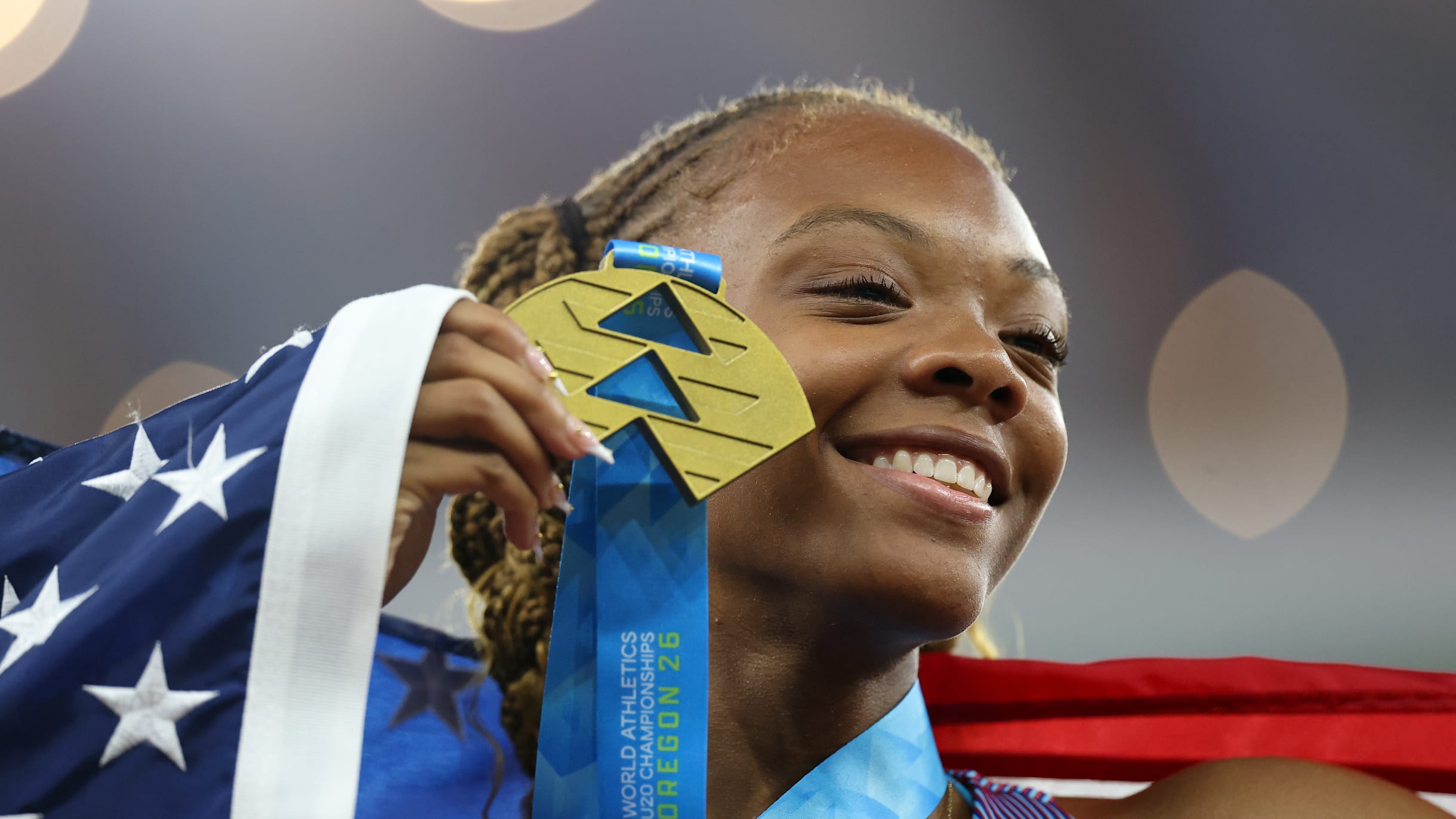
Picture by Steph Chambers/WA/Getty Images 2026
Nobody had Mia Maxwell on their radar. The 18-year-old American arrived at Hayward Field as just another contender in a field dominated by Jamaican power, and left with gold around her neck after running 11.14 seconds in the 100-meter final of the U20 World Athletics Championships. She surpassed Shanoya Douglas, the Jamaican who arrived as the undisputed favorite, and left Italy's Kelly Doualla Edimo—U18 European champion in the same distance—on the third step of the podium. It's that kind of result that reminds you why young athletics is so captivating: there, the seeding doesn't win, whoever runs best that day does.
The Context
The U20 World Athletics Championships is the most important showcase for sub-20 talent on the planet. Think of it as World Athletics' official breeding ground: it's where names that later became absolute stars debuted on the global radar, from Usain Bolt to Sifan Hassan. The category requires athletes to be 19 years old or younger in the year of competition, and that means each edition is a snapshot of what's coming in world athletics over the next decade.
The 100 meters flat, in particular, is the premier sprint event: pure power, starting technique, and the ability to maintain maximum velocity without "tightening up" in the final meters. That Maxwell ran 11.14 in a final under pressure, surpassing a Jamaican runner—a country with a sprinting tradition that's practically synonymous with sprint excellence—says a lot about her competitive maturity at 18 years old. And the fact that the podium was completed by a U18 European champion confirms that the next generation of world sprinters is already knocking on the door forcefully.
This kind of result also matters to distance-running fans, even if you don't compete on the track: it's a reminder that speed, technique, and strength are pillars transferable to any distance, and that proper early athletic development pays dividends.
What the Science Says
Winning a world final in 11.14 seconds isn't just raw talent: it's the result of years of work in strength, technique, and movement economy. Recent evidence in well-trained runners shows that strength training not only improves maximum power, but also protects technique and running economy when fatigue appears—a finding documented in distance runners, but whose principle (strength as the backbone of technique under stress) applies equally well to sprinting, where losing form in the final 20 meters costs medals (Zanini et al., 2025).
It's also worth discussing the performance differences between sexes and age categories in competitive athletics. Sports science has deepened our understanding of how physiological and developmental factors influence the progression curves of young sprinters and distance runners, recognizing that the peak performance and the path to it vary by athlete (Besson et al., 2022). This is relevant because an 18-year-old athlete winning a world championship doesn't mean she has "arrived": it means her development is on the right track, with enormous room for improvement heading into the senior category.
Finally, in short and explosive events like sprinting, technology applied to elite sport—from biomechanical analysis to training load monitoring—increasingly plays a larger role in polishing the details that separate an 11.14 from an 11.30. Technological innovation in elite sport is no longer optional for competing at the highest level; it's part of the machinery (Guppy et al., 2023).
For Your Training
You don't have to be a sprinter to learn from Maxwell. Here are the lessons that do apply to your running, whether you're a 5K runner or a marathoner:
- Put strength into your plan. Strength work (squats, deadlifts, basic plyometrics) isn't "extra": it improves your running economy and sustains you when fatigue appears in the final kilometers.
- Technique is trained, not improvised. Dedicate time to running technique drills (high knees, stride work, short accelerations) even if you run long distances. A better movement pattern translates to less wear and more efficiency.
- Trust the process, not the pre-race ranking. Douglas came in as the favorite and didn't win. In your own races, the pre-race forecast (yours or someone else's) doesn't define the result: what you decide to do that day does.
- Athletic development is a marathon, not a sprint. Maxwell is 18 and already a world champion, but her career is just beginning. Whatever your age or level, your progress is also a process of years, not weeks.
References
- "Strength Training Improves Running Economy Durability and Fatigued High-Intensity Performance in Well-Trained Male Runners: A Randomized Control Trial." — Zanini M, Folland JP, Wu H, Med Sci Sports Exerc 2025. https://pubmed.ncbi.nlm.nih.gov/40016936/
- "Sex Differences in Endurance Running." — Besson T, Macchi R, Rossi J, Sports Med 2022. https://pubmed.ncbi.nlm.nih.gov/35122632/
- "Technology Innovation and Guardrails in Elite Sport: The Future is Now." — Guppy F, Muniz-Pardos B, Angeloudis K, Sports Med 2023. https://pubmed.ncbi.nlm.nih.gov/37787844/
Original source
Olympics.com ↗Never miss an edition.
Get the running news brief and analysis straight to your inbox. No spam, unsubscribe anytime.