Neeraj Chopra and Rumesh Pathirage Star in an Asian Javelin Duel Heading to Brussels
August 28, 2026
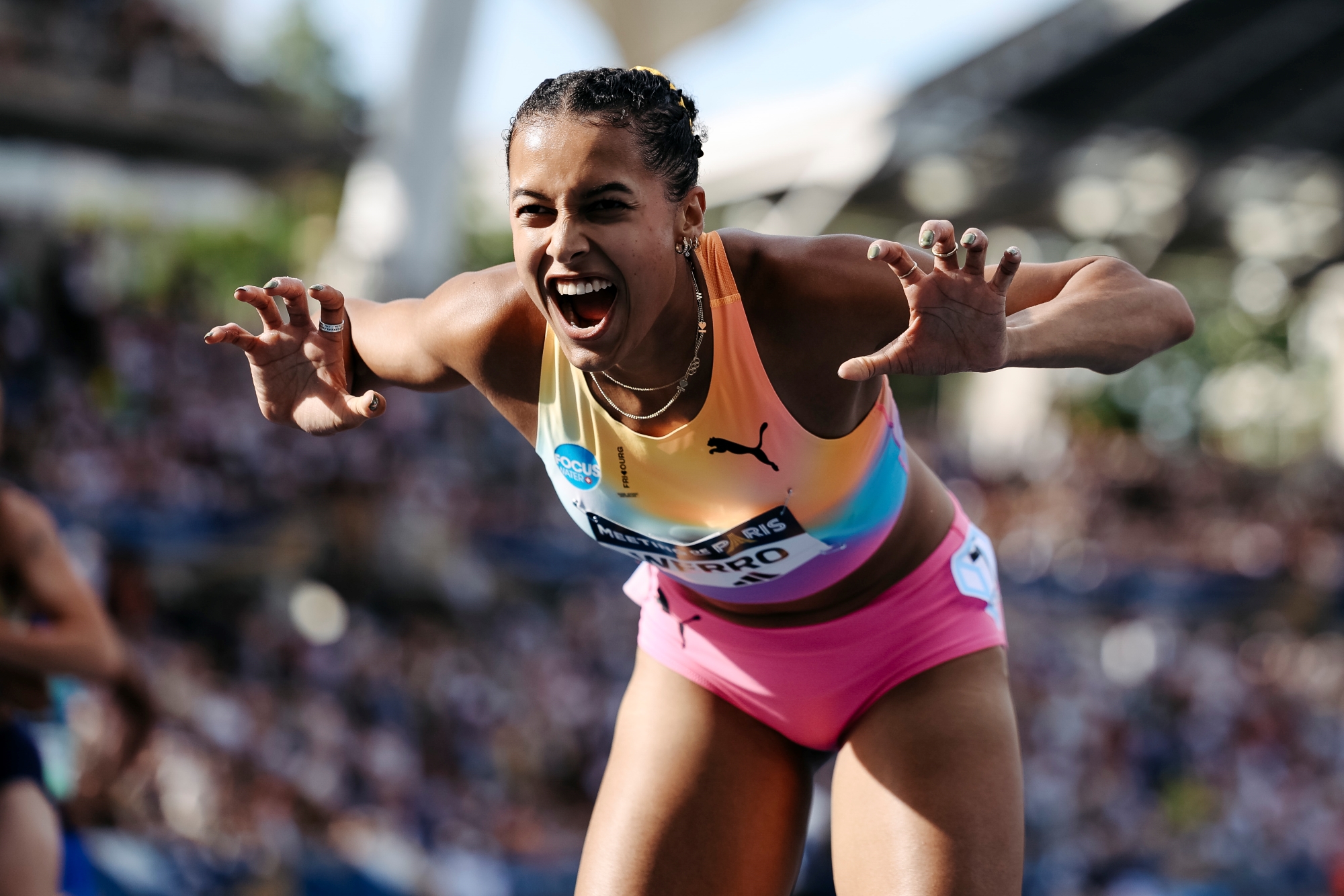
Foto vía Wanda Diamond League
There's a version of sport we like to ignore: the one where the champion stops winning by default. Neeraj Chopra, the man who put India on the map of world athletics with his Olympic gold, arrives in Lausanne in a position that would have been unthinkable a year ago — he needs a big result, almost urgently, to avoid being shut out of the Diamond League final. On the other side of the ring is Rumesh Pathirage, the Sri Lankan who leads the world rankings this season and who already has his ticket to Brussels secured. It's an Asian duel, yes, but it's also a story about how even legends have to fight for their place.
The Context
The Diamond League is the most prestigious league in world athletics: fourteen meetings spread across the globe during the season, where the best athletes in each discipline accumulate points based on their placement at each stop on the circuit. At the end of the year, only a handful of competitors per event — those who accumulated the most points — earn the right to compete in the Final, a single-night event where the "Diamond League Champion" of the season is crowned.
For 2026, it's already been confirmed that this grand final will take place in Brussels on September 4 and 5, closing the calendar with the signature flourish that this city has historically reserved: speed, drama, and records under the lights of King Baudouin Stadium.
The problem for Chopra is simple and cruel: the system doesn't forgive inconsistency. It doesn't matter that you're the reigning Olympic champion or that you have the best résumé of your generation; if you don't accumulate points at the qualifying stops, you end up watching the final on television. Pathirage, on the other hand, has built his season with the regularity that Chopra hasn't managed to sustain, and that's what took him to the world lead without needing to depend on one last card in Lausanne.
What the Science Says
What's interesting about Chopra's moment isn't just athletic, it's physiological: sustaining elite performance season after season is one of the greatest challenges in high-level sport, and there's increasingly more evidence that the key lies not just in raw talent, but in the fine management of individual variables. A recent article in Scandinavian Journal of Medicine & Science in Sports on personalized nutrition for elite athletic performance (Sutehall & Pitsiladis, 2025) raises this exact point: the margins that separate an Olympic champion from being left out of a final can no longer be explained by training volume alone, but rather by individualized optimization of each variable — nutrition, recovery, load — throughout the season.
It's also worth considering the technology that now accompanies these athletes. A review in Sports Medicine on technological innovation in elite sport (Guppy, Muniz-Pardos & Angeloudis, 2023) describes how continuous monitoring of biomechanical and physiological variables is redefining how athletes adjust their preparation week to week, something crucial when you're playing the fine margin between qualifying or being eliminated, as Chopra is today.
What It Means for You
You probably don't throw a javelin, but Chopra's lesson applies directly to your running: consistency beats isolated talent. You can hit your personal best in one race and still "miss the final" of your own season if you don't sustain your level in the rest of your training and competition.
Three things you can steal from this moment:
- Don't depend on a single big event. Just as Chopra can't bet everything on Lausanne, you shouldn't gamble your entire season on one race. Build consistency in blocks.
- Take care of the variables you do control. Hydration, nutrition, and recovery aren't details: the evidence on fluid and electrolyte needs in sport (Shirreffs & Sawka, 2011) confirms that these basic factors can be the difference between a good day and a mediocre one.
- Use data, not just feel. Continuous glucose monitoring and other metrics are changing how endurance athletes adjust their training in real time (Flockhart & Larsen, 2024) — and that mindset of data-driven adjustment, not guesswork, is replicable at any level.
Chopra can still qualify. But his case reminds us that in high-performance sport, even kings have to prove it race after race.
References
- Sutehall S, Pitsiladis Y. "Personalized Nutrition for the Enhancement of Elite Athletic Performance." Scand J Med Sci Sports, 2025. https://pubmed.ncbi.nlm.nih.gov/40164953/
- Guppy F, Muniz-Pardos B, Angeloudis K. "Technology Innovation and Guardrails in Elite Sport: The Future is Now." Sports Med, 2023. https://pubmed.ncbi.nlm.nih.gov/37787844/
- Shirreffs SM, Sawka MN. "Fluid and electrolyte needs for training, competition, and recovery." J Sports Sci, 2011. https://pubmed.ncbi.nlm.nih.gov/22150427/
- Flockhart M, Larsen FJ. "Continuous Glucose Monitoring in Endurance Athletes: Interpretation and Relevance of Measurements for Improving Performance and Health." Sports Med, 2024. https://pubmed.ncbi.nlm.nih.gov/37658967/
Original source
Wanda Diamond League ↗Never miss an edition.
Get the running news brief and analysis straight to your inbox. No spam, unsubscribe anytime.