Everything Ready for the World Athletics Ultimate Championship Debut in Budapest
September 5, 2026
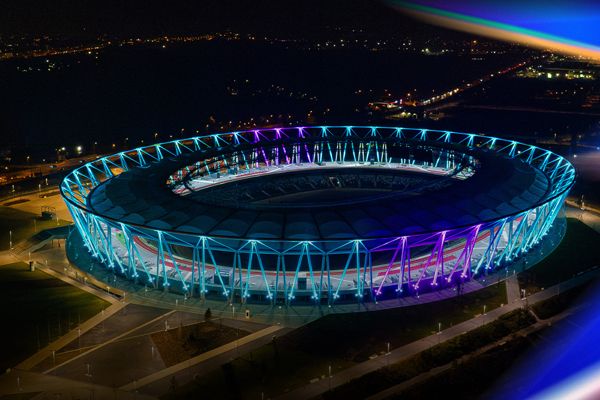
Foto vía World Athletics
Less than 300 days remain until Budapest becomes the stage for something athletics has never seen: an invitational championship where only the best compete, in a compressed three-day format, with a prize purse of 10 million dollars—the highest ever distributed in a single track and field competition. From September 11–13, the World Athletics Ultimate Championship will debut with a simple but radical premise: no endless elimination rounds, no filler athletes. Only Olympic champions, world champions, and Diamond League winners, competing against each other, with the clock and money as the only judges.
The Context
To understand why this is a watershed moment, you have to look at how elite athletics has functioned until now. Worlds and Olympic Games last between 9 and 17 days, with heats, semifinals, and finals that dilute intensity and prolong the public's wait. The Diamond League, meanwhile, is a series of meets throughout the season where points accumulate meet by meet, but all the stars of an event rarely compete on the same track on the same day.
The Ultimate Championship breaks that mold. It's invitational: only those who have already proven to be the best on the planet qualify (current champions and Diamond League winners), and the format condenses to three days of direct finals. Without the wear and tear of preliminary rounds, every race is, literally, a final from the first step. World Athletics is betting that this concentration of talent and prize money—comparable to what other individual sports like tennis or golf already offer in their "invitation only" tournaments—will elevate the competitive level and media interest in athletics outside the Olympic and World Championship cycles.
It is, at its core, a strategic move: further professionalize the sport, give constant visibility to its stars, and create an event that doesn't compete for attention with Olympic Games or World Championships, but rather fills the space between them.
What the Science Says
A three-day format with direct finals and no accumulated wear from preliminary rounds completely changes the physiological logic of competition. Without heats or semifinals, athletes arrive with intact glycogen stores and central nervous system reserves—something crucial in events where accumulated fatigue—even perceived fatigue—directly conditions final performance (Azevedo et al., 2021). Less wear means faster and riskier races from the starting gun, because no one needs to "save" anything for a later round.
This also intensifies the importance of load management in the days leading up to and during the event itself. Elite sports nutrition science has advanced toward increasingly individualized strategies—adjusting carbohydrates, electrolytes, and even continuous glucose monitoring according to the athlete and specific event (Sutehall & Pitsiladis, 2025; Cao et al., 2025; Flockhart & Larsen, 2024)—and in a high-density competitive event like this one, those fine margins can decide a medal.
Additionally, with Hungarian September heat as a possible variable, thermal acclimation becomes a determining factor again: it has been shown that gradual exposure to heat improves performance capacity in hot conditions, something elite technical teams already integrate as standard protocol before key competitions (Lorenzo et al., 2010).
What It Means for You
You're not going to compete for 10 million dollars in Budapest, but the lessons from this format apply directly to your training. First: accumulated fatigue matters more than you think. If you have a goal race, prioritize arriving fresh over "adding miles" in the final week—the evidence is clear that managing prior fatigue determines how hard you can push yourself on race day.
Second: don't underestimate specific preparation for race-day conditions. If you're going to run in heat, train in heat in the weeks before—your body needs to adapt physiologically, not just mentally. And third: precision nutrition is no longer just for elites. Adjusting your carbohydrate and electrolyte intake based on the duration and intensity of your race, instead of following a generic formula, is a strategy backed by recent evidence that any serious runner can apply.
Budapest 2026 will be a showcase of athletics in its purest and most concentrated form. And even though you race at a different scale, the physics of performance—fatigue, heat, fuel—are exactly the same.
References
- Lorenzo S, Halliwill JR, Sawka MN. "Heat acclimation improves exercise performance." J Appl Physiol, 2010. https://pubmed.ncbi.nlm.nih.gov/20724560/
- Sutehall S, Pitsiladis Y. "Personalized Nutrition for the Enhancement of Elite Athletic Performance." Scand J Med Sci Sports, 2025. https://pubmed.ncbi.nlm.nih.gov/40164953/
- Cao W, He Y, Fu R. "A Review of Carbohydrate Supplementation Approaches and Strategies for Optimizing Performance in Elite Long-Distance Endurance." Nutrients, 2025. https://pubmed.ncbi.nlm.nih.gov/40077786/
- Flockhart M, Larsen FJ. "Continuous Glucose Monitoring in Endurance Athletes." Sports Med, 2024. https://pubmed.ncbi.nlm.nih.gov/37658967/
- Azevedo RA, Silva-Cavalcante MD, Lima-Silva AE.
Original source
World Athletics ↗Never miss an edition.
Get the running news brief and analysis straight to your inbox. No spam, unsubscribe anytime.