Sam Laidlow Bets It All on Kona After Skipping the 70.3 World Championships to Focus on Hawaii
October 10, 2026
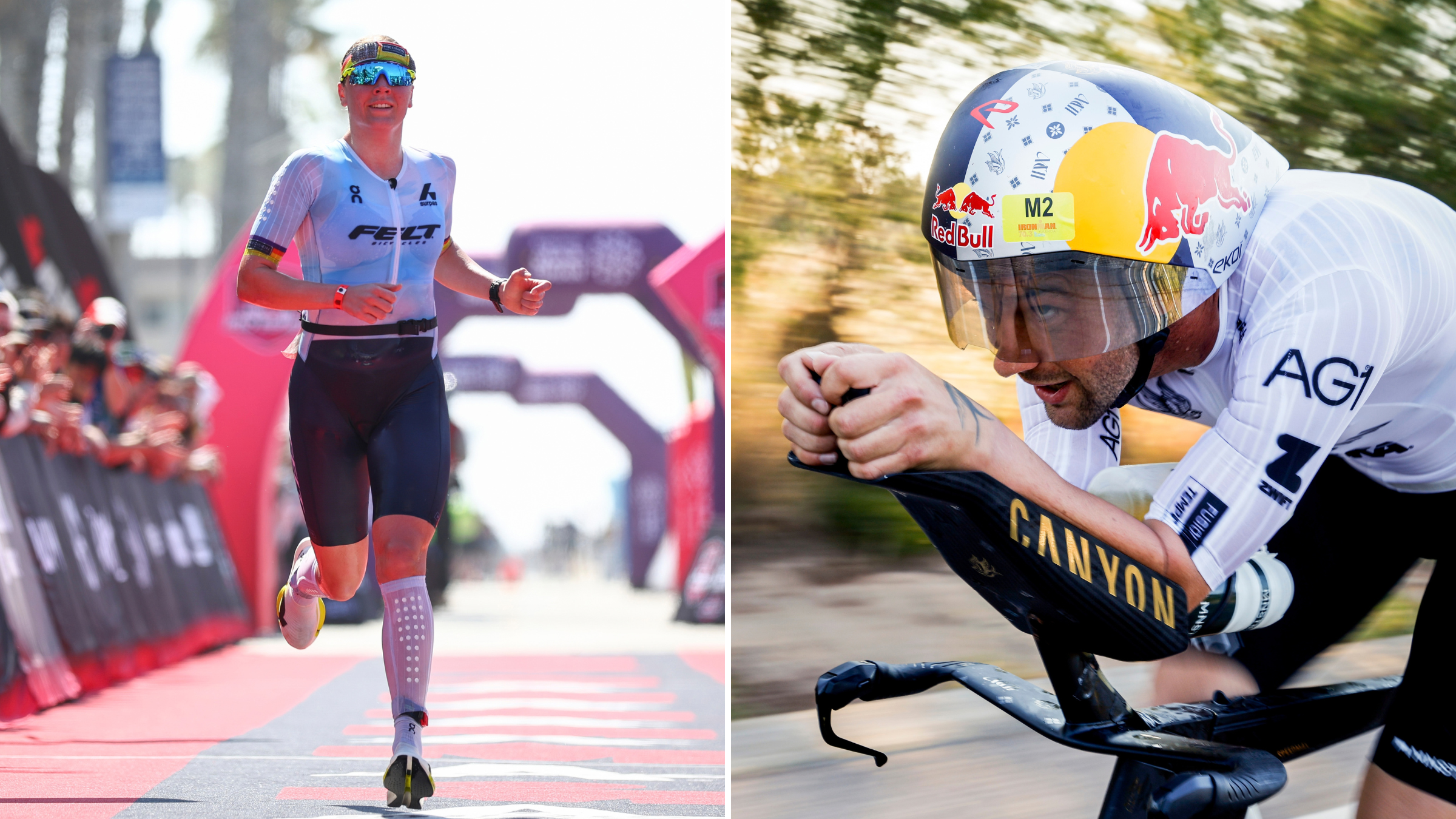
Foto vía Triathlete
There are decisions made with a cool head and others made with the conviction of someone who already knows exactly what they want. Sam Laidlow chose the latter. The Frenchman, who this season won Ironman Lanzarote by nearly nine minutes—a dominant performance on a demanding course, not a leisurely ride—decided to skip the 70.3 World Championship to devote one hundred percent of his preparation to a single event: the Ironman World Championship in Kona. It's a risky move in a sport where the season typically rewards consistency, but Laidlow seems to have understood something crucial: in Kona you don't win by accumulating points, you win by peaking on the exact day of your life.
The news matters because the 2026 men's field was left without a top contender after the title defender's injury withdrawal, opening up one of the most wide-open races in recent years. And there's Laidlow, alongside Kristian Blummenfelt, emerging as one of the top favorites to claim the most coveted title in long-distance triathlon.
The Context
The Ironman World Championship in Kona isn't just another race: it's the race. Founded in 1978, it's the very origin of long-distance triathlon as we know it—3.8 km swim, 180 km bike, and a full marathon—and it's run in conditions that are almost a character unto themselves in the competition: stifling heat, extreme humidity, and the dreaded Kona crosswind, capable of destroying the strategy of any athlete who hasn't done their homework.
That's why Laidlow's decision to skip the 70.3 World Championship—the other major date on the calendar, much faster and at the middle distance—isn't casual. They're two completely different beasts. The 70.3 demands pure speed; Kona demands management: of heat, of nutrition, of patience. Preparing for both at the highest level in the same cycle is, for many elite athletes, simply impossible without sacrificing one of the two. Laidlow decided not to split his chips. Everything to Kona.
The absence of the defending champion due to injury reshuffles the deck: without a rival who's already proven he can win there, the field is more open than ever, and the spotlight centers on who arrives best prepared physically and mentally to an island that doesn't forgive mistakes.
What the Science Says
Betting everything on one race in Kona has solid physiological logic. Heat acclimatization is arguably the most underestimated training variable in long-distance triathlon: evidence shows that progressive exposure to heat before competition improves performance by generating cardiovascular and thermoregulatory adaptations—greater plasma volume, more efficient sweating, lower heart rate at the same intensity (Lorenzo et al., 2010). This can't be rushed in two weeks: it requires specific training blocks weeks before the race, something incompatible with competing at full intensity in another different format.
Add to this the management of fluids and electrolytes, critical in an environment like Hawaii where sweat rates skyrocket (Shirreffs & Sawka, 2011). And in a race of that duration, carbohydrate strategy also becomes decisive: recent evidence in elite endurance athletes confirms that well-calibrated carbohydrate intake protocols—and increasingly individualized ones—make real differences in sustaining intensity during long races (Cao et al., 2025). None of this is achieved halfway; it demands total focus, the same focus that Laidlow decided not to split between two races.
What It Means for You
You don't need to be fighting for the world title in Kona to learn from this decision. The lesson is universal: if your goal is a specific race—your marathon, your first half-ironman, your dream 10K—build your season around THAT date, not accumulate "just in case" races that end up stealing resources from your true objective.
If your target race is run in heat, start exposing yourself to training in similar conditions weeks before, not the week prior. Adjust your hydration and carbohydrate strategy during long training sessions, not on race day. And most importantly: define which race is THE race, and let everything else be preparation, not race after race.
References
- "Heat acclimatization improves exercise performance." — Lorenzo S, Halliwill JR, Sawka MN, J Appl Physiol 2010. https://pubmed.ncbi.nlm.nih.gov/20724560/
- "Fluid and electrolyte needs for training, competition, and recovery." — Shirreffs SM, Sawka MN, J Sports Sci 2011. https://pubmed.ncbi.nlm.nih.gov/22150427/
- "A Review of Carbohydrate Supplementation Approaches and Strategies for Optimizing Performance in Elite Long-Distance Endurance." — Cao W, He Y, Fu R, Nutrients 2025. https://pubmed.ncbi.nlm.nih.gov/40077786/
Original source
Triathlete ↗Never miss an edition.
Get the running news brief and analysis straight to your inbox. No spam, unsubscribe anytime.