Brussels Has Its Guest List, and It's the Best Party in World Athletics
September 4, 2026
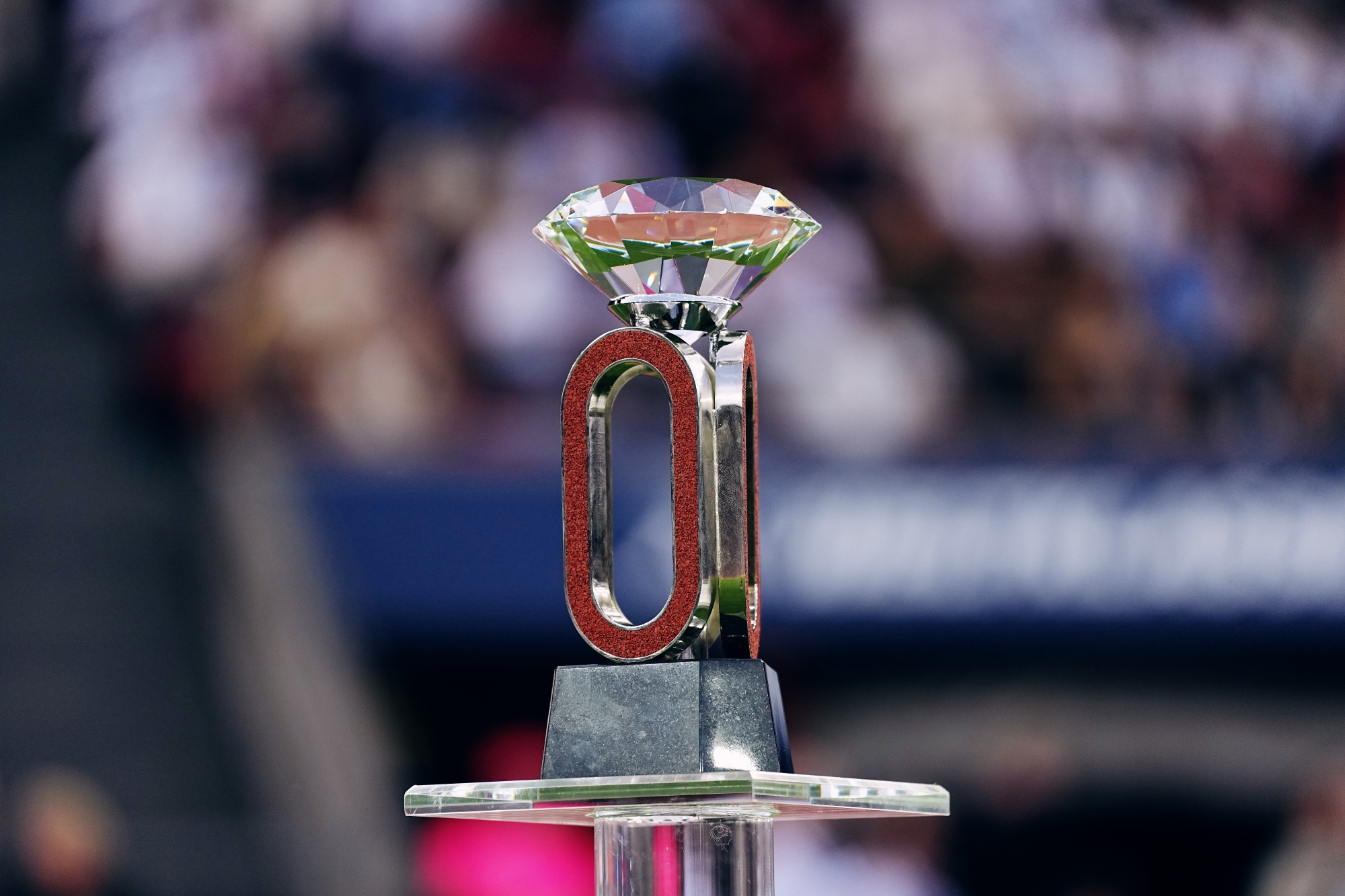
Foto vía Wanda Diamond League
This Friday and Saturday, King Baudouin Stadium in Brussels becomes the stage where the best on the planet are crowned. The complete entry lists for the 2025 Diamond League Final are now known, and the card is simply brutal: Mondo Duplantis chasing another impossible limit in pole vault, Femke Bol dominating the 400m hurdles, Masai Russell defending her explosive speed, and Miltiadis Tentoglou landing jumps that redefine the triple jump. If you like track and field — or if you simply train and want to understand what makes the world's best special — this final is your must-see appointment.
The Context
The Diamond League is the most prestigious athletics league in the world, a series of meetings held from May to September in cities like Doha, Rome, London, Monaco, and Eugene. Each meet distributes points, and only the best accumulated finishers reach the grand final. There, in a single night (or two, in this case), the season's champion is decided: it doesn't matter how you got there, it matters how you run, jump, or throw that day.
Brussels is the closing venue for 2025, and what makes it special is that it brings together 32 disciplines and their 32 best performers of the year in one place. It's not just any race: it's the final exam. Olympic champions and world record holders will be there competing against each other, with no room for excuses or "bad streaks." It's pure pressure, and that's why the level you're going to see this weekend is usually among the highest of the entire year — many athletes arrive in their best physical form of the season, saved specifically for this finale.
For the fan, it's the opportunity to see the state of the art in almost every athletics discipline in one weekend. For the recreational runner, it's a window into understanding what separates these athletes from the rest — and surprise: it's not just talent.
What Science Says
What makes athletes like Duplantis or Bol arrive "in point" for a final of this caliber isn't magic, it's high-precision physiological planning. Modern sports science has learned that elite performance depends on variables that go far beyond track training.
A clear example is personalized nutrition. Recent research on performance optimization in elite athletes (Sutehall & Pitsiladis, 2025) confirms that there is no longer a one-size-fits-all recipe: each athlete responds differently to strategies involving carbohydrates, hydration, and recovery, and technical teams at this level adjust those variables individual by individual, competition by competition. This combines with what we already knew about hydration and electrolytes during competition (Shirreffs & Sawka, 2011): even small imbalances can cost the margin that separates a medal from fourth place.
There's also a less visible but crucial dimension: monitoring technology. Today's high-performance teams use wearable devices to track load, fatigue, and recovery in real time (Guppy et al., 2023), allowing for fine-tuning of final adjustments before a decisive final like this one. It's no coincidence that athletes who make it to Brussels tend to be at their sharpest point of the year: it's the result of months of data, not improvisation.
And in endurance events, pacing management remains decisive. Evidence on fatigue development in self-regulated efforts (Azevedo et al., 2021) explains why distance athletes competing in Brussels manage their energy with almost mathematical precision: every wasted second at a miscalculated pace is a lost place on the podium.
What It Means for You
You're not going to compete in a Diamond League final, but the principles that drive these athletes do apply to your daily training:
- Plan your peak fitness. Just as these athletes save their best version for the key moment, you can also structure your season to arrive sharp at your goal race, not exhausted beforehand.
- Hydration and nutrition are not minor details. Adjusting your intake of carbohydrates and fluids according to your real needs can make a notable difference in long races.
- Use data in your favor. You don't need the team of an Olympic champion: a GPS watch and some discipline to review your load and recovery metrics already give you a real advantage.
- Master your pacing. Practicing pacing in your quality workouts prepares you to not "burn out" before the finish line, just like elite distance runners do.
This weekend, when you see Duplantis fly over the pole vault or Bol dominate the 400mh, remember: behind every second there's science, strategy, and years of quiet work. The same logic, on another scale, applies to you.
References
- Sutehall S, Pitsiladis Y. "Personalized Nutrition for the Enhancement of Elite Athletic Performance." Scand J Med Sci Sports, 2025. https://pubmed.ncbi.nlm.nih.gov/40164953/
- Shirreffs SM, Sawka MN. "Fluid and electrolyte needs for training, competition, and recovery." J Sports Sci, 2011. https://pubmed.ncbi.nlm.nih.gov/22150427/
- Guppy F, Muniz-Pardos B, Angeloudis K. "Technology Innovation and Guardrails in Elite Sport: The Future is Now." Sports Med, 2023. https://pubmed.
Original source
Wanda Diamond League ↗Never miss an edition.
Get the running news brief and analysis straight to your inbox. No spam, unsubscribe anytime.