La Vuelta a España 2026 Started in Monaco with the Inaugural Time Trial
August 23, 2026
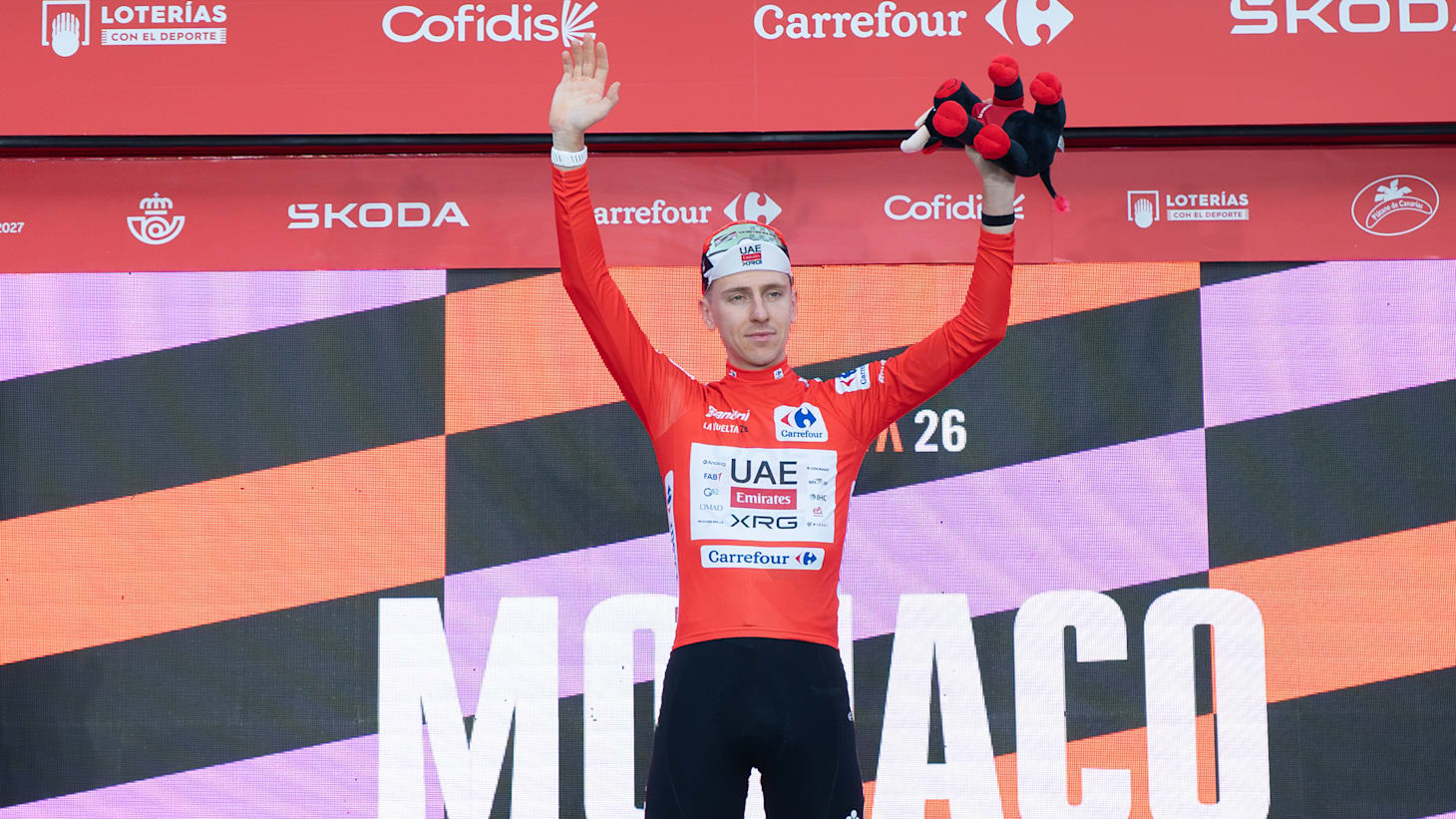
Foto por: Cxcling Creative Agency
The Principality of Monaco, with its streets bathed in luxury and perfect asphalt, was the unexpected yet glamorous setting for the start of the 81st Vuelta a España. An individual time trial of just 9 kilometers—short, explosive, almost a sprint time trial—served as the starting gun for three weeks of racing on Spanish roads. And as has become customary in modern cycling, the name that resonates is always the same: Tadej Pogačar, who arrives with the ambition to accomplish something that very few in history have achieved: winning all three grand tours (Giro, Tour, and Vuelta) in a single year.
If you're passionate about human performance—whether you run, cycle, or simply admire the limits of the trained body—this Vuelta is a laboratory in motion. And understanding what's behind such a feat gives you invaluable clues for your own training.
The Context
The Vuelta a España is, along with the Giro d'Italia and the Tour de France, one of the three "grand tours" of professional cycling: three-week stage races that demand a brutal combination of endurance, recovery, and managing accumulated fatigue. Unlike a one-day race, here the winner isn't determined by who's fastest in a single stage, but rather by who best manages fatigue day after day, stage after stage, for 21 days.
The race starting in Monaco—outside of Spain, as is tradition for European grand départs—and with a short time trial is no accident. Short time trials are a tactical tool: they mark minimal but symbolic differences, crown someone with the leader's jersey from day one, and generate psychological tension for the rest of the peloton. Passing by the Casino of Monte Carlo and sections of the legendary Formula 1 circuit gave a cinematic touch to a stage that, fundamentally, is pure science of effort: power, aerodynamics, and pace management in less than 15 minutes of racing.
The real story, however, is what comes next: 21 stages, brutal mountains, and the question of whether Pogačar can sustain a level of fatigue and recovery that no cyclist has managed to maintain throughout an entire modern season with this level of demand across all three tours.
What Science Says
Completing three grand tours in one year isn't just a feat of talent: it's a physiological feat of resource management. Evidence in elite sports nutrition (Sutehall & Pitsiladis, 2025) emphasizes that performance in these extreme events increasingly depends on personalization: each athlete needs individualized protocols for carbohydrates, hydration, and recovery, not generic formulas.
Speaking of carbohydrates, a recent review on supplementation in elite endurance athletes (Cao et al., 2025) confirms something every mountain biker already knows firsthand: the ability to oxidize large amounts of carbohydrate per hour (between 90 and 120 grams, combining glucose and fructose) is one of the factors that most distinguishes who lasts three weeks from who falls apart at the end.
Additionally, continuous glucose monitoring (Flockhart & Larsen, 2024) has become a common tool in the professional peloton: it allows real-time intake adjustments based on each stage's demands, avoiding both hypoglycemia and caloric waste. And let's not forget hydration: Shirreffs and Sawka (2011) documented over a decade ago that poorly managed fluid and electrolyte losses are one of the silent causes of performance decline in long-duration events, something critical for those racing a time trial under the Mediterranean sun of Monaco.
What It Means for You
You're not going to race a time trial in the Principality of Monaco, but the principles that drive Pogačar and company apply directly to your running training:
- Personalize your nutrition: don't copy another runner's carbohydrate plan. Experiment during long training runs to find what amount and type of carbohydrate you tolerate best.
- Hydrate with strategy, not by thirst. In long or hot races, plan electrolytes before you start, don't try to sort it out mid-race.
- Think in "stages," not in a single effort: if you're training for a long race, practice how you recover between intense sessions, not just how you perform in one.
- Use data to your advantage: whether with a GPS watch or a heart rate band, learning to read your body in real time—as cyclists do with their glucose—helps you run smarter, not just harder.
The Vuelta is just getting started. And while Pogačar seeks to make history, the real learning for you lies in how he manages each resource, each day, for three full weeks.
References
- Sutehall S, Pitsiladis Y. "Personalized Nutrition for the Enhancement of Elite Athletic Performance." Scand J Med Sci Sports, 2025. https://pubmed.ncbi.nlm.nih.gov/40164953/
- Cao W, He Y, Fu R. "A Review of Carbohydrate Supplementation Approaches and Strategies for Optimizing Performance in Elite Long-Distance Endurance." Nutrients, 2025. https://pubmed.ncbi.nlm.nih.gov/40077786/
- Flockhart M, Larsen F
Original source
Olympics.com ↗Never miss an edition.
Get the running news brief and analysis straight to your inbox. No spam, unsubscribe anytime.