The Silesia Diamond League Will Bring the World's Best Sprinters Together in the 100 Meters
August 6, 2026
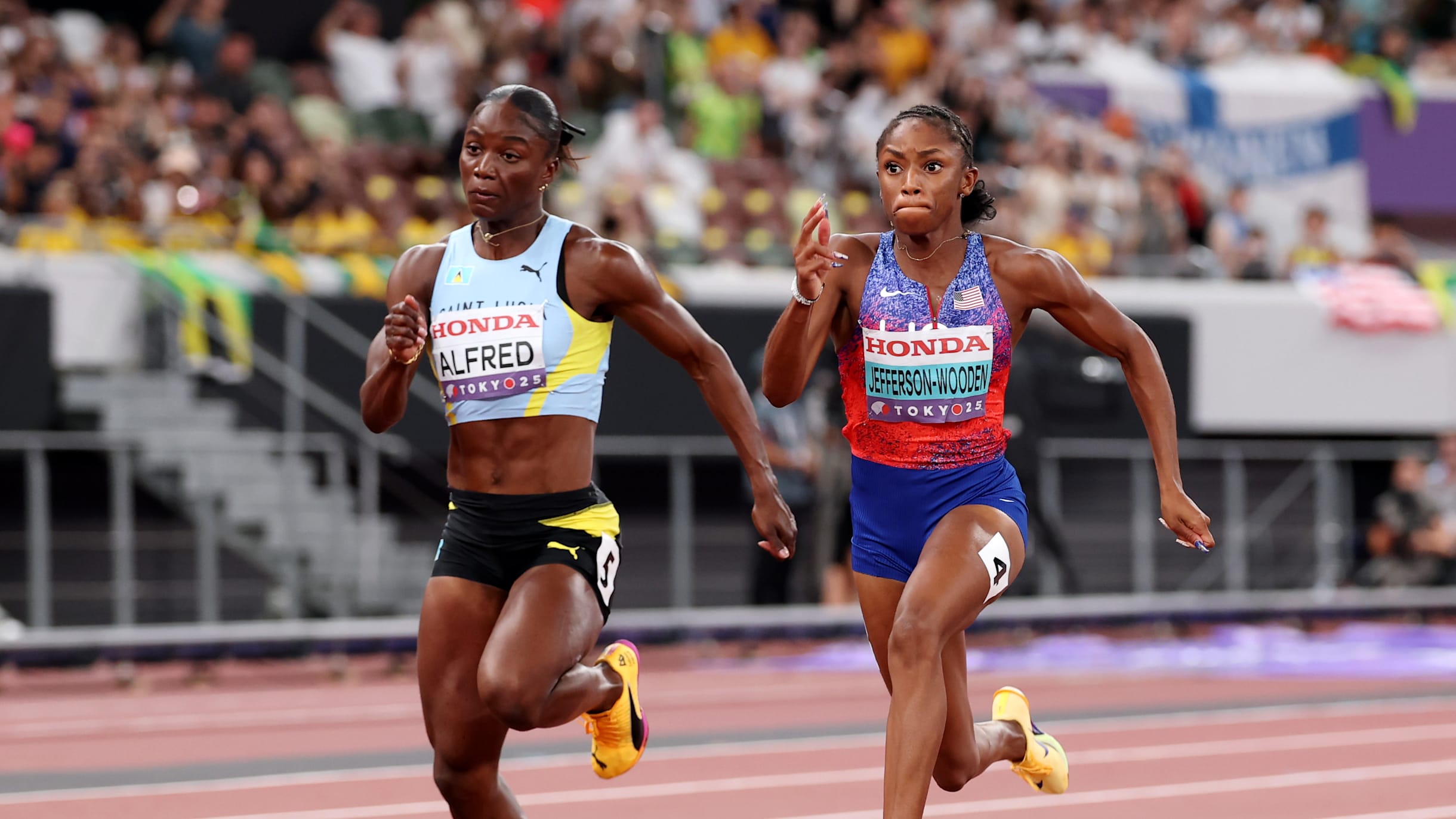
Picture by Patrick Smith/Getty Images
The calendar doesn't lie: there are only a few weeks left in the season and the race for a ticket to the Diamond League Final is tighter than ever. On August 23, Silesia will be the stage where Julien Alfred, Olympic champion and one of the most dominant sprinters of the cycle, faces off against Melissa Jefferson-Wooden in the 100 meters flat. It's not just another race: Jefferson-Wooden arrives just four points behind Patrizia Van der Weken in the overall standings that determines who advances to the grand final in Brussels. Four points. In sprinting, that can be the difference between a slightly slower start or a poorly adjusted stride in the final meters.
For any runner—elite or weekend warrior—races like this are a reminder of something we sometimes forget: athletics is decided by microscopic details, and those details are built through months of invisible work.
The Context
The Diamond League is the most prestigious track and field league in the world, a series of meets that travels across Europe, Asia, and North America throughout the season. Each stop awards points based on athletes' performances in their events, and at the end of the regular season, the top-ranked athletes in each discipline face off at the Final, a highly prestigious event where it's determined who was truly the best of the year.
Silesia, in Poland, is the penultimate stop before that Final in Brussels. This makes it a kind of "final exam before the final exam": athletes who are near the qualification zone need to rack up points there no matter what, because there won't be another opportunity before the cutoff.
That is exactly the drama surrounding Jefferson-Wooden. Being four points behind Van der Weken means that any result in Silesia—a victory, a second-place finish, even a difference of hundredths—can reshuffle the entire board. And with Julien Alfred in the same race, the pressure multiplies: racing against the world's best not only stakes pride on the line, but also the points that define entire seasons.
What Science Says
In pure sprint events like the 100 meters, the margin between winning and falling short of qualification is measured in fractions of a second, and that's where factors come into play that go far beyond talent. Modern sports science has shown that optimizing performance in elite athletes depends on a fine combination of individual variables: from personalized nutrition to fatigue management and recovery between competitions (Sutehall & Pitsiladis, 2025).
Although the 100 meters seems like a "simple" event—run as fast as possible for ten seconds—the preparation behind it is enormously sophisticated. Technology applied to elite sport, including real-time biomechanical and physiological monitoring, has become a key tool for adjusting training loads and preventing injuries in athletes who compete week after week in demanding circuits like the Diamond League (Guppy, Muniz-Pardos & Angeloudis, 2023). When the calendar forces competition at high intensity in multiple cities over a few weeks, smart recovery management becomes as decisive as speed itself.
It's also worth thinking about heat: Silesia in August can present warm conditions, and the evidence is clear that heat acclimatization improves physical performance, something that the technical teams of these athletes are undoubtedly considering in their planning (Lorenzo, Halliwill & Sawka, 2010).
What It Means for You
You're not running the 100 meters against Julien Alfred, but the lesson applies equally: the results you see on the track—those seconds that define medals—are the tip of an iceberg made of small and constant decisions. The difference between being four points ahead or behind is not resolved on race day, it's resolved in the weeks before.
For your own training, this translates into three concrete ideas:
- Take care of the details you don't see on social media: hydration, sleep, and daily nutrition matter as much as hard training (Shirreffs & Sawka, 2011).
- Plan your race calendar with the same logic as an elite team: not all competitions matter equally; identify which are your "Silesias" and prioritize recovery around them.
- If you train or compete in warm climates, give your body time to adapt: heat acclimatization is not optional when you're chasing maximum performance.
On August 23 you're going to see a ten-second race. Behind it, there are months of science, strategy, and silent work. That's the real sport.
References
- "Heat acclimatization improves exercise performance." — Lorenzo S, Halliwill JR, Sawka MN, J Appl Physiol (1985), 2010. https://pubmed.ncbi.nlm.nih.gov/20724560/
- "Fluid and electrolyte needs for training, competition, and recovery." — Shirreffs SM, Sawka MN, J Sports Sci, 2011. https://pubmed.ncbi.nlm.nih.gov/22150427/
- "Personalized Nutrition for the Enhancement of Elite Athletic Performance." — Sutehall S, Pitsiladis Y, Scand J Med Sci Sports, 2025. https://pubmed.ncbi.nlm.nih.gov/40164953/
- "Technology Innovation and Guardrails in Elite Sport: The Future is
Original source
Olympics.com ↗Never miss an edition.
Get the running news brief and analysis straight to your inbox. No spam, unsubscribe anytime.