Jan Frodeno, trail running legend, wins his age category at UTMB OCC
September 9, 2026
Jonathan Turner
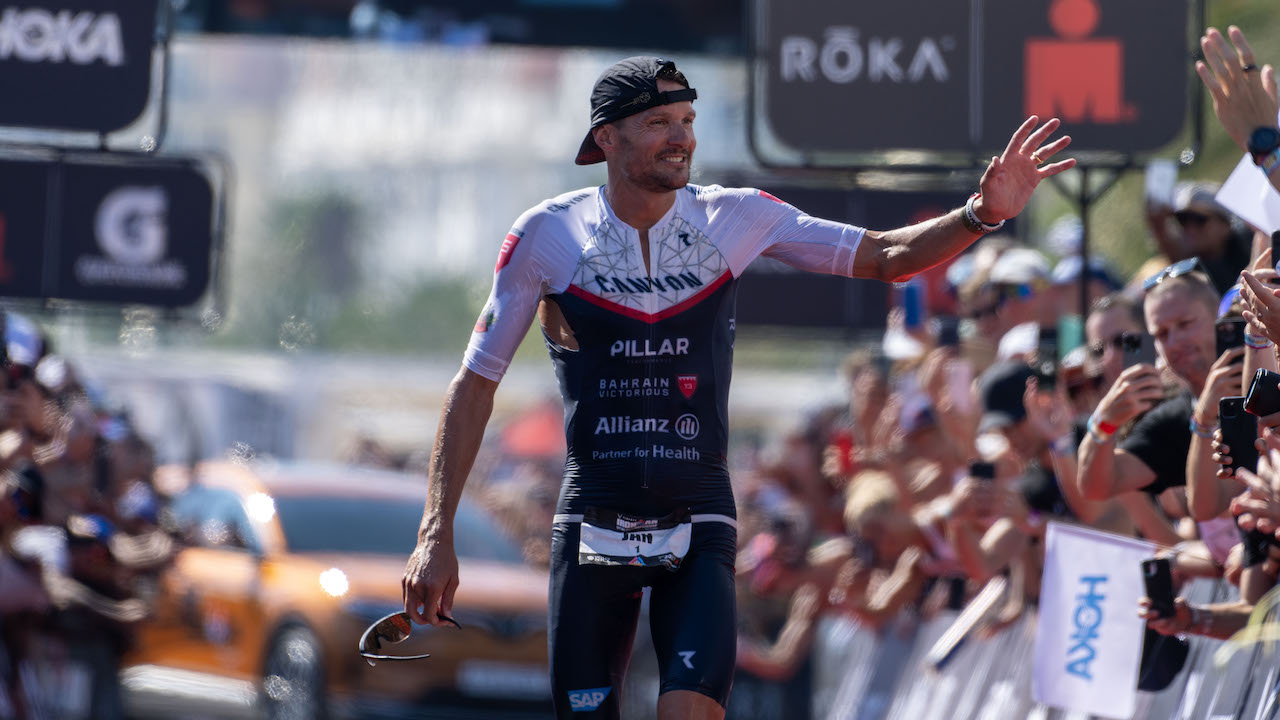
There are athletes who retire to rest, and there are athletes who retire to reinvent themselves. Jan Frodeno clearly belongs to the second category. The German, three-time Ironman World Championship champion and one of the most dominant triathletes of the past decade, just completed the OCC by UTMB—61.4 km and thousands of meters of elevation gain through the French Alps—in 6 hours, 31 minutes and 55 seconds. He won his age category (45-49) by nearly 25 minutes and finished 58th in the overall standings among approximately 2,000 runners. He didn't run to complete it: he ran to compete, and he won.
The news matters because it confirms something that any endurance runner intuits but rarely sees validated by a legend: well-trained endurance is transferable, and trail running has become the new playing field for elite athletes seeking a different challenge without abandoning extreme physical demands.
The context
The UTMB (Ultra-Trail du Mont-Blanc) is, for trail running, what the Ironman in Kona is for triathlon: the mecca. It runs every August in Chamonix, France, and encompasses several races of different distances that circle Mont Blanc, each with its own color code and prestige. The OCC (Orsières-Champex-Chamonix) is one of the "gateways" to the UTMB ecosystem: it's not the premier ultradistance (that's the 171 km UTMB), but with its 61 km and more than 3,500 meters of positive elevation gain, it's demanding, technical, and far from being an "easy" race. It requires leg strength, nutrition and hydration management on changing terrain, and aerobic capacity that many road marathoners would envy.
That Frodeno, a figure who built his career in the most controlled and measurable discipline of endurance sports—swimming, cycling, and running on flat, predictable surfaces—would throw himself into terrain as wild as Alpine trail running, and on top of that win his age category, says much about how high-performance endurance training is a foundation that can be transferred to new contexts. It's no accident: it's the result of years building an "aerobic machine" that now simply applies itself to different terrain.
What the science says
Frodeno's performance isn't magic, it's well-understood physiology. Elite athletes who migrate from one endurance discipline to another typically retain much of their aerobic capacity and movement economy, because cardiovascular adaptations—greater stroke volume, better oxygen extraction, more efficient mitochondria—are not specific to a single sport. What does change, and is where trail demands more, is the neuromuscular component: technical terrain and elevation gain demand eccentric strength in the quadriceps and stabilizers that a road triathlete doesn't train in the same way.
This is where a relevant finding comes in: strength training improves not only running economy, but its "durability," that is, the ability to maintain that efficiency when the body is already fatigued (Zanini et al., 2025). In a race lasting more than six hours, with thousands of meters of downhill that punish the legs, that durability is probably more determining than pure speed in a 5K test.
Pacing and fatigue perception management also play a role. Evidence on pacing in endurance events shows that more experienced runners better regulate their effort throughout the race, avoiding collapse in the final stretches (Cuk et al., 2024; Nikolaidis et al., 2019). An athlete with Frodeno's competitive background—accustomed to reading body signals under extreme pressure—arrives with a huge mental and strategic advantage, even in a sport new to him.
Finally, don't underestimate nutrition. Ultradistance mountain races require carbohydrate strategies very different from a one-day triathlon, with sustained intakes over hours to avoid glycogen depletion (Cao et al., 2025). Executing this without prior trail experience is, in itself, a technical achievement.
What it means for you
You don't need to be a former world champion to apply this lesson: the aerobic base you build in one sport transfers to other endurance challenges. If you run, swim, or cycle consistently, that work doesn't disappear if you decide to try an ultra trail, a mountain marathon, or any other challenge.
But Frodeno's story is also a reminder of what's missing if you want to cross that bridge successfully: adding specific strength work for downhill and uneven terrain, practicing your nutrition in long training sessions before race day, and training pacing with the same seriousness you train your aerobic engine. Endurance is transferable. Execution is less so.
References
- Zanini M, Folland JP, Wu H, et al. "Strength Training Improves Running Economy Durability and Fatigued High-Intensity Performance in Well-Trained Male Runners: A Randomized Control Trial." Med Sci Sports Exerc, 2025. https://pubmed.ncbi.nlm.nih.gov/40016936/
- Cuk I, Markovic S, Weiss K, et al. "Running Variability in Marathon-Evaluation of the Pacing Variables." Medicina (Kaunas), 2024. https://pubmed.ncbi.nlm.nih.gov/38399506/
- Nikolaidis PT, Ćuk I, Knechtle B. "P
Original source
TRI247 ↗Never miss an edition.
Get the running news brief and analysis straight to your inbox. No spam, unsubscribe anytime.