Berlin 2026 reveals its elite list: 25 men under 2:08 and Tigst Assefa leading the women
September 5, 2026
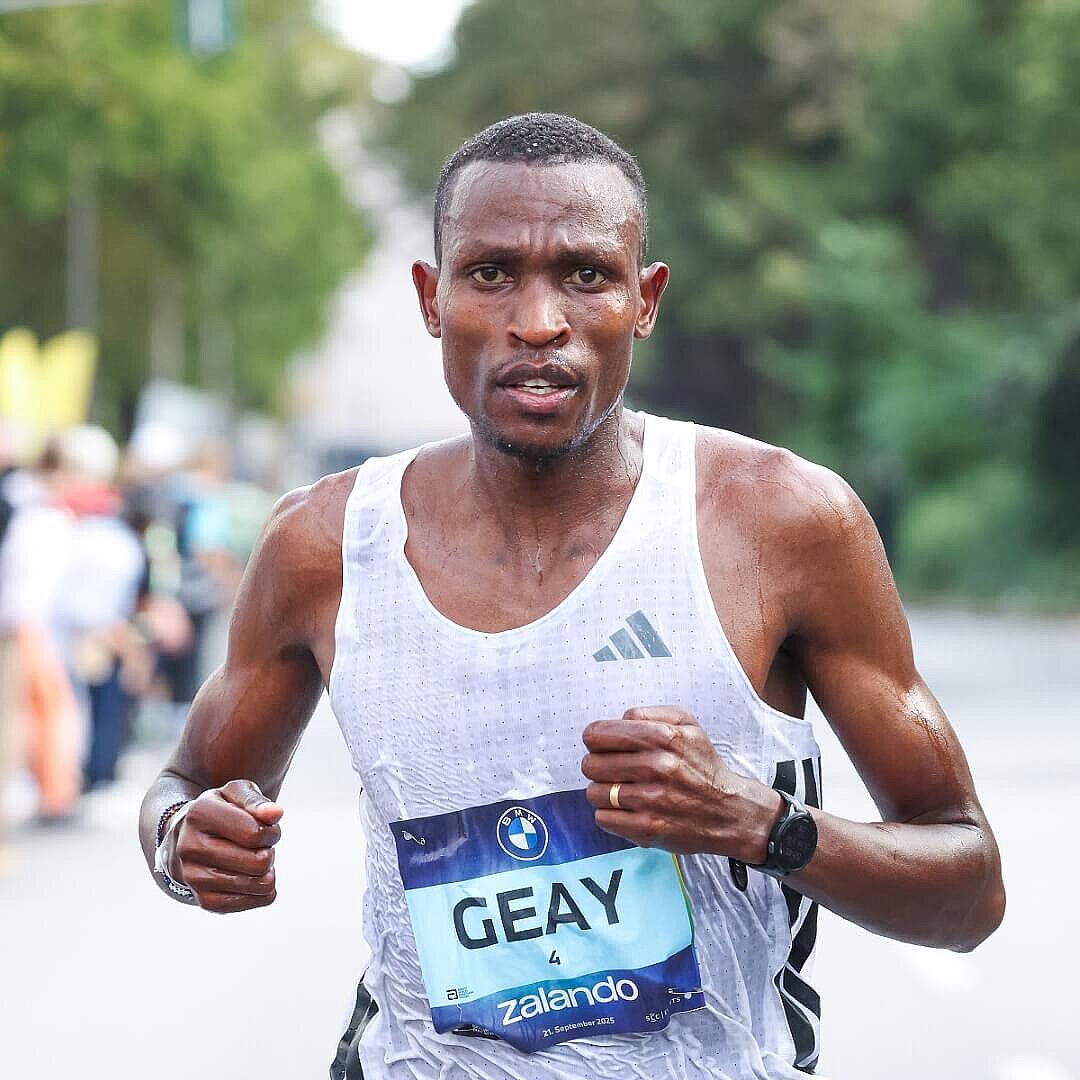
© Victah Sailer @PhotoRun
More than eleven months remain until September 27, 2026, and the Berlin Marathon has already lit the fuse. The organization just confirmed an elite field that, on paper, is from another planet: 25 men capable of running under 2:08:00, six of them already with times under 2:05, and in women, eight runners under 2:20:00 led by Tigst Assefa, the Ethiopian who holds the circuit record with 2:11:53. If you're one of those people who stays up late watching a world record fall live, mark this date: Berlin is historically the place where that happens.
The Context
Berlin is not just another marathon: it's the preferred landing strip for world marathon records. Its course is practically flat, fast, with smooth curves and late-September weather that tends to be cool and stable—just the combination a human body needs to sustain a brutal pace for over two hours. That's where Kipchoge's records fell, where Bekele's fell, and where Assefa's own women's record that she holds today came down.
That the organization announces 25 men under 2:08 is not decorative information: it's a statement of intent. Berlin is building depth, not just stars. That means tactical racing from kilometer one, perfectly calibrated pacemakers, and probably several athletes competing to break 2:03 on the same day. In women's racing, the terrain is equally interesting: Assefa runs at home, defending her own record, surrounded by seven rivals who have already proven they can run under 2:20, a barrier that a decade ago belonged to a handful of runners in the world.
What the Science Says
These super-loaded fields aren't accidents or just talent: they're the result of optimization happening in every corner of training and competition. The science of pacing, for example, shows that elite marathoners handle pace variability very differently from amateurs, maintaining nearly identical splits kilometer to kilometer, which reduces accumulated metabolic wear (Cuk et al., 2024). And there are documented sex differences in how men and women distribute effort in long races, something technical teams now use to design pacemaker strategies specific to each race (Nikolaidis et al., 2019; Besson et al., 2022).
Behind every sub-2:05 mark is also a silent revolution in nutrition. Carbohydrate loading and consumption strategies during the race have become much more aggressive and personalized over the last decade, allowing athletes to sustain high intensities without the dreaded "wall" (Cao et al., 2025). Add to this continuous glucose monitoring, which now allows athletes and technical staff to adjust intake in real time based on how each runner's body responds (Flockhart & Larsen, 2024), and individualized nutritional plans that consider genetics, history, and race context (Sutehall & Pitsiladis, 2025).
There's also a less visible foundation: strength. Recent studies show that strength training improves the "durability" of running economy—that is, the ability to maintain an efficient stride even when the body is already fatigued—exactly what's needed in the final 10 km of an elite marathon (Zanini et al., 2025).
What It Means for You
You're not going to run 2:03, but Berlin's lessons do apply to your training:
- Watch your pacing. The difference between the elite and everyone else isn't just speed: it's consistency. Practice running your long runs with even splits instead of going out fast and suffering at the end.
- Train strength, not just mileage. Two weekly strength sessions can improve your fatigue resistance in the final kilometers.
- Test your nutrition in training, never on race day. Figure out how much carbohydrate you can tolerate per hour long before your goal marathon.
- Watch Berlin as a laboratory. When these athletes compete, pay attention to how they distribute their effort: it's the best free pacing lesson you'll get.
References
- Cuk I, Markovic S, Weiss K. "Running Variability in Marathon-Evaluation of the Pacing Variables." Medicina (Kaunas), 2024. https://pubmed.ncbi.nlm.nih.gov/38399506/
- Nikolaidis PT, Ćuk I, Knechtle B. "Pacing of Women and Men in Half-Marathon and Marathon Races." Medicina (Kaunas), 2019. https://pubmed.ncbi.nlm.nih.gov/30646638/
- Besson T, Macchi R, Rossi J. "Sex Differences in Endurance Running." Sports Med, 2022. https://pubmed.ncbi.nlm.nih.gov/35122632/
- Cao W, He Y, Fu R. "A Review of Carbohydrate Supplementation Approaches and Strategies for Optimizing Performance in Elite Long-Distance Endurance." Nutrients, 2025. https://pubmed.ncbi.nlm.nih.gov/40077786/
- Flockhart M, Larsen FJ. "Continuous Glucose Monitoring in Endurance Athletes." Sports Med, 2024. https://pubmed.ncbi.nlm.nih.gov/37658967/
- Sutehall S, Pitsiladis Y. "Personalized Nutrition for the Enhancement
Original source
Marathon Handbook ↗Never miss an edition.
Get the running news brief and analysis straight to your inbox. No spam, unsubscribe anytime.