Romell Glave Surprises and Wins Gold in the 100 Meters at the Birmingham European Championships
August 12, 2026
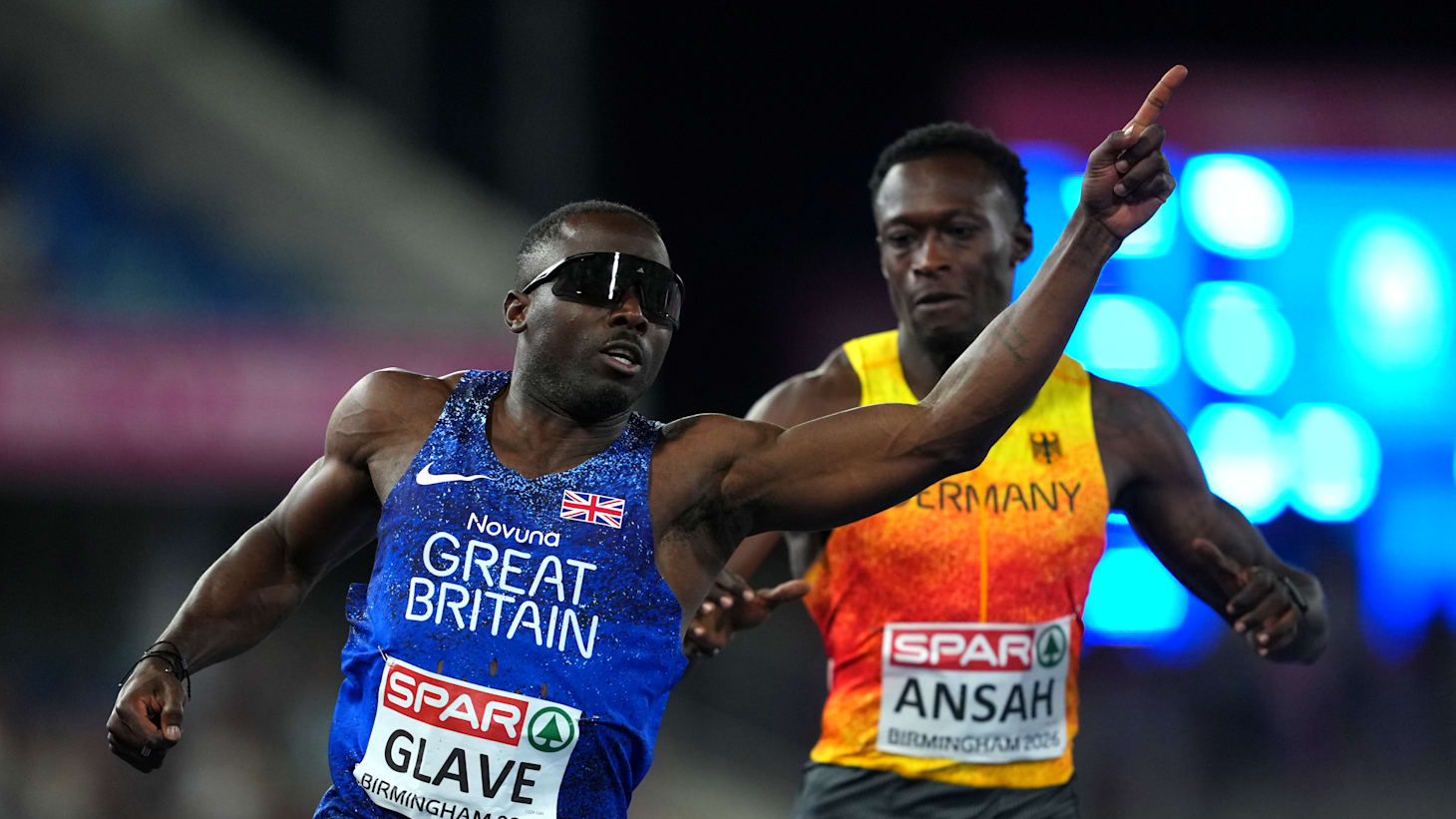
Picture by 2026 Getty Images
Nobody had him in the betting pool. Romell Glave, running in front of his home crowd in Birmingham, crossed the finish line in 10.09 seconds and claimed the European gold medal in the 100 meters on a night that promised to be the stage for the coronation of other names. The surprise felt even greater because Marcell Jacobs, Olympic champion and one of the most high-profile figures in world sprinting, didn't even manage to finish the race, withdrawing due to physical discomfort mid-competition. It's one of those nights that reminds you why athletics, and sport in general, resists pre-written scripts.
The Context
The European Athletics Championship is the most important continental event for sprinters, jumpers, and distance runners in Europe, and it functions as a perfect barometer of the level of athletics on the continent heading toward major global objectives, like World Championships and Olympic Games. Unlike a Diamond League—which brings together a circuit of meets spread across different cities worldwide throughout the season, accumulating points toward a final—the European Championship is a single event with direct elimination, where there's no rematch the following week. That changes everything: psychological pressure skyrockets, and running "at home"—as Glave did in Birmingham—can be a double-edged sword. The roar of the local crowd pushes you forward, but it also adds an extra layer of expectation.
The 100 meters flat, moreover, is the flagship event of athletics: the shortest, the most explosive, and the one that leaves the least room for error. A poor start, a tenth of a second lost in reaction time, a body that doesn't respond the same way under pressure, and the race is decided. That Jacobs, a world-class elite athlete with a history of muscle injuries in his career, withdrew mid-final confirms something every sprinter knows: at this distance, the body doesn't forgive anything.
What the Science Says
The withdrawal of a favorite in the midst of maximum effort is neither coincidence nor pure bad luck; it's usually the consequence of an accumulation of physiological factors and load management that become visible precisely when competitive stress is highest. Elite sports science has been insisting that the margin between a podium finish and an acute injury is getting thinner and thinner, and that personalized training and recovery is the only way to sustain performance over a demanding season (Sutehall & Pitsiladis, 2025).
One aspect that also comes into play in tests of maximum explosivity is neuromuscular durability: how well an athlete maintains their power and technique when the system is already under fatigue or accumulated tension. Recent research on strength training in runners shows that working on strength systematically improves running economy and performance under fatigue conditions, meaning it helps the body respond more consistently when it matters most (Zanini et al., 2025). Although that study focused on distance runners, the principle behind it—that a more robust neuromuscular system tolerates extreme stress better—is transferable to any discipline where the body is pushed to the limit in seconds.
It's also worth considering the role of modern technology in monitoring elite athletes: sensors, wearables, and real-time data analysis now allow teams to detect signs of fatigue or risk before they turn into a visible injury during competition, a trend that's already transforming how technical staffs make decisions about when an athlete should pull back in time (Guppy et al., 2023).
What It Means for You
You don't need to run 100 meters in a European final to learn from this night. These are the lessons that do apply to your training:
- Listen to the early warning signs. If you feel muscle discomfort before an important race, don't ignore it because of the pressure of the moment. Elite athletes withdraw too; doing so in time is a smart decision, not a defeat.
- Strength training is not optional. Adding strength work to your routine, whether you run 5K or a half marathon, improves your muscular resilience and protects you when fatigue accumulates in the final stages.
- Prepare your mind for pressure, not just your body. Competing at home, with your own crowd, adds expectation. Practice visualization and pre-race routines that help you manage that extra energy without letting it overwhelm you.
- Don't underestimate the unpredictable. The result of a race is never guaranteed on paper. Preparing well means controlling what's controllable; the rest, run with an open mind.
References
- "Personalized Nutrition for the Enhancement of Elite Athletic Performance." Sutehall S, Pitsiladis Y, Scand J Med Sci Sports, 2025. https://pubmed.ncbi.nlm.nih.gov/40164953/
- "Strength Training Improves Running Economy Durability and Fatigued High-Intensity Performance in Well-Trained Male Runners: A Randomized Control Trial." Zanini M, Folland JP, Wu H, Med Sci Sports Exerc, 2025. https://pubmed.ncbi.nlm.nih.gov/40016936/
- "Technology Innovation and Guardrails in Elite Sport: The Future is Now." Guppy F, Muniz-Pardos B, Angeloudis K, Sports Med, 2023. https://pubmed.ncbi.nlm.nih.gov/37787844/
Original source
Olympics.com ↗Never miss an edition.
Get the running news brief and analysis straight to your inbox. No spam, unsubscribe anytime.