Pogačar Officially Confirms His Participation in the 2026 Vuelta a España
August 10, 2026
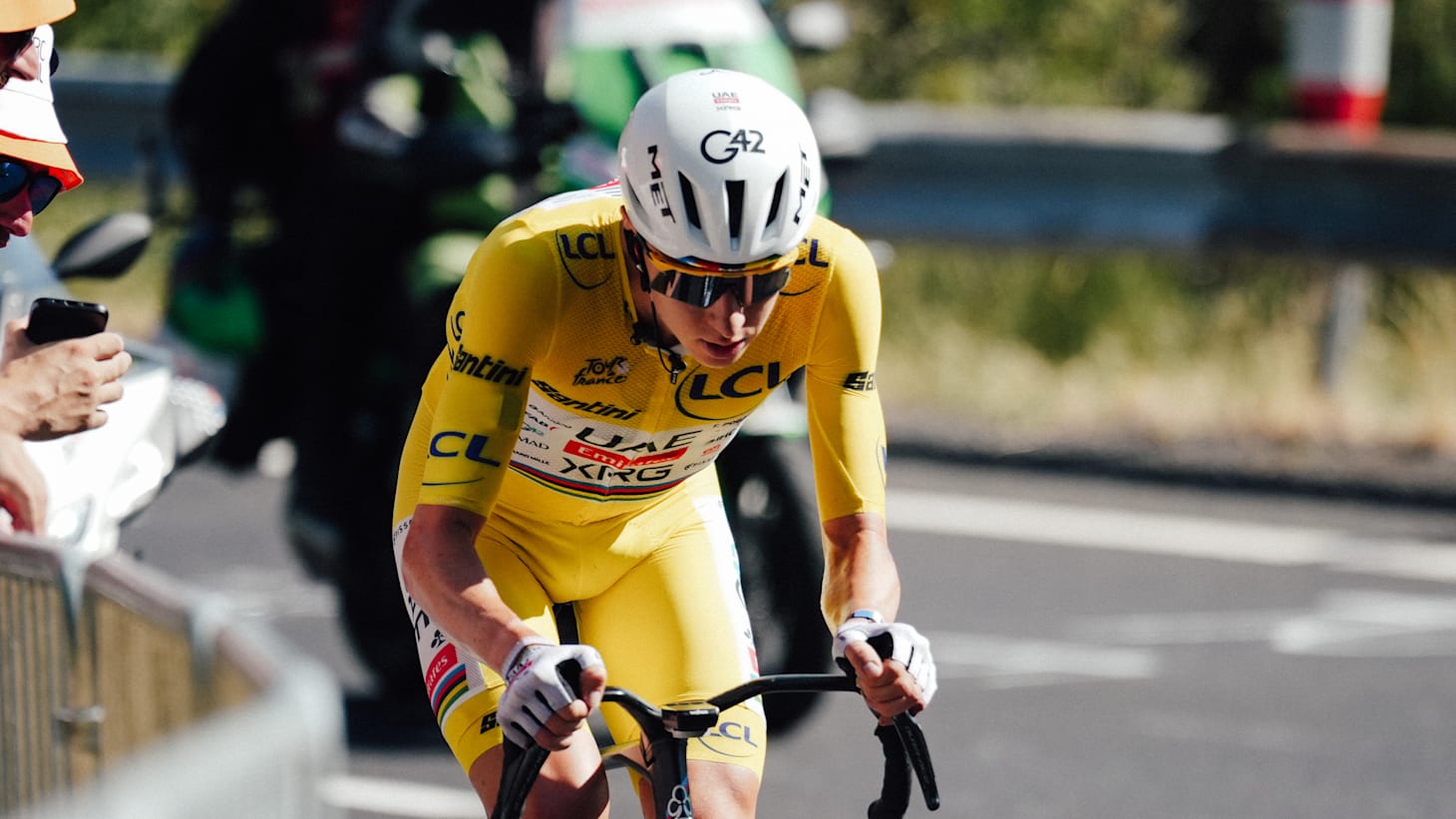
Picture by A.S.O./ThomasMaheux
The speculation is over. UAE Team Emirates-XRG confirmed what half the peloton suspected since July: Tadej Pogačar will race the 2026 Vuelta a España. The Slovenian, who just added his fifth Tour de France, now has an objective that transcends individual victories: completing the historic triple crown of winning the Giro, Tour, and Vuelta throughout his career. He's missing exactly one piece, and he's already chosen when to go get it.
For any endurance sports fan, this isn't just "another cyclist in another race." It's the best rider of his generation—possibly of recent history—exposing himself to the physical and mental wear that few dare to plan this far in advance. And there lies the lesson we care about: managing accumulated fatigue, long-term periodization, and strategic decision-making around the body, not just talent.
The Context
The three Grand Tours of cycling—Giro d'Italia, Tour de France, and Vuelta a España—are the equivalent of an ultramarathon spread over three weeks, with mountain stages, time trials, and sprints that demand different energy systems day after day. Winning one is hard. Winning all three throughout a career—what's informally known as completing the "collection"—is an incredibly exclusive club of legends.
Pogačar already has the Giro (2024) and the Tour (2020, 2021, 2024, 2025, and now also this year just confirmed). The Vuelta, traditionally the last of the three on the calendar (August-September) and the one raced with a body already beaten down by the season, is his unfinished business. Announcing it nearly a year in advance is no accident: it allows his team to design a calendar of performance peaks, training loads, and recovery specifically aimed at arriving fresh for that appointment without sacrificing other seasonal objectives (Classics, Tour, Worlds).
It's, at its core, an exercise in elite-level periodization: deciding a year in advance exactly when you're going to expose your body to maximum stress, and working backward from there.
What the Science Says
What makes an athlete like Pogačar unique isn't just the engine: it's the ability to sustain performance when fatigue is already setting in. A recent study in well-trained runners showed that strength work specifically improves the "durability" of running economy and high-intensity performance when the body is already fatigued (Zanini et al., Med Sci Sports Exerc, 2025). Translated to three-week cycling, it's exactly the type of adaptation that separates someone who wins the first week from someone who keeps winning in the third.
Nutrition also plays a central role in races of this duration. Evidence on carbohydrate supplementation strategies in elite endurance sports (Cao et al., Nutrients, 2025) confirms that sustained energy availability—not just in one stage, but day after day for weeks—is decisive for avoiding the metabolic collapse that ruins so many riders in the third week of a tour. Add to this continuous glucose monitoring, increasingly used by elite teams to adjust intake in real time based on the demands of each stage (Flockhart & Larsen, Sports Med, 2024).
And don't underestimate the environmental factor: the Vuelta is raced in the middle of Spanish summer, with stages of extreme heat in the interior peninsula. Heat acclimatization measurably improves endurance performance (Lorenzo, Halliwill & Sawka, J Appl Physiol, 2010), and managing fluids and electrolytes in those conditions isn't a minor detail but a variable that can decide the general classification (Shirreffs & Sawka, J Sports Sci, 2011).
What It Means for You
You're not going to race the Vuelta, but the logic behind this decision applies to any major objective you have on your calendar, whether it's a marathon, an ultra, or a mountain race:
- Plan with real anticipation. Pogačar and his team didn't decide this last week. If you have a goal race in six months or a year, start building backward from there, not when it's already close.
- Incorporate strength if your goal is long-duration. The evidence is clear: strength training improves your ability to maintain pace when you're already tired, which is exactly where long races are won or lost.
- Don't underestimate heat or hydration. If your goal race is in summer, heat acclimatization and a hydration strategy thought through weeks in advance can be the difference between finishing strong or suffering unnecessarily.
- Sustained energy matters more than a single peak. Practice your carbohydrate strategy in long training sessions, don't save it for race day.
References
- Zanini M, Folland JP, Wu H, et al. "Strength Training Improves Running Economy Durability and Fatigued High-Intensity Performance in Well-Trained Male Runners: A Randomized Control Trial." Med Sci Sports Exerc, 2025. https://pubmed.ncbi.nlm.nih.gov/40016936/
- Cao W, He Y, Fu R, et al. "A Review of Carbohydrate Supplementation Approaches and Strategies for Optimizing
Original source
Olympics.com ↗Never miss an edition.
Get the running news brief and analysis straight to your inbox. No spam, unsubscribe anytime.