Neeraj Chopra Falls Again to Rumesh Tharanga in Lausana Javelin
August 22, 2026
Picture by 2026 Getty Images
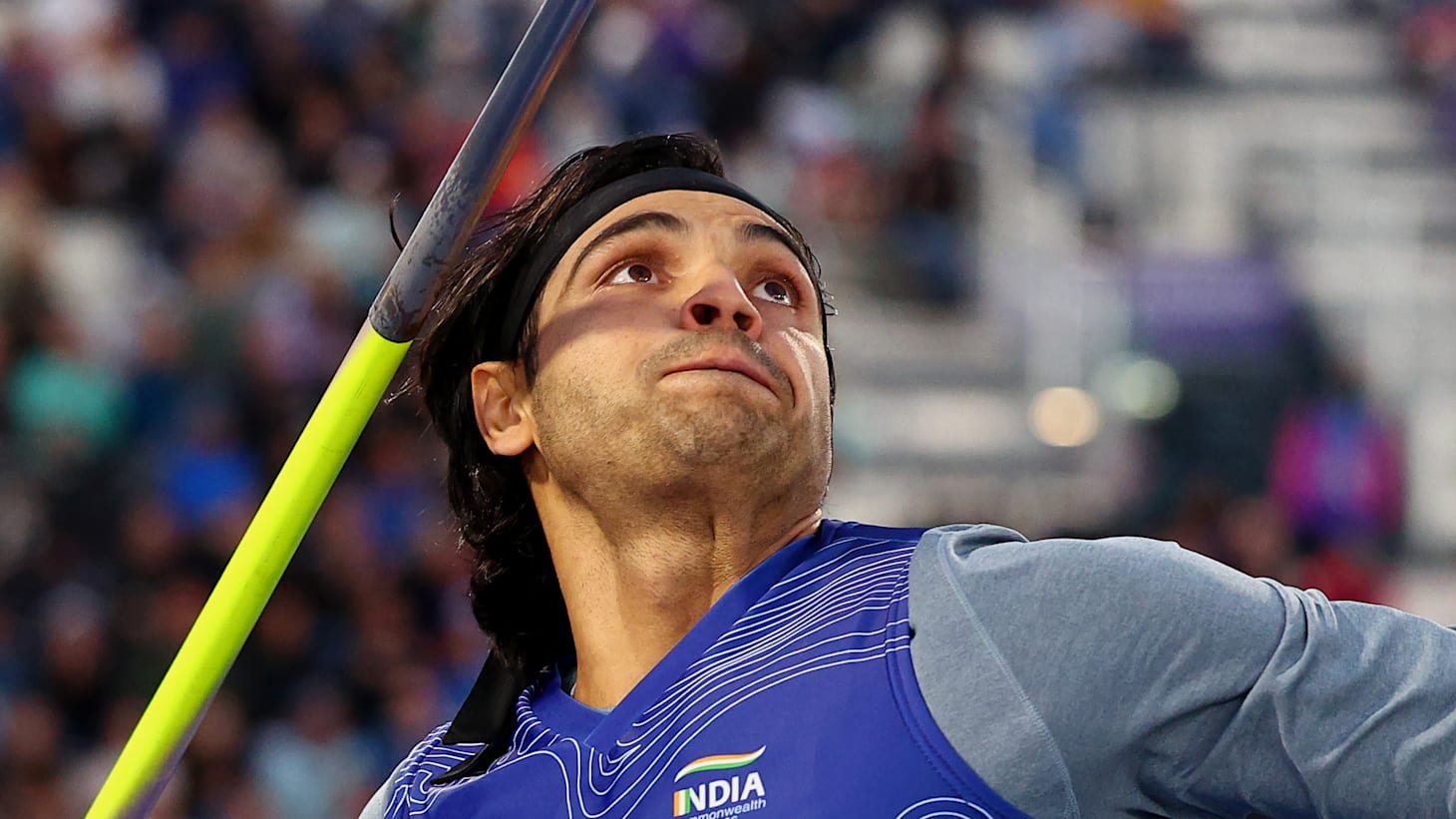
Neeraj Chopra did what he does best: threw far, with that polished technique that made him an Olympic champion. His season-best mark of 88.05 meters would have been enough to win almost any other competition on the circuit. But in Lausana it wasn't enough. Rumesh Tharanga, the Sri Lankan who has become his new nightmare, responded with 88.14 meters to take gold by just nine centimeters. It is the fourth consecutive time—since the Tokyo World Championships—that Tharanga has defeated Chopra. What once seemed like an isolated result is now, officially, a rivalry.
For anyone who follows track and field, this is a signal that the power map in javelin is shifting. And even though you don't throw javelins, there are lessons here that serve every runner who competes against themselves, against a rival, or against the clock.
The Context
The Diamond League is the most prestigious track and field league in the world outside the Olympic Games and World Championships: a series of elite meets, spread across cities like Lausana, Monaco, London, and Zurich, where the world's best athletes accumulate points toward the September final. Winning a Diamond League competition is not just any trophy; it is a declaration of form and relevance against your direct rivals, in real time, season after season.
Chopra, Olympic champion in Tokyo 2021 and one of the most important figures Indian track and field has produced, has been for years the name to beat in javelin. But elite sport is cyclical: rivals study, adjust, improve. Tharanga, with this victory, adds his third Diamond League title in 2026 and confirms that this is not a matter of luck, but a pattern. Four consecutive losses to the same rival, even throwing near your best mark, is the kind of data that forces an athlete and his coaching team to review everything: training, peak performance, and even the small margins that separate one medal from another.
What the Science Says
What is fascinating about this type of duel is that they are decided by centimeters, and centimeters in elite sport no longer depend solely on brute force. Modern sports science has made clear that peak performance is the sum of dozens of fine variables: individualized nutrition, recovery, fatigue management, and even technology that monitors the athlete day by day.
One key aspect—though little visible in broadcasts—is personalization. Recent research on nutrition for elite athletes (Sutehall & Pitsiladis, 2025) emphasizes that it is no longer enough to follow generic protocols: the individual response to training load, hydration, and nutritional timing can make the difference between repeating your best mark and surpassing it by those centimeters that separate gold from silver. In explosive events like javelin, where a single throw defines the result, consistency in execution under pressure—something trained both physically and mentally—is as important as technique.
It is also worth looking at the role of technology in elite sport (Guppy et al., 2023): today, coaching teams use biomechanical data and wearables to adjust micro-details of technique and training load, seeking exactly those minimal margins that in Lausana decided the competition. Chopra did not lose due to lack of talent or preparation; he lost by a margin that modern sports science constantly tries to reduce, without ever eliminating it entirely, because in the end sport remains human.
What It Means for You
You are not competing for an Olympic medal, but the lesson applies the same: results do not always reflect whether you did things well. Chopra threw his best mark of the year and still lost. That is not failure, that is high-level competition, and it reminds you that process matters more than the single result.
If you come from a race where you gave your best time of the year and still did not achieve your goal—you did not break that psychological barrier, you did not beat that rival from your club—do not punish yourself. Review the process: was your nutrition aligned with the demands of the day? Did you arrive rested or accumulating fatigue? Science is clear that recovery and hydration (Shirreffs & Sawka, 2011) are as decisive as training itself, and often they are the invisible margin that decides a close race.
Take Chopra as an example of resilience: four consecutive losses to the same rival, and he keeps throwing near his personal ceiling. That is what separates a serious athlete from one who gives up after a single bad result: the ability to keep trusting the process while adjusting what is necessary to eventually win by those same centimeters that today left him short.
References
- "Personalized Nutrition for the Enhancement of Elite Athletic Performance." — Sutehall S, Pitsiladis Y, Scand J Med Sci Sports 2025. https://pubmed.ncbi.nlm.nih.gov/40164953/
- "Technology Innovation and Guardrails in Elite Sport: The Future is Now." — Guppy F, Muniz-Pardos B, Angeloudis K, Sports Med 2023. https://pubmed.ncbi.nlm.nih.gov/37787844/
- "Fluid and electrolyte needs for training, competition, and recovery." — Shir
Original source
Olympics.com ↗Never miss an edition.
Get the running news brief and analysis straight to your inbox. No spam, unsubscribe anytime.