The 2026 Continental Tour reaches record calendar with over 280 meetings
September 7, 2026
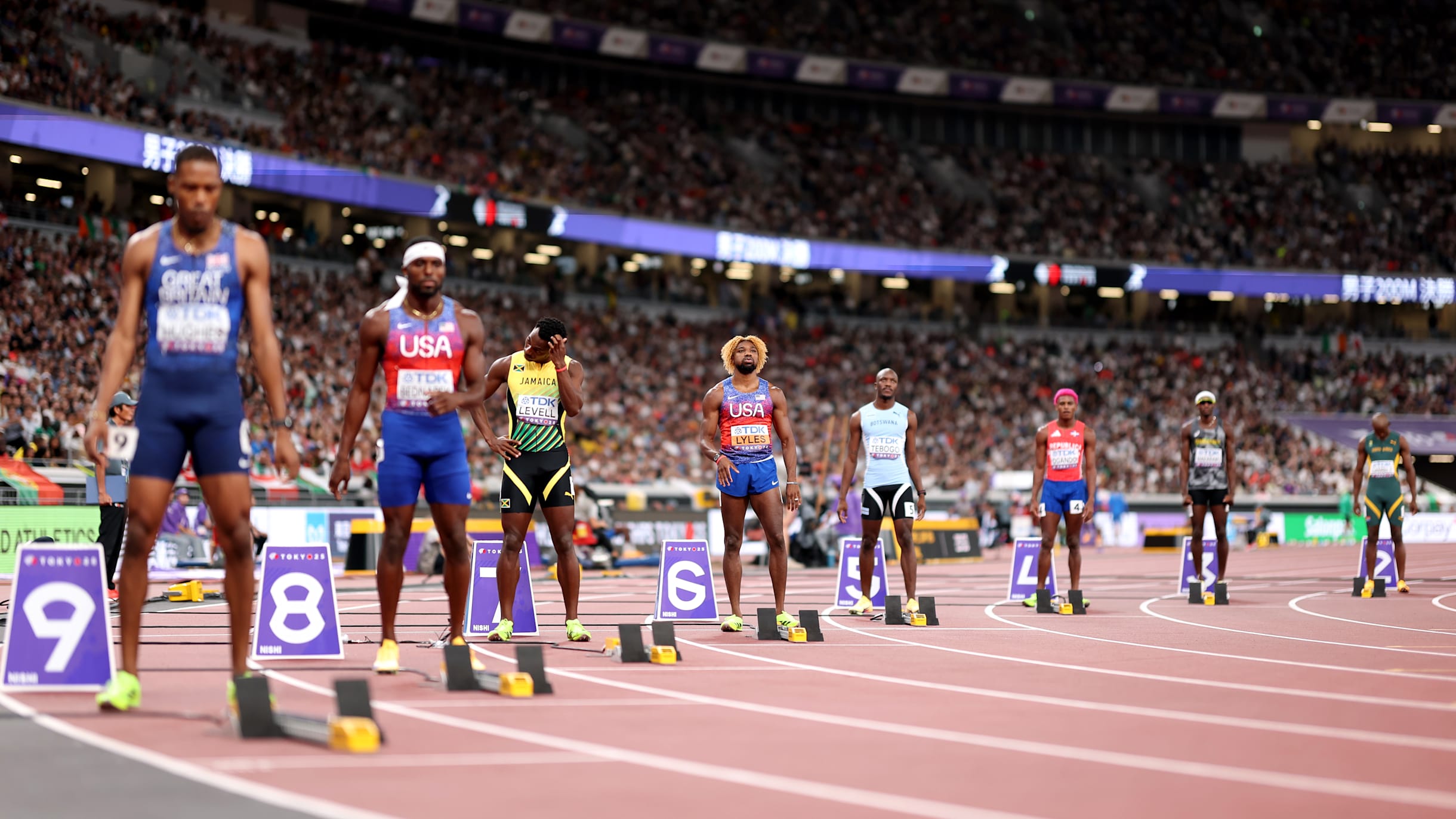
Picture by 2025 Getty Images
If you ever thought that track and distance running was a sport reserved for Europe and the United States, it's time to update your mental map. World Athletics just confirmed that its 2026 Continental Tour will have over 280 meetings spread across four categories—Gold, Silver, Bronze, and Challenger—and, for the first time, countries like Egypt, Ethiopia, South Korea, Lesotho, Oman, and Saudi Arabia will host official competitions. For you, who run and follow the sport, this isn't just trivia: it means more opportunities to see (and maybe run) international-level races close to home, more pathways for emerging athletes from historically underrepresented regions, and a calendar that's finally starting to reflect the true global geography of running.
The context
The Continental Tour is the structure World Athletics uses to organize the global circuit of meetings outside the absolute elite of the Diamond League. It works as a tiered system: Gold meetings are the most competitive and offer more points toward the world ranking, followed by Silver, Bronze, and at the base, Challenger events, which serve as a training ground for developing athletes and federations with less tradition in the sport.
Why does this pyramid system matter? Because it gives a runner from Lesotho or Oman, for example, the chance to compete in their own country against international rivals, earn ranking points, and eventually qualify for events like the World Championships or the Olympic Games, without needing to travel thousands of kilometers for their first international experience. The expansion to over 280 dates—a historic figure—confirms a trend that athletics has been pursuing for years: decentralizing the calendar and moving it away from its traditional Euro-North American axis.
The addition of host cities like Egypt, Ethiopia, and Saudi Arabia also has a strategic dimension. Ethiopia is a global powerhouse in distance running, but has rarely hosted international meetings of this caliber; now its own athletes will be able to compete at home, with the crowd, climate, and altitude they know. And the arrival of the Middle East and Southeast Asia on the map confirms that the sport is investing in markets where running is growing fast, both in participation and in audience.
What the science says
More venues across more geographies also means more environmental variability for athletes: extreme heat in the Gulf, altitude in the Horn of Africa, humidity in Southeast Asia. Performance science has quite a bit to say here. Heat acclimatization, for example, is one of the most studied and effective interventions for improving performance and physiological tolerance in adverse conditions: the body adjusts its plasma volume, sweating rate, and perceived effort when progressively exposed to hot environments (Lorenzo et al., 2010). For athletes who now must travel to venues like Oman or Saudi Arabia, this is not a minor detail: arriving in advance and training heat exposure could be the difference between a good result and heat collapse.
Linked to this is fluid and electrolyte management, which becomes critical when conditions change from one meeting to another within weeks (Shirreffs & Sawka, 2011). And equally important: personalized nutrition, a field that has grown exponentially in recent years as a tool to optimize elite performance considering individual variables like genetics, environment, and training load (Sutehall & Pitsiladis, 2025). A geographically more dispersed calendar demands that technical teams think about preparation not only in terms of intervals and miles, but physiological logistics.
What it means for you
You don't need to be an elite athlete to benefit from this news. First, if you follow track and field as a spectator or fan, you'll have access to more competitions broadcast from places that never appeared on the calendar before, which broadens your view of who the new generation of runners in the world are.
Second, if you're an amateur runner with ambitions to compete internationally someday, this kind of expansion democratizes access: the Bronze and Challenger categories exist precisely to take that first step. And third, the broader lesson applies to any runner who travels to compete in climates different from their own: plan your acclimatization well in advance, adjust your hydration to the specific environment, and don't underestimate the environmental factor as a performance variable, regardless of whether your "international meeting" is a marathon in another city or a 10K race in another continent.
References
- Lorenzo S, Halliwill JR, Sawka MN. "Heat acclimation improves exercise performance." J Appl Physiol, 2010. https://pubmed.ncbi.nlm.nih.gov/20724560/
- Shirreffs SM, Sawka MN. "Fluid and electrolyte needs for training, competition, and recovery." J Sports Sci, 2011. https://pubmed.ncbi.nlm.nih.gov/22150427/
- Sutehall S, Pitsiladis Y. "Personalized Nutrition for the Enhancement of Elite Athletic Performance." Scand J Med Sci Sports, 2025. https://pubmed.ncbi.nlm.nih.gov/40164953/
Original source
Olympics.com ↗Never miss an edition.
Get the running news brief and analysis straight to your inbox. No spam, unsubscribe anytime.