Duplantis Prepares for His World Record Attempt in Pole Vault on the Streets of Lausana
August 20, 2026
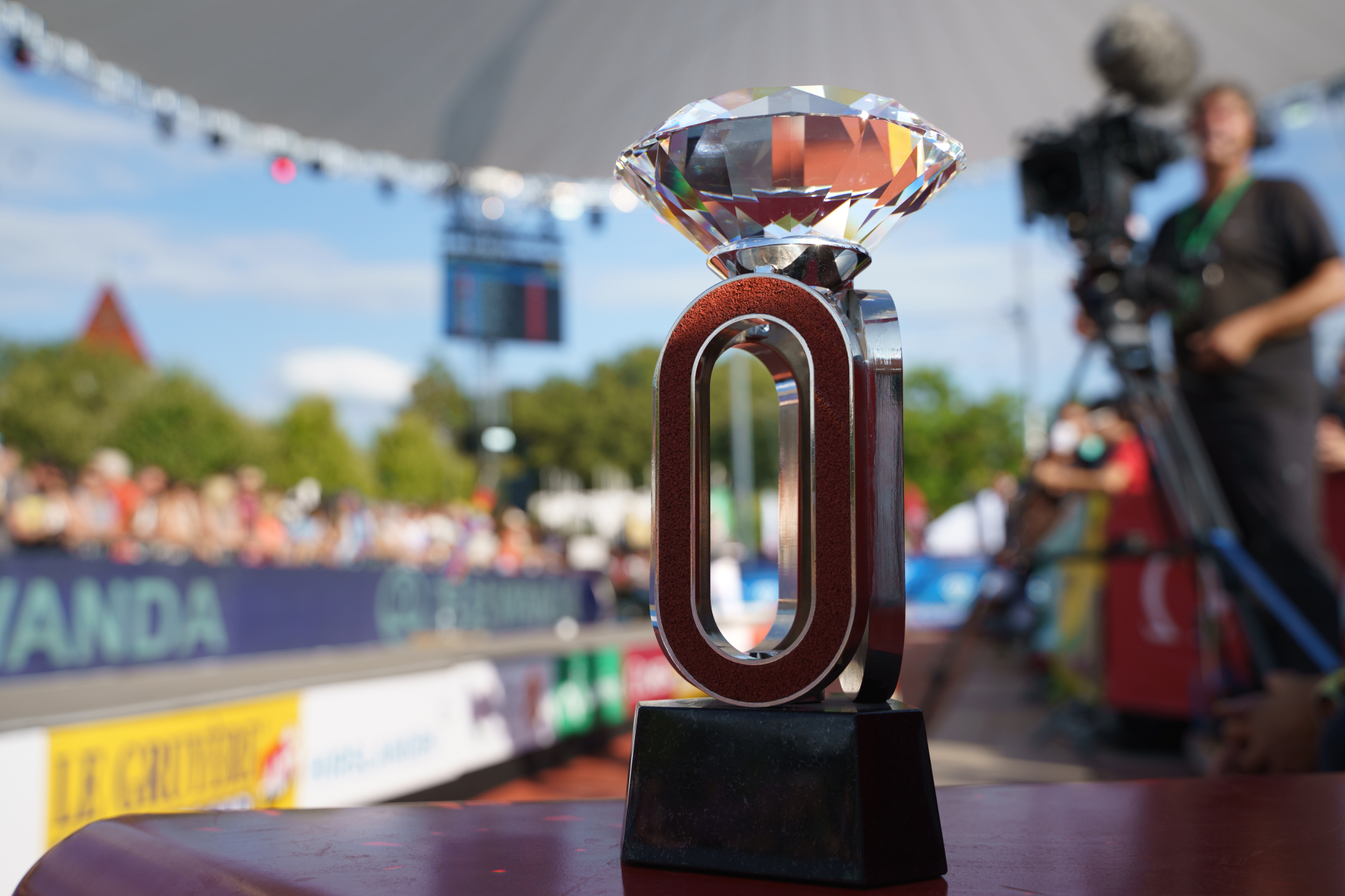
Foto vía Wanda Diamond League
Any given Thursday, on the shores of Lake Geneva, people walking through Lausana are going to come across something unusual: a man attempting to fly over a fiberglass rod at more than six meters high, for free, right in the middle of the street. Armand Duplantis, the Swede who rewrote the rules of pole vaulting, is moving up his performance one day ahead of the official Diamond League kickoff at Athletissima. It's not a simple promotional show — it's the prelude to another possible world record, something that at this point already seems to be his routine rather than the exception.
The Context
The Diamond League is the world's most prestigious athletics circuit: fourteen meets spread across iconic cities where the best specialists in each discipline compete, accumulating points toward a season finale. Lausana, with Athletissima, is one of the classic stops — a meet with history, a summer European calendar, and always packed with top-tier figures. This year's lineup includes Letsile Tebogo, the Botswanan sprinter who shook up the 200m, and Audrey Werro, one of the Swiss revelations in the 800m.
But what really generates anticipation is the parallel event: Duplantis vaulting in an urban setting, without the traditional stadium grandstands, seeking once again to surpass his own mark. Since he debuted as a record holder, the Swede has turned every competition into a hunt for that extra centimeter. He no longer competes against rivals — he competes against himself, and that duel has become the great spectacle of world athletics. Taking that duel to the street, free and accessible, is a smart move: it brings a technical and sometimes insular sport to the masses, generating the kind of viral moment that athletics needs to compete for attention in the era of infinite scrolling.
What the Science Says
Pole vaulting is, in essence, a physics problem solved with the human body: approach velocity, conversion of kinetic energy into potential energy, and millimetric technique at the moment of takeoff. There's no study that tells you "how to jump six meters with a pole," but there are sports science principles that explain why athletes like Duplantis manage to perform at their peak, competition after competition, with no signs of stagnation.
One of the least visible but most decisive factors is environmental management: temperature, hydration, and precision nutrition. Research on heat acclimatization shows that the body improves its capacity to perform under thermal stress conditions when progressively exposed to them (Lorenzo et al., 2010), something relevant for athletes competing in multiple cities and climates within weeks, as happens on the Diamond League circuit. To this we can add evidence on hydration and electrolytes during competition (Shirreffs & Sawka, 2011): small imbalances can cost the tenth of a second or the centimeter that separates a successful attempt from a failed one.
It's also worth mentioning the growing role of personalized nutrition in elite sport. A recent review (Sutehall & Pitsiladis, 2025) suggests that the future of ultra-high-level performance lies not only in technical training, but in adjusting nutrition to the individual metabolic profile of the athlete — something that teams like Duplantis's, with cutting-edge resources, are already applying routinely.
What It Means for You
You're not going to jump six meters this week (nor should you), but the logic behind Duplantis's performance applies to any recreational runner or athlete who wants to seriously improve:
- Prepare the ground before the big day. If you're going to compete in a place with a climate different from yours, give your body a few days of prior exposure. Acclimatization is not a luxury of the elite, it's basic biology.
- Hydration doesn't improvise. Define your fluid and electrolyte strategy before the race, not in the start line.
- Personalize, don't copy. What works for a world record holder doesn't necessarily work for you. Adjust nutrition and training load to your own body and goals.
- Spectacle also trains the mind. Watching Duplantis compete on the street, without the pressure of a packed stadium, is a reminder that confidence is built by competing in varied contexts, not just on the "important" day.
References
- "Heat acclimation improves exercise performance." Lorenzo S, Halliwill JR, Sawka MN, J Appl Physiol, 2010. https://pubmed.ncbi.nlm.nih.gov/20724560/
- "Fluid and electrolyte needs for training, competition, and recovery." Shirreffs SM, Sawka MN, J Sports Sci, 2011. https://pubmed.ncbi.nlm.nih.gov/22150427/
- "Personalized Nutrition for the Enhancement of Elite Athletic Performance." Sutehall S, Pitsiladis Y, Scand J Med Sci Sports, 2025. https://pubmed.ncbi.nlm.nih.gov/40164953/
Original source
Wanda Diamond League ↗Never miss an edition.
Get the running news brief and analysis straight to your inbox. No spam, unsubscribe anytime.