World Athletics Ultimate Championship Debuted in Budapest with Revolutionary Format
September 30, 2026
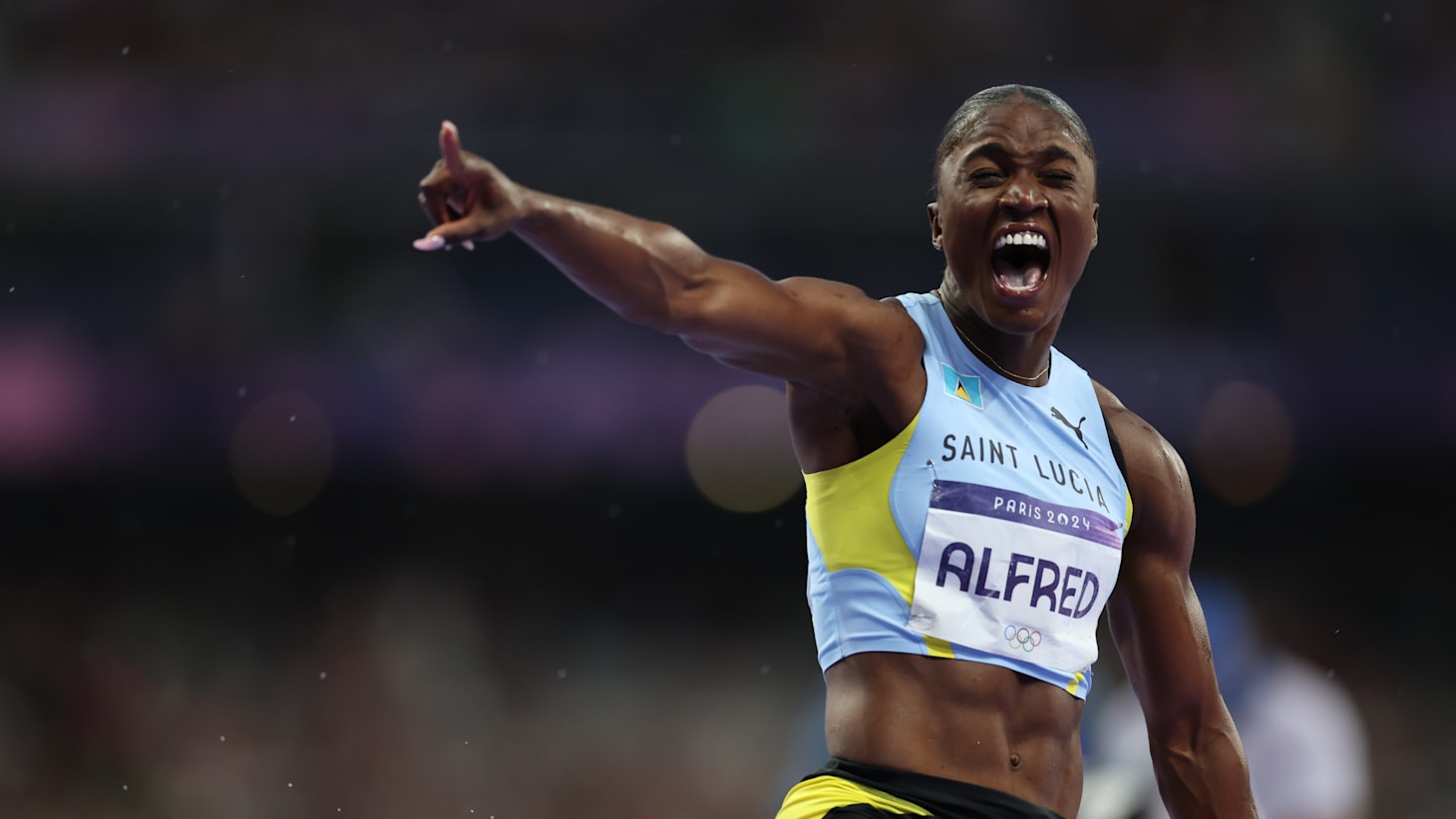
Picture by 2024 Getty Images
Budapest witnessed, from September 11–13, something athletics had never seen before: a championship where only the very best compete. No mass qualifying rounds, no endless elimination heats. Sebastian Coe, president of World Athletics, designed the Ultimate Championship as a direct final between Olympic champions, world champions, and Diamond League winners, with $10 million in prize money distributed over a single weekend. Armand Duplantis flying in the pole vault, Femke Bol dominating the 400 hurdles, Letsile Tebogo proving why he's the heir to African speed. If you're passionate about running and track and field, this wasn't just another season-closing event: it was an experiment in how elite sport should look in the future.
The Context
To understand why this matters, you have to understand the problem Coe tried to solve. The traditional athletics calendar is saturated: Diamond League, continental championships, world championships, Olympic Games. For the average fan, it's hard to know which competition really matters and which is "just another one." Plus, the world's best athletes often don't compete against each other for months because they're scattered across different meets with schedules that don't align.
The Ultimate Championship attacks that problem with surgical precision: no qualifying rounds, no filler athletes. Only those who've already proven themselves to be number one on the planet in their event that season get in. It's essentially a "star-studded playoff" in the style of North American professional leagues—something athletics, a sport traditionally conservative in its format, had never attempted on this scale.
The $10 million prize purse also sends a message: World Athletics is betting big to compete for media attention against other spectacle sports, and to retain its stars in a landscape where road running and endurance racing are taking the spotlight away from classic track.
What the Science Says
This kind of concentrated format—maximum intensity, minimum number of events, compressed into a short window of days—isn't accidental. Evidence in elite sports physiology shows that maximum performance depends on extremely fine-tuned preparation: from heat and hydration management (Lorenzo et al., 2010; Shirreffs & Sawka, 2011) to personalized nutrition protocols that today use continuous glucose monitoring and individualized carbohydrate strategies to sustain performance in high-demand competition (Sutehall & Pitsiladis, 2025; Flockhart & Larsen, 2024; Cao et al., 2025).
Moreover, a championship like this—where there's no room to "hold back" for the next round—forces athletes to manage fatigue differently. The science of pacing and fatigue development during self-regulated exercise (Azevedo et al., 2021) explains why watching Duplantis or Bol compete in an "all-or-nothing" format produces such high marks: no conservative strategy is possible when every race is the final.
It's also worth mentioning the growing role of technology in elite sport—wearables, sensors, real-time data—which now allows coaching staffs to make more precise decisions about load and recovery in high-density competitive events like this one (Guppy et al., 2023).
What It Means for You
You won't be competing for $10 million this weekend, but the principle behind the Ultimate Championship does apply to you: quality beats quantity. If your racing calendar is packed with "filler" competitions, you're probably not bringing your best self to any of them. Pick 2 or 3 real objectives per season and structure your training—including strength work, which improves running economy and sustains performance under fatigue (Zanini et al., 2025)—around those peaks instead of scattering your energy.
And if you're someone who runs a race every month "because it's there," take note from Duplantis and Bol: the world's best prioritize quality over quantity of competitions. You can too.
References
- Lorenzo S, Halliwill JR, Sawka MN. "Heat acclimation improves exercise performance." J Appl Physiol, 2010. https://pubmed.ncbi.nlm.nih.gov/20724560/
- Shirreffs SM, Sawka MN. "Fluid and electrolyte needs for training, competition, and recovery." J Sports Sci, 2011. https://pubmed.ncbi.nlm.nih.gov/22150427/
- Sutehall S, Pitsiladis Y. "Personalized Nutrition for the Enhancement of Elite Athletic Performance." Scand J Med Sci Sports, 2025. https://pubmed.ncbi.nlm.nih.gov/40164953/
- Cao W, He Y, Fu R. "A Review of Carbohydrate Supplementation Approaches and Strategies for Optimizing Performance in Elite Long-Distance Endurance." Nutrients, 2025. https://pubmed.ncbi.nlm.nih.gov/40077786/
- Flockhart M, Larsen FJ. "Continuous Glucose Monitoring in Endurance Athletes." Sports Med, 2024. https://pubmed.ncbi.nlm.nih.gov/37658967/
- Azevedo RA, Silva-Cavalcante MD, Lima-Silva AE. "Fatigue development and perceived response during self-paced endurance exercise." Eur J Appl Physiol, 2021. https://pubmed.ncbi.nlm.nih.gov/33389141/
- Guppy F
Original source
Olympics.com / World Athletics ↗Never miss an edition.
Get the running news brief and analysis straight to your inbox. No spam, unsubscribe anytime.