Amy Hunt completes a triple gold and Dina Asher-Smith matches a historic milestone in Birmingham
August 16, 2026
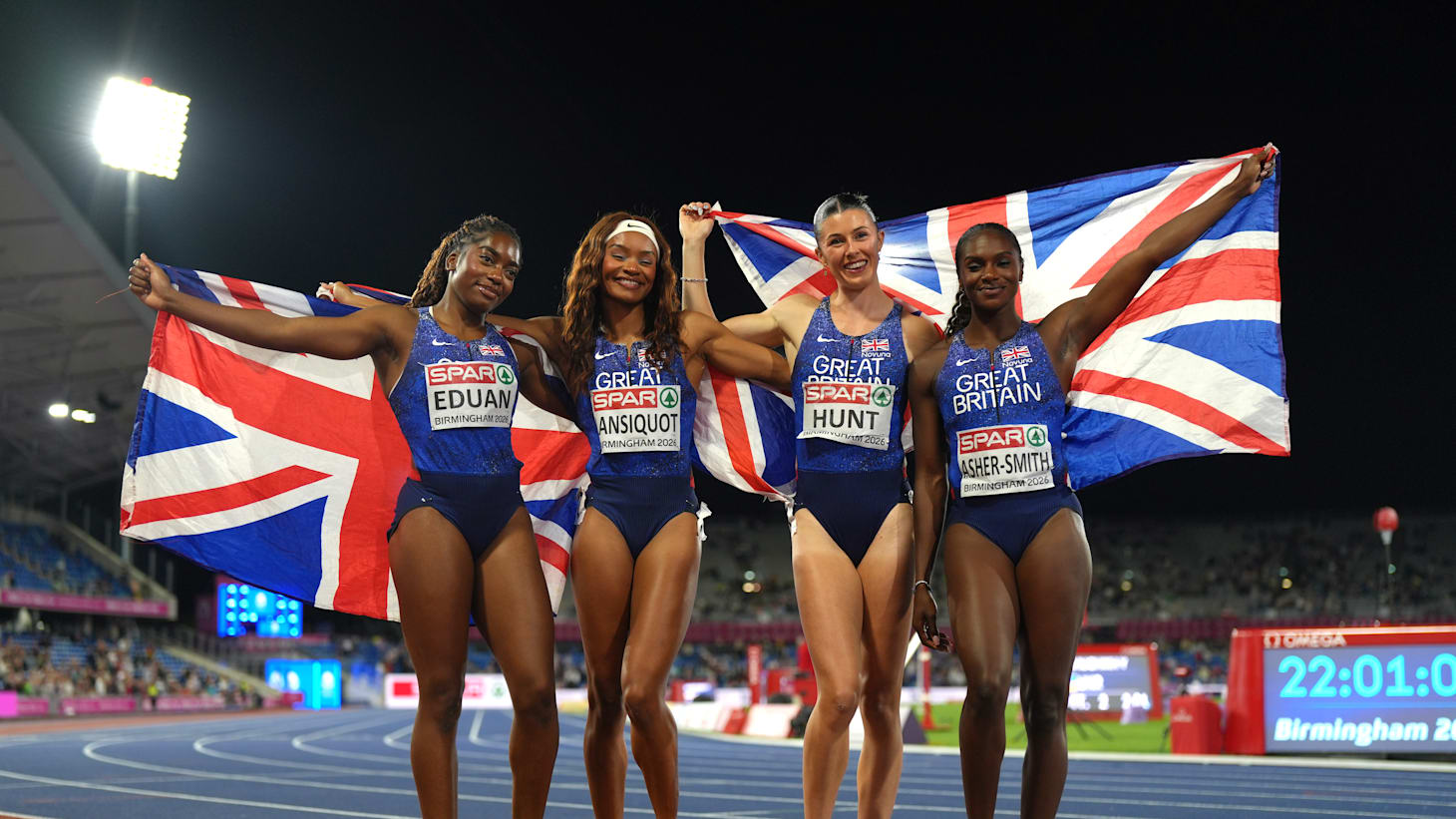
Picture by Sona Maleterova/Getty Images
Saturday night in Birmingham will be etched in the memory of British athletics. Amy Hunt sealed her third title of the competition, a triple that confirms her emergence as one of the continent's most complete sprinters, while Dina Asher-Smith matched a historic mark that places her among European sprint legends. For any runner—elite or Sunday morning jogger—there's something hypnotic about watching these athletes dominate the track with that combination of power, technique, and competitive composure. And behind that dominance lies science, method, and years of invisible work that's worth understanding.
The context
The European Athletics Championships are, along with the World Championships and the Olympic Games, one of the most important dates on the continental calendar. They bring together Europe's best athletes in track and field events and serve as a barometer for the new generations that will later fight for medals on the global stage. Winning here isn't just a consolation trophy: it's confirmation that an athlete is in peak form right when it matters.
What makes this Birmingham edition special is the depth of the British team in women's sprint events. It's not about a single star shining in isolation, but a "lineage" of sprinters—with Asher-Smith as the historic reference point and Hunt as the new generation—that feeds off each other. When an established athlete trains alongside emerging talent on the same team, the level of internal demand rises, training times are shared, and the result is a ladder of performance that pushes the entire group upward. That internal competitive dynamic is often as decisive as individual talent.
What the science says
Elite sprinting is an extreme example of physiological differences between sexes in athletic performance, a topic that science has begun mapping with more precision in recent years. The review by Besson et al. (2022) in Sports Medicine on sex differences in endurance running reminds us that factors like body composition, muscle fiber distribution, and metabolic strategies influence how men and women achieve their maximum performance, and that understanding these differences—rather than applying the same training template to everyone—is key to maximizing each athlete's potential. Though that study focuses on endurance, the principle applies equally well to sprinting: training for the world's best sprinters is increasingly individualized.
Another invisible but decisive factor in repeated performances like Hunt's—three golds in a matter of days—is the capacity for recovery between rounds. This is where personalized nutrition becomes important. The work by Sutehall and Pitsiladis (2025) in Scandinavian Journal of Medicine & Science in Sports suggests that precision nutrition, tailored to the individual rather than following generic protocols, is one of the next frontiers for squeezing performance out of elite athletes. Sustaining three demanding finals in the same championship requires a logistical system of energy and electrolyte replenishment that leaves nothing to chance, something also supported by the classic review by Shirreffs and Sawka (2011) on fluid and electrolyte needs in competition.
What it means for you
You're not going to run a 100-meter final at a European Championship, but there are lessons directly applicable to your training:
- Surround yourself with people who demand more from you. The "elite group" effect isn't exclusive to Great Britain: training with teammates of similar or higher level raises your ceiling. Look for a running group that pushes you, not one that keeps you comfortable.
- Personalize, don't copy. What works for Hunt or Asher-Smith reflects their particular physiology. Apply the principle, not the exact plan: adjust loads, nutrition, and hydration to your own body and context.
- Recovery between efforts is trainable. If you have back-to-back races or intense intervals in the same session, practice your fluid and carbohydrate replenishment protocol as if it were part of your training, not a secondary detail.
- Peak fitness is built, not improvised. Hitting "the mark" at an important event, as the British team did in Birmingham, is the result of months of planning. Define your own target race and work backward from there.
References
- Besson T, Macchi R, Rossi J. "Sex Differences in Endurance Running." Sports Medicine, 2022. https://pubmed.ncbi.nlm.nih.gov/35122632/
- Sutehall S, Pitsiladis Y. "Personalized Nutrition for the Enhancement of Elite Athletic Performance." Scandinavian Journal of Medicine & Science in Sports, 2025. https://pubmed.ncbi.nlm.nih.gov/40164953/
- Shirreffs SM, Sawka MN. "Fluid and electrolyte needs for training, competition, and recovery." Journal of Sports Sciences, 2011. https://pubmed.ncbi.nlm.nih.gov/22150427/
Original source
Olympics.com ↗Never miss an edition.
Get the running news brief and analysis straight to your inbox. No spam, unsubscribe anytime.