Copenhagen Prepares to Host the World Road Running Championships with Ingebrigtsen, Gressier and Ngetich
September 17, 2026
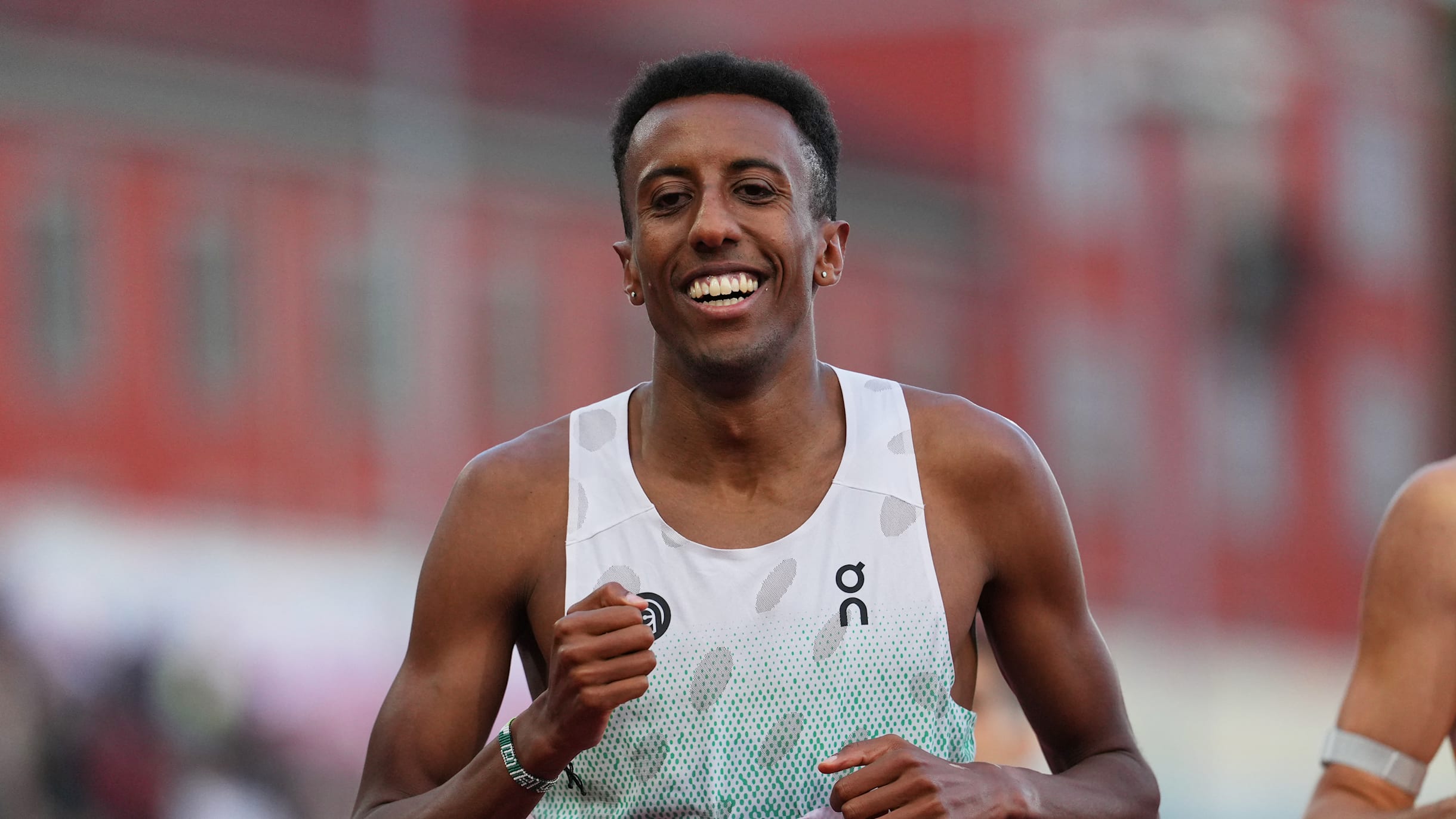
Picture by 2026 Getty Images
On September 19–20, the streets of Copenhagen will become the epicenter of global running. World Athletics brings together 496 athletes from 85 federations in a format we rarely see: the mile, 5K, and half marathon, all in the same weekend, all on asphalt. If you love elite-level running, this is as big as an Olympic final, with the added bonus that track and road runners share the same stage. And the names don't disappoint: Yared Nuguse arrives as the leader in the men's mile with his personal best, while Jimmy Gressier, Jakob Ingebrigtsen, and Agnes Ngetich—all reigning champions—take to the course to defend their crowns.
The Context
The World Road Running Championships is relatively young compared to other World Athletics championships, but it has become a key showcase because it mixes distances that normally don't share the podium: the mile (a test of pure speed, almost track-like, but run on the road), the 5K (the bridge between speed and endurance), and the half marathon (the premier distance event before the marathon). That combination forces athletes to show real versatility, not just specialization.
What's interesting is who crosses boundaries to compete here. Ingebrigtsen, dominant on the track over 1500m and 5000m, steps into different territory: asphalt, without the control of a synthetic track, with curves, surface changes, and variable weather conditions. Gressier, the world champion in the half marathon, defends a title in a discipline where effort management is everything. And Ngetich, a Kenyan standout, arrives bearing the weight of being the reigning champion and one of the most complete female runners in the current landscape.
For the fan, this championship is a unique opportunity to see track stars and road stars measured against each other in the same weekend—something that rarely happens in the international calendar.
What the Science Says
Running on asphalt, under real street conditions (wind, temperature, irregular surface), is not the same as running on a track. Thermal regulation becomes a decisive factor: research on heat acclimatization shows that the ability to perform in warm or changing conditions depends directly on how much the body trained to adapt thermally, not just on pure fitness (Lorenzo, Halliwill & Sawka, 2010). September in Copenhagen is usually mild, but any variation can affect the pace of these elite athletes, who are accustomed to controlling every variable.
Another key point is pacing. The half marathon, unlike the mile, demands much finer effort management: studies on pace variability in distance races show that athletes who maintain a more uniform pace—avoiding the classic "go out hard and suffer later"—tend to perform better in the final result (Cuk et al., 2024; Nikolaidis et al., 2019). For runners like Gressier, who come from defending a title, the ability to read the race in real time and adjust without losing control is as important as aerobic fitness.
And we can't ignore fatigue. In races of this caliber, the perception of effort changes constantly throughout the race, and knowing how to "read" those body signals—without slowing down too early or blowing up from overestimating reserves—is a trainable skill, not just natural talent (Azevedo et al., 2021).
What It Means for You
You don't need to be running a World Championship to apply these lessons:
- Train pace variety. If you only run at one pace, your body never learns to handle the intensity changes that a real race demands, with hills, curves, or wind gusts.
- Practice your pacing in real conditions, not just on a treadmill or track. The street has variables your body needs to know before race day.
- Don't underestimate heat or weather. Even if you're not competing in Copenhagen, any amateur runner benefits from gradually exposing themselves to the conditions in which they'll compete.
- Learn to listen to your perceived effort. The skill of adjusting your pace based on how you feel—not just on a number on your watch—is what separates a well-run race from a suffering race.
References
- "Heat acclimation improves exercise performance." Lorenzo S, Halliwill JR, Sawka MN, J Appl Physiol, 2010. https://pubmed.ncbi.nlm.nih.gov/20724560/
- "Running Variability in Marathon-Evaluation of the Pacing Variables." Cuk I, Markovic S, Weiss K, Medicina (Kaunas), 2024. https://pubmed.ncbi.nlm.nih.gov/38399506/
- "Pacing of Women and Men in Half-Marathon and Marathon Races." Nikolaidis PT, Ćuk I, Knechtle B, Medicina (Kaunas), 2019. https://pubmed.ncbi.nlm.nih.gov/30646638/
- "Fatigue development and perceived response during self-paced endurance exercise: state-of-the-art review." Azevedo RA, Silva-Cavalcante MD, Lima-Silva AE, Eur J Appl Physiol, 2021. https://pubmed.ncbi.nlm.nih.gov/33389141/
Original source
Olympics.com / World Athletics ↗Never miss an edition.
Get the running news brief and analysis straight to your inbox. No spam, unsubscribe anytime.