Adidas Launches Adizero Evo SL, Carbon-Plate-Free Version of Its Record-Breaking Shoe
September 19, 2026
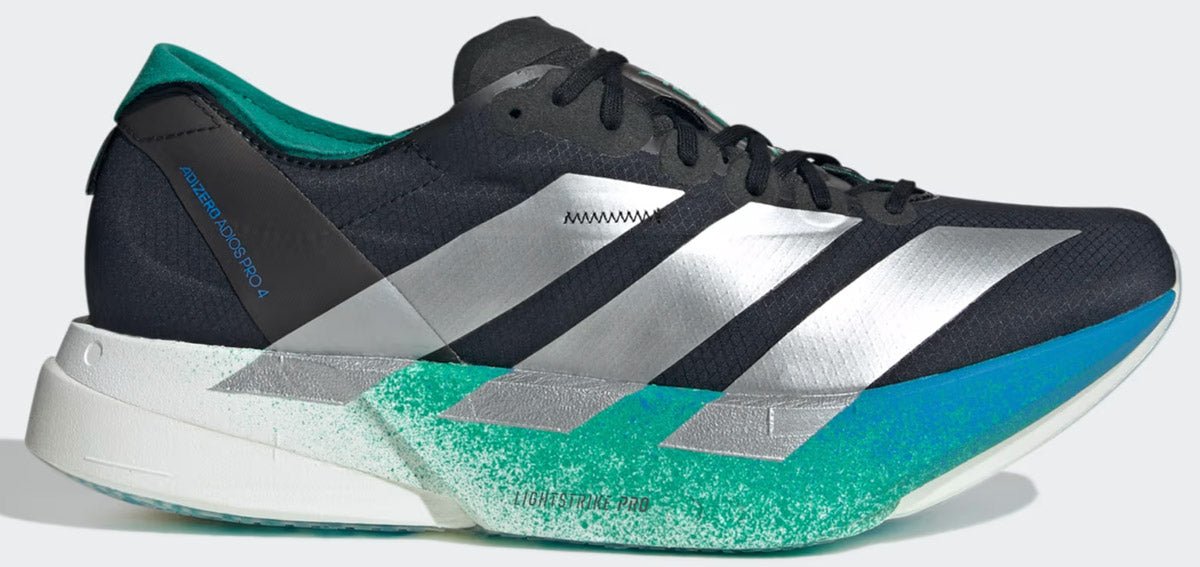
Foto vía Sundried
Adidas just made a key move in the running shoe chess match: it took the Lightstrike Pro foam—the same foam that led its elite athletes to break world records at the 2026 London Marathon—and put it into a daily training shoe, but removed the carbon plate. The result is the Adizero Evo SL, a proposal that promises some of the magic of super shoes without the rigidity that many recreational runners never managed to master. If you ever tried a plated model and felt it "pushed" you in a weird way, this news is for you.
The Context
Since Nike popularized carbon plates with the Vaporfly in 2017, the running industry has experienced an arms race. Brands incorporated ultra-reactive foams (like Adidas's Lightstrike Pro or Nike's ZoomX) combined with rigid carbon fiber plates, seeking to improve running economy: run faster while spending the same energy.
The problem is that combination—soft foam plus rigid plate—works spectacularly for elites running at very high paces with polished technique, but for the average recreational runner, who trains at more moderate paces and with less accumulated mileage, the plate can feel unstable, uncomfortable, or simply unnecessary. That's why the market started asking for something in between: the feel of premium foam, without the "plank" under your foot.
The Adizero Evo SL is Adidas's answer to that demand. It's, in essence, a partial democratization of record-breaking technology: bringing the foam—the ingredient that contributes most to efficiency—to a more versatile shoe, designed for daily training and not just race day.
What the Science Says
The evidence on carbon-plate footwear and running economy is solid when we're talking about high-performance runners at fast paces: high-resilience energy foams reduce the metabolic cost of running. But the equation changes with the runner's level and training speed, a point that the literature on technological innovation in elite sports has been highlighting: the benefit of a technology is not universal; it depends on how the athlete interacts with it (Guppy F, Muniz-Pardos B, Angeloudis K, Sports Med, 2023).
This is key to understanding the Evo SL: by removing the plate, Adidas aims for the foam to work "on its own," offering energy return without imposing a rigid movement pattern. For easy runs, long jogs, and volume-based training—where the runner's natural biomechanical efficiency matters more than artificial propulsion—a reactive foam without a plate can feel more comfortable and reduce accumulated fatigue without forcing a stride that isn't yours.
There's also an injury prevention angle worth mentioning: the abrupt transition to rigid-plated footwear has been associated, anecdotally and in clinical practice, with overload in areas like the tibia, especially in runners who increase volume without progressive adaptation. The literature on bone stress injuries in distance runners emphasizes that footwear changes and load shifts must be managed with caution and progressivity (Warden SJ, Davis IS, Fredericson M, J Orthop Sports Phys Ther, 2014; George ERM, Sheerin KR, Reid D, Sports Med, 2024). A training shoe without a plate but with premium foam reduces that risk of sudden transition.
⚖️ PMP Verdict
Good for: recreational runners training 4 to 6 days per week who want to feel "something special" under their foot during easy runs without compromising stability or spending money on two pairs of super shoes. Also for those coming from heavier shoes and looking for a bridge toward the carbon-plate world without the abrupt jump.
Not good for: competitive runners seeking maximum performance on a goal marathon or 10K—for that, the plate is still relevant at sustained fast paces. It's also not the best option for someone just starting to run, where the priority is building aerobic base and technique, not cutting-edge technology.
What It Means for You
If you're going to incorporate the Evo SL or any premium foam shoe without a plate, do it as part of your training rotation, not as a total replacement for your usual shoe. Progress your use over 2–3 weeks, alternating with your current footwear, so your tissues (tendons, fascia, bones) adapt to the new energy-return pattern. Save the carbon plate—if you use one—for race day or specific race-pace training sessions, and let the plate-free foam do its job on your base runs.
References
- "Technology Innovation and Guardrails in Elite Sport: The Future is Now." — Guppy F, Muniz-Pardos B, Angeloudis K, Sports Med, 2023. https://pubmed.ncbi.nlm.nih.gov/37787844/
- "Management and prevention of bone stress injuries in long-distance runners." — Warden SJ, Davis IS, Fredericson M, J Orthop Sports Phys Ther, 2014. https://pubmed.ncbi.nlm.nih.gov/25103133/
- "Criteria and Guidelines for Returning to Running Following a Tibial Bone Stress Injury: A Sc
Original source
Sundried ↗Never miss an edition.
Get the running news brief and analysis straight to your inbox. No spam, unsubscribe anytime.