Athlete with Multiple Sclerosis Pursues World Record in Half Marathon in Chile
October 3, 2026
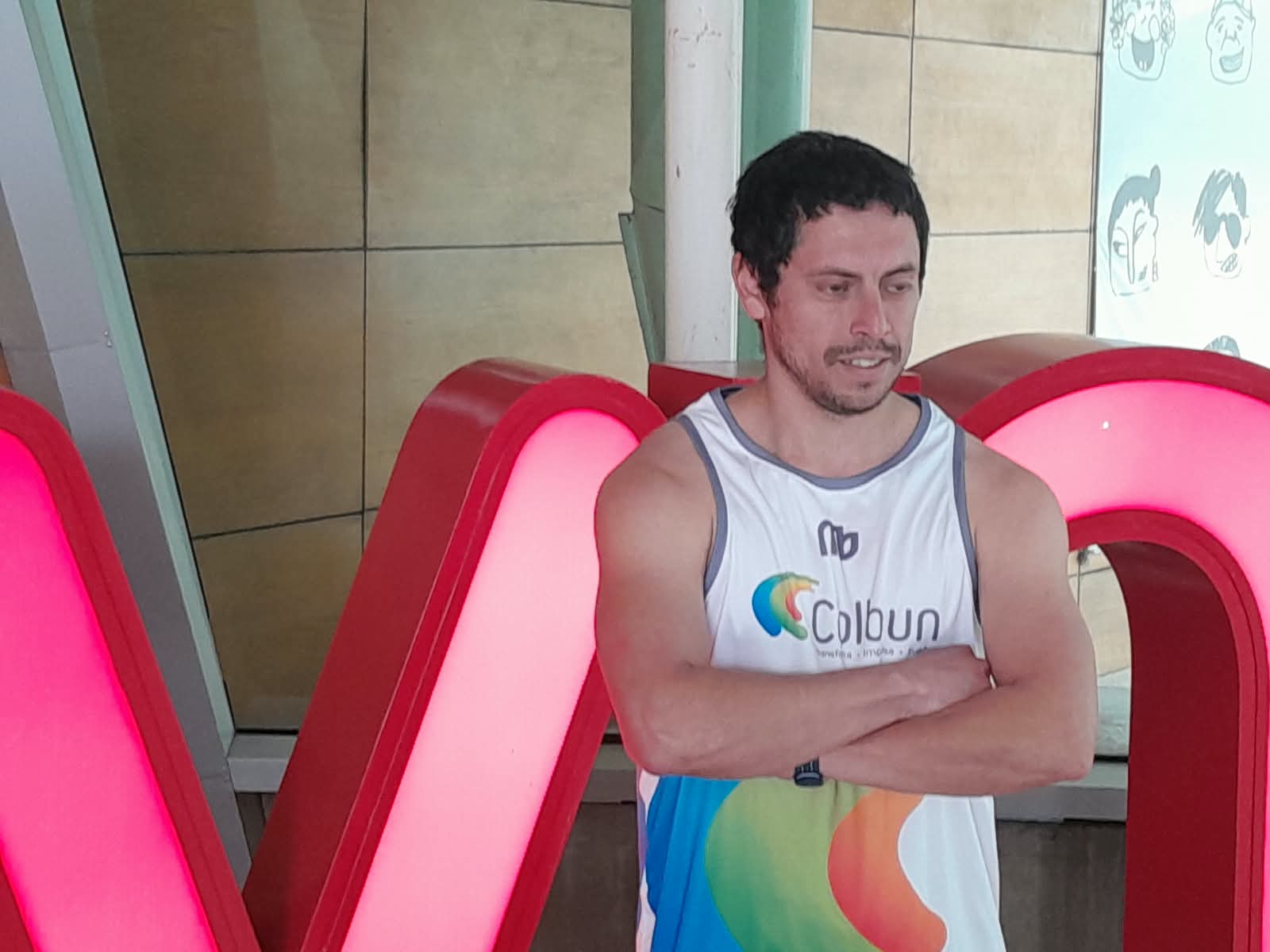
Foto vía G5 Noticias
This Sunday, October 4th, while thousands of runners start the Viña del Mar Marathon, José García Rozas will have in mind an objective that goes beyond crossing the finish line: he is seeking the world record for the fastest half marathon for men with multiple sclerosis. It's not just another motivational anecdote. It is the culmination of a sports career that started at age 13 and today becomes a powerful message for anyone who thinks a diagnosis closes doors.
The Context
Multiple sclerosis (MS) is a chronic autoimmune disease that affects the central nervous system: the body's own immune system attacks myelin, the protective layer that covers nerve fibers. This can result in extreme fatigue, coordination problems, muscle spasticity, balance alterations, and in many cases, direct impact on the ability to exercise. For decades, the traditional medical recommendation for people with MS was "rest and care," under the belief that physical exertion could worsen symptoms.
That vision changed radically in the last two decades. Today we know that structured exercise is not only safe for most people with MS, but is an active part of treatment: it improves motor function, reduces perceived fatigue, and has positive effects on quality of life. Within that framework, what García Rozas is attempting is not reckless whim, but the maximum expression of an approach that sports science and neurology have been validating for years.
The Viña del Mar Marathon, one of Chile's most traditional running events, thus becomes the stage for something that transcends sport: proof that the limits we impose on chronic diseases are often more cultural than physiological.
What the Science Says
Training for a half-marathon record—with or without an underlying neurological condition—requires fine attention to variables that sports science has studied with increasing rigor.
One of them is pacing, that is, how effort is distributed throughout the race. The evidence shows that the most successful runners in half marathons and marathons tend to manage controlled pace variability, avoiding the classic uncontrolled "positive split" where the second half falls apart (Cuk et al., 2024; Nikolaidis et al., 2019). For an athlete with MS, where fatigue can appear less predictably than in a healthy runner, this pace management becomes even more critical: running "even" is not just a performance strategy, it is a tool for physiological safety.
Another key point is fatigue and its perception. Recent literature on fatigue in self-regulated endurance exercise describes how the brain integrates peripheral (muscular, metabolic) and central signals to regulate effort in real time (Azevedo et al., 2021). In people with MS, this integration can be altered by underlying neurological damage, making training fatigue tolerance—in a progressive and monitored manner—as important as training pure aerobic capacity.
Finally, factors such as hydration and thermal management are not minor: evidence on heat acclimatization shows clear improvements in performance when the body progressively adapts to competing in warm conditions (Lorenzo et al., 2010), and adequate fluid and electrolyte balance remains a basic pillar of any endurance race plan (Shirreffs & Sawka, 2011). For an athlete with MS, where heat can exacerbate neurological symptoms (the so-called Uhthoff phenomenon), this management becomes even more determinant than for an average runner.
What It Means for You
You don't need a complex medical condition to learn from this story. What García Rozas does—training with method, respecting pacing, caring for hydration and heat, and listening to fatigue signals without ignoring them or overdramatizing them—is exactly what any recreational runner should apply before a half marathon.
If you have a health limitation, real or perceived, this is the reminder that well-designed exercise is rarely the enemy: the enemy is usually poorly planned training or complete inaction. Talk to your doctor, seek professional guidance, and remember that the body's limits are almost always more flexible than the mind anticipates.
References
- Lorenzo S, Halliwill JR, Sawka MN. "Heat acclimation improves exercise performance." J Appl Physiol, 2010. https://pubmed.ncbi.nlm.nih.gov/20724560/
- Shirreffs SM, Sawka MN. "Fluid and electrolyte needs for training, competition, and recovery." J Sports Sci, 2011. https://pubmed.ncbi.nlm.nih.gov/22150427/
- Cuk I, Markovic S, Weiss K. "Running Variability in Marathon-Evaluation of the Pacing Variables." Medicina (Kaunas), 2024. https://pubmed.ncbi.nlm.nih.gov/38399506/
- Nikolaidis PT, Ćuk I, Knechtle B. "Pacing of Women and Men in Half-Marathon and Marathon Races." Medicina (Kaunas), 2019. https://pubmed.ncbi.nlm.nih.gov/30646638/
- Azevedo RA, Silva-Cavalcante MD, Lima-Silva AE. "Fatigue development and perceived response during
Original source
G5 Noticias ↗Never miss an edition.
Get the running news brief and analysis straight to your inbox. No spam, unsubscribe anytime.