World Athletics Sets First World Record Standards for Marathon Race Walk
September 7, 2026
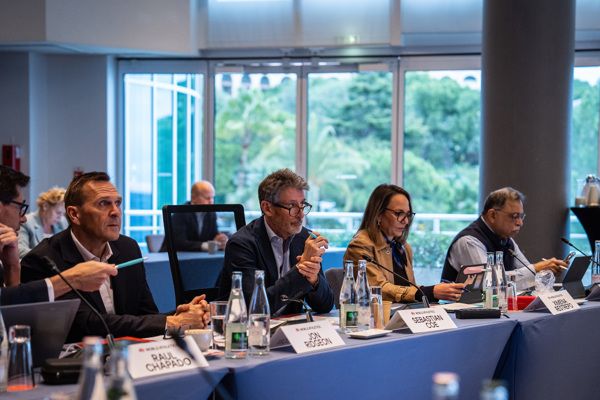
Foto vía World Athletics
The World Athletics Council has just approved the inaugural world record standards for the marathon race walk, a decision that may seem technical and bureaucratic but actually marks a turning point for a century-old discipline. Starting January 1, 2026, any mark that wants to make it into the history books will have to surpass these newly defined thresholds. If you like distance running, this matters to you: it's the latest chapter in a quiet revolution that is redrawing the map of road race walking.
The context
For decades, race walking was associated almost exclusively with track distances and the 20 km and 50 km on the road, lifetime Olympic events. But World Athletics has been executing a profound restructuring: it recently confirmed that the half marathon and marathon race walk are now the official road distances, gradually replacing the 50 km format, which had fallen into a limbo of relevance and participation (many countries barely trained in it seriously).
This change is not cosmetic. By establishing the marathon race walk as a standard distance, the federation needed to solve a gap: there were no recognized world records for that specific distance. Hence the approval of these inaugural standards, which function as the minimum "floor" of performance for a mark to be officially ratified. It's the same principle that governs any world record: certified race conditions are needed, anti-doping control, and now, a reference time that validates the mark within the new competitive framework.
For the athletics ecosystem, this opens a huge door: more marathons will be able to include official race walking, more race walkers will have a clear and measurable goal, and the statistical record of an event that until now had almost no references at 42.195 km starts to be built. In practical terms, it's the formal birth of a new competitive era.
What the science says
Race walking demands a unique biomechanical pattern—there must always be contact with the ground and the supporting leg remains extended—which makes it an endurance discipline with physiological demands comparable to running a marathon, but with its own particularities in fatigue and energy expenditure.
One of the major challenges in moving from 20 km or 50 km to a standardized 42 km marathon is pace management during a much longer effort. The evidence on pacing in marathon running shows that pace variability and the ability to sustain the effort in the final stretches are decisive factors in final performance, and that men and women typically manage different pace strategies throughout the race (Cuk et al., 2024; Nikolaidis et al., 2019). It's reasonable to expect that elite race walkers face the same tactical dilemmas that marathoners already know: going out too fast costs you at kilometer 35.
Prolonged neuromuscular fatigue also comes into play. The review by Azevedo et al. (2021) on fatigue development in self-paced exercise explains that, as effort duration extends, the brain constantly adjusts intensity based on peripheral signals and perceived exertion. In a new event like the marathon race walk, where there is still no "reference manual" or accumulated historical pacing, this self-regulation will be key—and we'll likely see significant tactical adjustments in the coming years as collective experience accumulates.
Finally, don't underestimate the role of nutrition in efforts of this duration. The review by Cao et al. (2025) on carbohydrate strategies in elite endurance confirms that sustaining energy intake during more than three hours of continuous effort is decisive to prevent performance drop in the final stretches, something that race walkers will have to plan with the same seriousness as elite marathoners.
What it means for you
Even if you're not a competitive race walker, this news leaves you with some applicable lessons:
- Pacing is trained, not improvised. If you run marathons, the evidence is clear: high pace variability is associated with worse final performance. Practice your target pace in long workouts before applying it on race day.
- Fatigue in long efforts is multifactorial. It's not just physical: perceived exertion and tactical decisions weigh as much as muscular status.
- Race nutrition is not optional at marathon distances. Practice your carbohydrate strategy in long workouts, just as these pioneers of race walking will have to do.
- If you like athletics, follow this transition closely: you're going to witness firsthand how a world record is built from scratch, something that rarely happens in such an established sport.
References
- "Running Variability in Marathon-Evaluation of the Pacing Variables." Cuk I, Markovic S, Weiss K, Medicina (Kaunas), 2024. https://pubmed.ncbi.nlm.nih.gov/38399506/
- "Pacing of Women and Men in Half-Marathon and Marathon Races." Nikolaidis PT, Ćuk I, Knechtle B, Medicina (Kaunas), 2019. https://pubmed.ncbi.nlm.nih.gov/30646638/
- "Fatigue development and perceived response during self-paced endurance exercise: state-of-the-art review." Azevedo RA, Silva-C
Original source
World Athletics ↗Never miss an edition.
Get the running news brief and analysis straight to your inbox. No spam, unsubscribe anytime.