The debate over 'technological doping' in running shoes intensifies
August 20, 2026
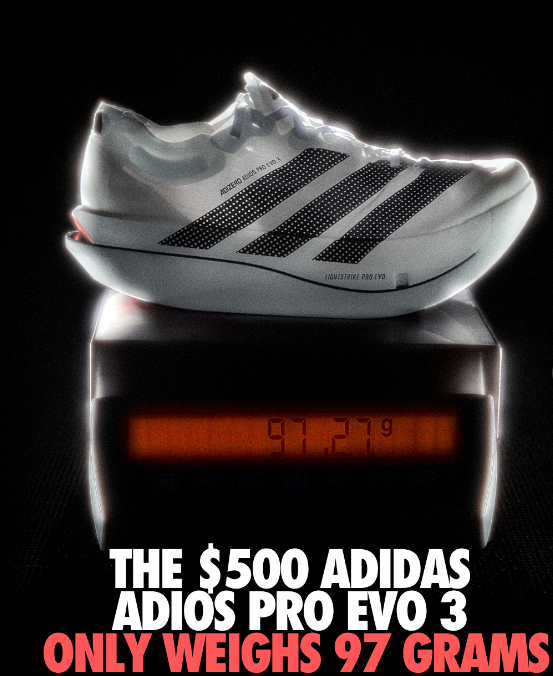
Foto vía Athletics Illustrated
Sebastian Sawe runs in shoes that, according to some voices within athletics, shouldn't be on the track. Not because they have a hidden chip or a banned substance, but because their plate and foam could exceed the limits that World Athletics set for itself. If this sounds like déjà vu, it's because we've been here before: just over a decade ago, the world of swimming had to ban polyester suits because they were breaking records at a pace that had nothing to do with human talent anymore. The question shaking the running world today is uncomfortable but necessary: are we witnessing legitimate technological evolution, or the same pattern dressed up as a shoe?
The context
Since 2017, when Nike launched the Vaporfly with its carbon plate and ultralight foam, elite running entered a silent arms race. World Athletics responded in 2020 by establishing specific rules: the sole cannot exceed 40 mm in height and only one rigid plate (typically carbon fiber) is allowed per shoe. The idea was to curb uncontrolled development and preserve some competitive equity.
The problem, according to reports from specialized media like Athletics Illustrated, is that some brands—in this case Adidas, with the model used by Sawe—could be operating in gray areas of that regulation, and the federation wouldn't be enforcing with the rigor its own rules demand. This isn't the first time it's happened: the famous "Alphafly" and their successors have already raised similar doubts in recent years.
The comparison to swimming is no accident. In 2009, polyester suits led to 43 world records being broken at a single world championship in Rome. The swimming federation acted quickly and banned the suits the following year. In athletics, the reaction has been slower and, according to critics, more permissive.
What the science says
This isn't about loose opinions: there's solid evidence that these shoes generate a real physiological advantage. Research in running economy—the "energetic cost" of running at a given speed—shows consistent 4% improvements on average with carbon plate technology and high resilience foam, compared to traditional shoes. That's not a placebo effect: it's elastic energy return with every stride, literally a spring pushing you forward.
A recent review on technological innovation in elite sport (Guppy et al., Sports Med, 2023) raises exactly this dilemma: technology advances faster than regulatory frameworks, and sports federations face the impossible task of defining where "equipment" ends and "mechanical doping" begins. The study proposes that "guardrails" are needed—clear and constantly updated—something that seems to be failing in elite running today.
What makes this debate unique is that, unlike a banned substance, the shoe's advantage is visible, measurable, and—to some extent—accessible to any recreational runner who buys the same model. That complicates the conversation: is it doping if anyone can buy it at a store?
⚖️ PMP Verdict
My position is clear: the technological advantage is real and the rules must be applied with the same rigor as they are to an athlete who tests positive in an anti-doping control. If World Athletics sets a 40 mm limit, that limit must be respected without exceptions or commercial ambiguities. The credibility of world records is at stake.
For the recreational runner, this is no cause for panic or moral outrage. It serves those seeking performance in 10K races, half-marathons or marathons: the evidence of improvement in running economy is real and applicable at any level. It doesn't serve—and shouldn't matter as much to—those who run for health and enjoyment, where the marginal benefit of a $250 shoe is irrelevant compared to factors like strength training, consistency, and rest.
What it means for you
If you compete and are seeking time, a World Athletics-approved shoe with a carbon plate is a legitimate investment backed by science. But it doesn't replace the foundational work: the evidence also shows that strength training improves running economy and fatigue resistance in well-trained runners, with effects that hold up even in demanding final kilometers. The shoe gives you a push; the base work gives you the complete race. Don't let the regulatory debate distract you from what really builds performance: consistency, strength, and patience.
References
- "Technology Innovation and Guardrails in Elite Sport: The Future is Now." — Guppy F, Muniz-Pardos B, Angeloudis K, Sports Med 2023. https://pubmed.ncbi.nlm.nih.gov/37787844/
- "Strength Training Improves Running Economy Durability and Fatigued High-Intensity Performance in Well-Trained Male Runners: A Randomized Control Trial." — Zanini M, Folland JP, Wu H, Med Sci Sports Exerc 2025. https://pubmed.ncbi.nlm.nih.gov/40016936/
Original source
Athletics Illustrated ↗Never miss an edition.
Get the running news brief and analysis straight to your inbox. No spam, unsubscribe anytime.