Jacob Kiplimo and Hawi Feysa Defend Their Titles at the Chicago Marathon
October 4, 2026
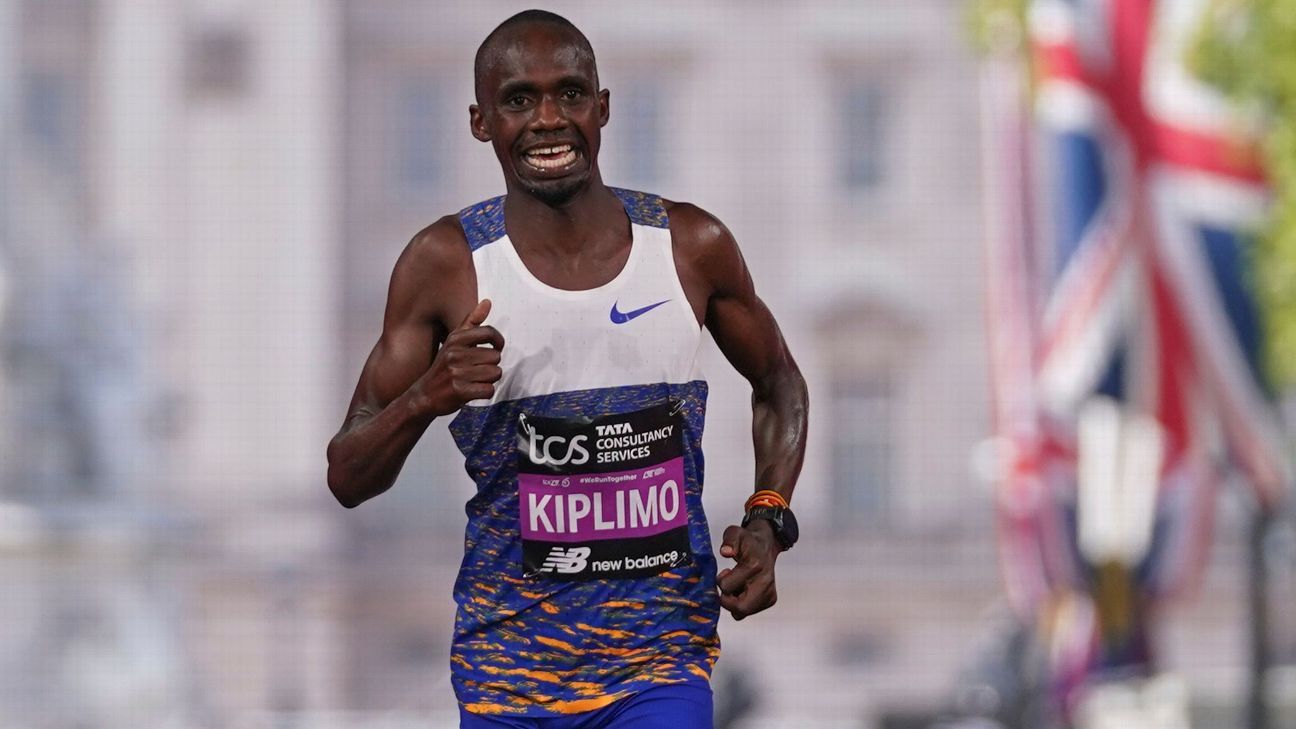
Foto vía ESPN Run
Sunday in Chicago was no ordinary race. Jacob Kiplimo, the Ugandan who had already proven his class on the track and on the road, decided to lead from the starting gun and never relinquished command. The result: 2:02:21, the second-fastest time in that course's history and a new reminder that the human limit in the marathon continues to shift. He was joined on the podium by Kenyans Amos Kipruto and Alex Masai, in a race where the overall level was brutal. In the women's race, Ethiopian Hawi Feysa repeated her title with 2:14:56, the fifth-best mark of all time at the distance. If you love running, this isn't just a results roundup: it's a practical masterclass in strategy, physiology, and limits.
The Context
Chicago is one of the six World Marathon Majors (along with Boston, London, Berlin, New York, and Tokyo), the circuit that brings together the most prestigious marathons on the planet. What makes Chicago special is its profile: flat, fast, with typically cool weather in October. Historically, it's fertile ground for records—that's where Kelvin Kiptum's world record fell in 2023.
That Kiplimo ran "wire-to-wire" means he assumed the lead from kilometer zero and sustained it himself, without hiding behind pacemakers or rivals. It's a high-risk tactical decision: it exposes the runner to wind, the psychological pressure of setting the pace, and the possibility of "burning out" prematurely. That it worked with a time of 2:02:21 speaks to an almost surgical pace control, something that pacing science describes as key for elite performances: the most successful marathon runners tend to minimize pace fluctuations between segments, avoiding the infamous uncontrolled "positive splits" that ruin fast races.
On the women's side, Hawi Feysa confirms Ethiopian-Kenyan dominance at the distance and enters an increasingly competitive historical list, reflecting a sport where women's times have dropped more sharply than men's over the past decade.
What Science Says
Sustaining a pace of 2:55 min/km for 42 kilometers, solo, isn't just talent: it's the sum of trainable variables. Evidence on pacing in marathons (Cuk et al., 2024) shows that pace variability—how much a runner accelerates or decelerates between kilometers—is directly associated with the final result: less variability, better time. Leading wire-to-wire demands precisely that: an internal regulation of effort without external references setting the pace.
That regulation is also linked to how fatigue develops. Azevedo et al.'s (2021) review on fatigue during self-paced exercise explains that the body constantly adjusts perceived effort based on physiological signals and an unconscious "calculation" of how much energy remains available for the rest of the race. An elite athlete of Kiplimo's caliber manages that internal dialogue with a precision that most recreational runners still haven't achieved.
On the other hand, no feat of this level is sustained without fuel. Cao et al.'s (2025) review of carbohydrate strategies in elite endurance athletes confirms what we already knew but remains underestimated: carbohydrate intake during the race, well-planned and trained, delays fatigue and allows sustaining high paces in the final 10K, precisely where most marathons are decided.
What It Means for You
You're not going to run at 2:55 min/km, but the lessons from Chicago apply directly to your next race:
- Define your pace and respect it. The science of pacing is clear: consistency wins more races than the euphoria of a fast start. Go out more conservatively than your anxiety tells you to.
- Train fatigue, not just speed. Working the final segments of your long runs in accumulated fatigue prepares you for those last kilometers where results are made.
- Practice your nutrition strategy in training, never race day. Test amounts and types of carbohydrates in your long runs to know what your gut can handle at race pace.
- Strengthen your "internal pace". Running some segments without a watch, guided by feel, trains that self-regulation capacity that Kenyan-Ugandans dominate innately and that you can build through practice.
Kiplimo and Feysa didn't just win a race: they reminded us that the marathon remains, above all, an exercise in intelligent effort management.
References
- Cuk I, Markovic S, Weiss K. "Running Variability in Marathon-Evaluation of the Pacing Variables." Medicina (Kaunas), 2024. https://pubmed.ncbi.nlm.nih.gov/38399506/
- Azevedo RA, Silva-Cavalcante MD, Lima-Silva AE. "Fatigue development and perceived response during self-paced endurance exercise: state-of-the-art review." Eur J Appl Physiol, 2021. https://pubmed.ncbi.nlm.nih.gov/33389141/
- Cao W, He Y, Fu R. "A Review of Carbohydrate Supplementation Approaches and Strategies for Optimizing Performance in Elite Long-Distance Endurance." Nutrients, 2025. https://pubmed.ncbi.nlm.nih.gov
Original source
ESPN Run ↗Never miss an edition.
Get the running news brief and analysis straight to your inbox. No spam, unsubscribe anytime.