Birmingham Ignites the Track: 2026 European Athletics Championship Kicks Off
August 11, 2026
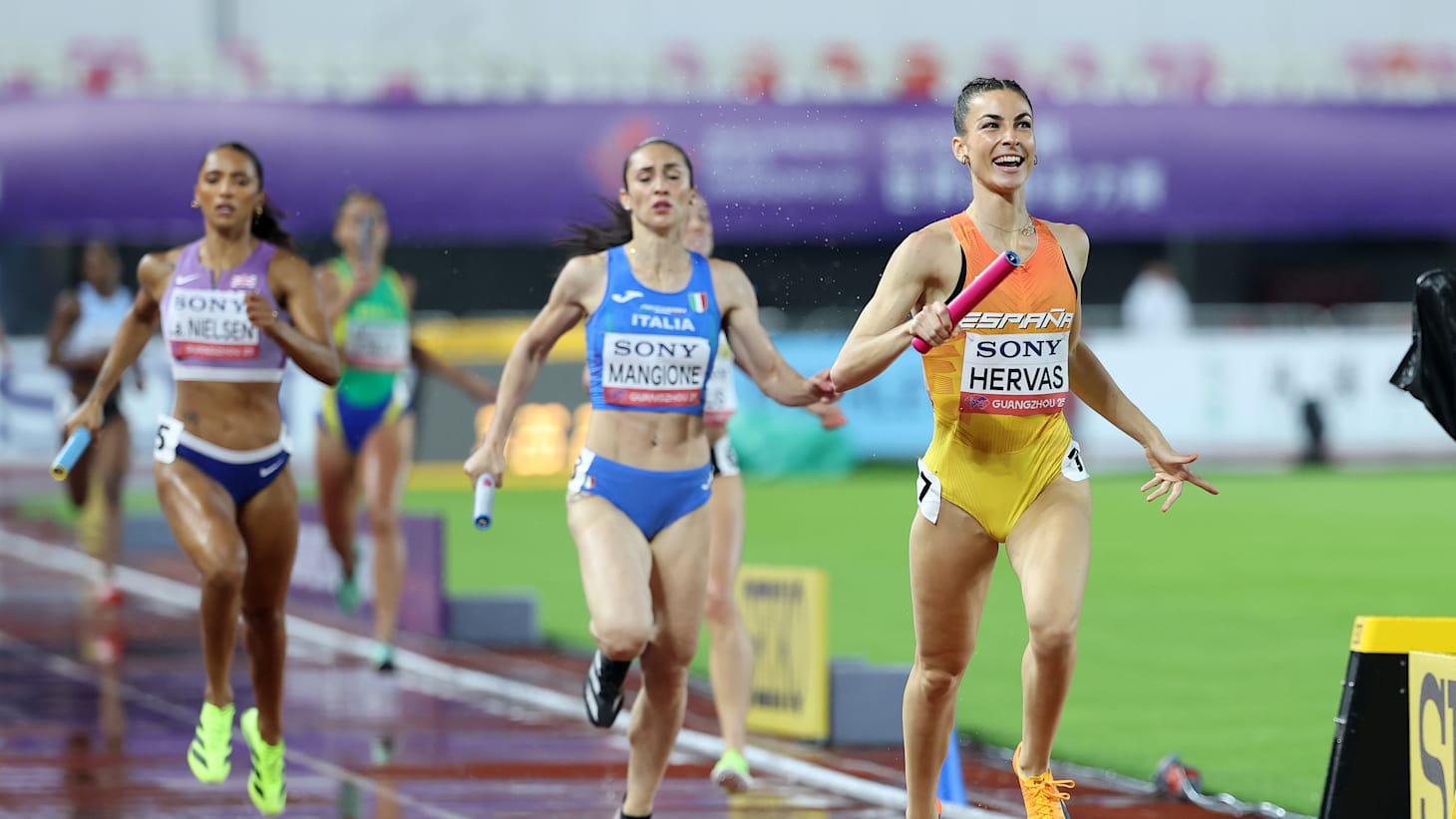
Foto por: 2025 Getty Images
From August 10-16, Birmingham will make history. For the first time, the English city will host the European Athletics Championship, and it will do so in grand fashion: 50 titles at stake under the renovated roof of the Alexander Stadium. For Spain, the event holds special significance: the country travels with the largest delegation in its history, over 90 athletes, with the mission of surpassing the eight medals earned in Rome 2024. If you're passionate about athletics—or if you run and dream of one day stepping foot on a track like this—this week in August is worth marking on your calendar.
The Context
The European Athletics Championship is, alongside the World Championships and the Olympic Games, one of the most important dates on the calendar for continental athletics. It takes place every two years and brings together Europe's best athletes in track, field, race walking, and marathon events, all concentrated in one week of intense competition.
Birmingham being a host city for the first time is no small matter. The Alexander Stadium, remodeled for the 2022 Commonwealth Games, is establishing itself as a world-class venue, and this edition confirms the growing prominence of the United Kingdom in organizing major athletic events.
For Spain, the number of selected athletes—over 90—reflects a moment of growth in national athletics, with a generational shift underway, world-class race walkers, and distance and middle-distance runners who have been showing steady progression in recent cycles. Surpassing the eight medals from Rome 2024 is not just a number: it's a signal of where the sport in the country is heading.
For running enthusiasts, these championships are also a showcase of what the science of elite athletic training can achieve in the human body, and many of those lessons trickle directly into our daily training.
What the Science Says
August in Birmingham doesn't promise extreme heat, but any athlete competing on an outdoor track in the summer faces some thermal stress, and here science has much to say. Research by Lorenzo, Halliwill and Sawka (2010) showed that heat acclimatization not only helps better tolerate high temperatures, but can improve aerobic performance even in mild conditions, thanks to adaptations like increased plasma volume. The technical teams preparing these athletes work months in advance on these details, alongside hydration and electrolyte strategies tailored to each individual—an area where Shirreffs and Sawka (2011) laid the foundations that remain valid today.
Another key point in modern elite athletics is individualized nutrition. A recent study by Sutehall and Pitsiladis (2025) suggests that the future of maximum-level performance lies in customized nutrition plans—not generic formulas—considering each athlete's genetics, microbiota, and metabolic response. This is increasingly combined with tools like continuous glucose monitoring, which according to Flockhart and Larsen (2024) allows distance runners to adjust their carbohydrate intake in real time during training and even competition.
And speaking of carbohydrates: the review by Cao, He and Fu (2025) confirms that supplementation strategies—type, amount, and timing—remain one of the most determining factors for maintaining pace in endurance events, something we'll see reflected in how European distance runners manage their 5,000, 10,000-meter, and marathon races.
What It Means for You
You don't need to compete in a European Championship to apply these lessons. First, if you train or compete in summer, give your body time to adapt to the heat: one or two weeks of progressive exposure to high temperatures improve your capacity to perform, not just survive the session.
Second, stop improvising with hydration. Know how much you sweat, replenish electrolytes, and don't wait until you're thirsty to drink water.
Third, if you run long distances, experiment with carbohydrate intake during long training before your next major race. You don't need a professional glucose sensor to start paying attention to how your energy responds based on what you eat before and during the effort.
Watching Europe's best compete in Birmingham is also an invitation: to look with more curiosity at the science behind performance and to apply, at your level, those same principles to your next race.
References
- "Heat acclimation improves exercise performance." — Lorenzo S, Halliwill JR, Sawka MN, J Appl Physiol (1985), 2010. https://pubmed.ncbi.nlm.nih.gov/20724560/
- "Fluid and electrolyte needs for training, competition, and recovery." — Shirreffs SM, Sawka MN, J Sports Sci, 2011. https://pubmed.ncbi.nlm.nih.gov/22150427/
- "Personalized Nutrition for the Enhancement of Elite Athletic Performance." — Sutehall S, Pitsiladis Y, Scand J Med Sci Sports, 2025. https://pubmed.ncbi.nlm.nih.gov/40164953/
- "Continuous Glucose Monitoring in Endurance Athletes: Interpretation and Relevance of Measurements for Improving Performance and Health." — Flockhart M, Larsen FJ, Sports Med, 2024. https://pubmed.ncbi.nlm.nih.gov/37658967/
- "A Review of Carbohydrate Supplementation
Original source
Olympics.com ↗Never miss an edition.
Get the running news brief and analysis straight to your inbox. No spam, unsubscribe anytime.