CEP Presents the Pro Run Optaspeed BowTech, Its New Hybrid Speed and Control Shoe
August 9, 2026
CEP.com
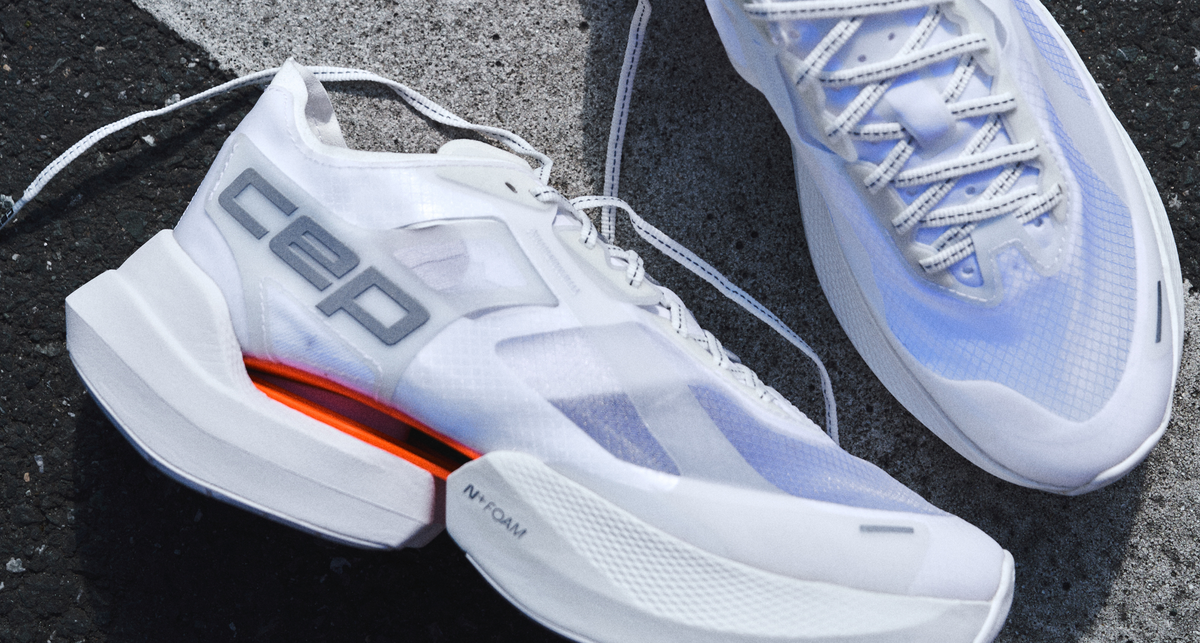
When you think of CEP, you probably picture those compression sleeves that elite marathoners wear, not carbon-plated shoes. But the German brand just broke that expectation with the Pro Run Optaspeed BowTech, a supertrainer that promises something many shoes in this category sacrifice: explosive speed without losing control. If you're someone who loves that "rocket ship" feeling but ends up rolling side to side at kilometer 30, this shoe matters to you.
The Context
A "supertrainer" is that middle category between daily training shoes and racing flyers (the famous "carbon racers"). They feature rigid plates (usually carbon or similar compounds), high-rebound foams, and aggressive geometries—but they're designed to handle more training kilometers, not just the 25-30K of a marathon.
The Optaspeed BowTech fits right there, with a particular technical proposition: a dual BowTech plate system (patented), combined with Supercritical N+Foam cushioning, which is the type of foam injected with supercritical gas (nitrogen or CO2) that became standard in the latest generation of high-performance shoes—the same technology family that brands like Nike and ASICS popularized in their top models.
The geometry is aggressive but not extreme: 37 mm heel, 30 mm forefoot, 7 mm drop. Compared to many racers that hover around 39-40 mm heel (the limit World Athletics allows), CEP sits a bit lower, suggesting a shoe designed to offer more feedback and stability, not just maximum bounce.
The "dual plate" idea isn't new—several brands use it to control how the foot bends during takeoff—but CEP markets it as their differentiator: one plate for propulsion and another for control, preventing the shoe from feeling "unstable" at high speeds or when fatigued.
What the Science Says
Here's where we need to be honest: the scientific evidence on carbon plates and running economy is real, but it's not magical or universal. Studies show running economy improvements of between 1-4% on average with rigid-plate shoes and high-rebound foam, though individual response varies dramatically depending on biomechanics, body weight, and stride technique.
What's most interesting—and what CEP is aiming at with the message of "sustaining pace under fatigue"—connects to a concept running science is increasingly studying: the durability of running economy. A recent study (Zanini et al., 2025, Med Sci Sports Exerc) showed that strength training improves exactly that: the ability to maintain efficient running economy when the body is already fatigued, something critical in the second half of a marathon. This is key because it reminds us that the shoe helps, but doesn't replace physical preparation. No plate compensates for poor strength training or a badly structured training plan.
We also know, thanks to reviews on fatigue in endurance exercise (Azevedo et al., 2021, Eur J Appl Physiol), that deterioration of running form under fatigue is multifactorial: neuromuscular, metabolic, and even perceptual. A shoe with better control (as the dual-plate system promises) can help mitigate the mechanical part of that deterioration, providing more stability when form starts to break down in the final kilometers.
⚖️ PMP Verdict
Good for: intermediate-to-advanced runners looking for a versatile shoe for long fast runs, intervals, and even 10K-21K races, and who value feeling "control" along with bounce. Also for those coming from unstable shoes who want a safer transition into the carbon-plate world.
Not for: beginner runners still building their base of mileage and strength—a traditional, cheaper, and more durable training shoe remains a better investment there. Also not for someone seeking maximum pure racing performance: dedicated race flyers still exist for that, lighter and with more extreme geometry.
For Your Training
If you're tempted to add this shoe to your rotation, do it smartly: introduce it gradually into quality workouts (intervals, tempo runs), not on your first long run. And don't forget what science keeps telling us: the durability of your running economy is built with strength and well-dosed mileage, not just shoe technology. The BowTech can be another tool in your box, but the engine is still you.
References
- Zanini M, Folland JP, Wu H. "Strength Training Improves Running Economy Durability and Fatigued High-Intensity Performance in Well-Trained Male Runners: A Randomized Control Trial." Med Sci Sports Exerc, 2025. https://pubmed.ncbi.nlm.nih.gov/40016936/
- Azevedo RA, Silva-Cavalcante MD, Lima-Silva AE. "Fatigue development and perceived response during self-paced endurance exercise: state-of-the-art review." Eur J Appl Physiol, 2021. https://pubmed.ncbi.nlm.nih.gov/33389141/
Original source
CEP Running (sitio oficial) ↗Never miss an edition.
Get the running news brief and analysis straight to your inbox. No spam, unsubscribe anytime.