Chicago Marathon 2026 Kicks Off with Kiplimo and Kosgei as Major Figures
October 11, 2026
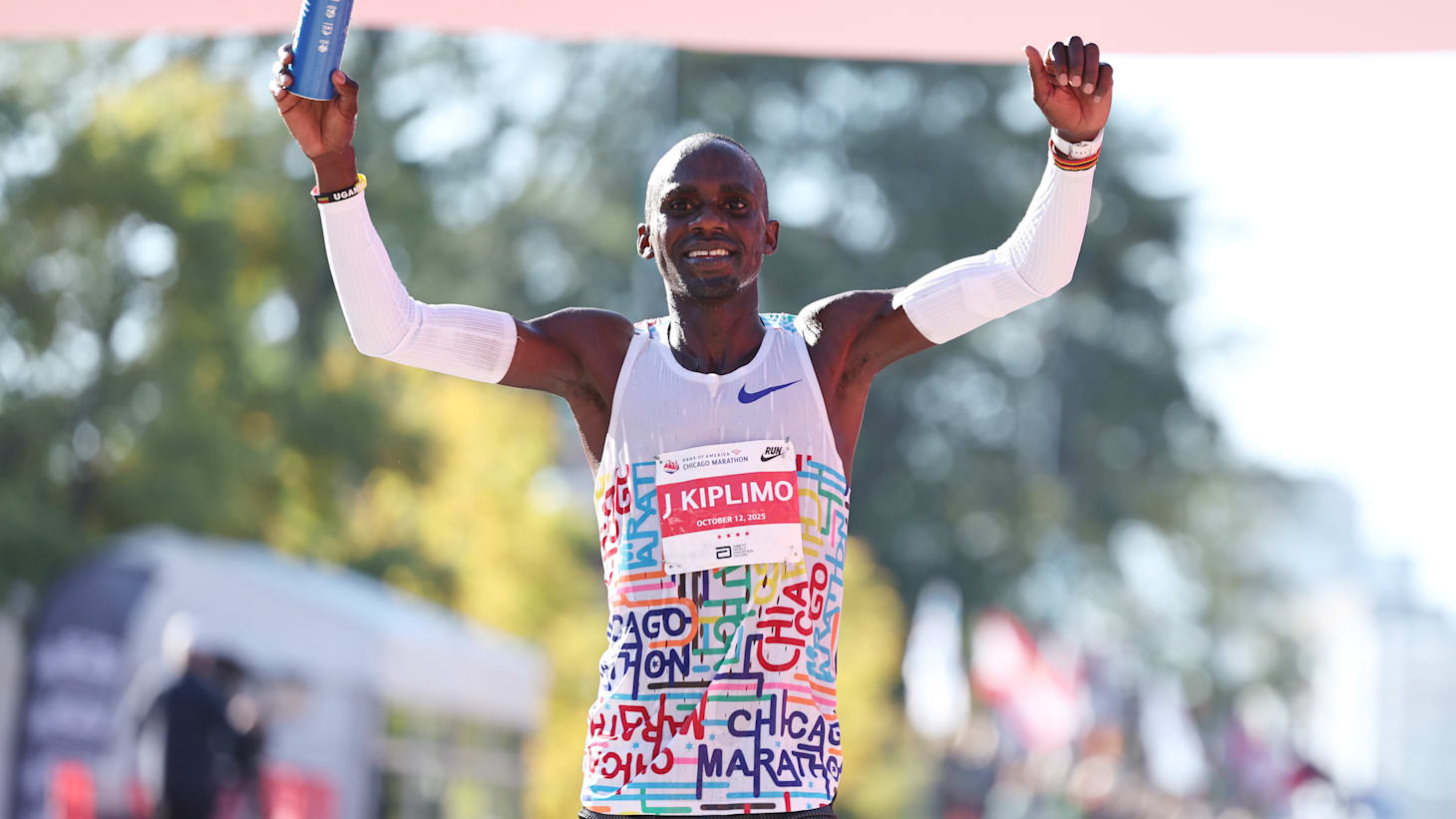
Picture by Geoff Stellfox/Getty Images
This Sunday, October 11, Chicago transforms once again into the fastest laboratory in world running. Ugandan Jacob Kiplimo arrives as the defending champion, backed by his 2:00:28 run in London—just a breath away from the two-hour barrier—and Brigid Kosgei returns to the city where in 2019 she shattered the women's world record. It's not just another marathon on the calendar: it's the 48th edition of a race that, historically, is synonymous with broken records and elite fields of another world. If you're passionate about running, this race is a live masterclass in what the human body can achieve when strategy, physiology, and ambition align.
The Context
Chicago Marathon belongs to the select group of World Marathon Majors (along with Boston, London, Berlin, New York, and Tokyo), the six most prestigious races on the planet. What makes Chicago special is its course: flat, fast, with smooth curves and typically cool October weather—conditions almost like a laboratory for pursuing fast times. That's why it's no surprise that Kosgei's women's world record (2:14:04) fell there, and why year after year the athletes with the best time credentials congregate.
Kiplimo arrives carrying the weight of being the defending champion and with a recent mark—2:00:28 in London—that positions him among the few humans who have seriously flirted with the two-hour barrier. Defending the title in Chicago, moreover, has special significance: it's the race where he solidified his leap from middle-distance running (he was world champion in the 10K road race and a multiple medalist on the track) toward running's premier distance.
On the women's side, Kosgei doesn't return as just another runner: she returns to the stage of her masterpiece. And she's not alone: Sharon Lokedi, champion of New York and Boston, arrives as one of the major threats. In the men's race, Amos Kipruto—winner of London in 2022 and world medalist—rounds out a field that will likely produce results to analyze for months to come.
What the Science Says
Running a marathon at elite pace (less than 3:00 min/km sustained for over two hours) is an exercise in fatigue management as sophisticated as physical talent itself. Research on pacing in marathons shows that the highest-level runners manage to distribute effort with less variability between segments, which is directly associated with better final results (Cuk et al., 2024). This explains why athletes like Kiplimo don't "go out to see what happens": every split is calculated months in advance.
We also know, thanks to reviews on fatigue development in self-paced efforts, that perceived exertion and the ability to tolerate discomfort in the final 10 km are determinants just as important as VO2max (Azevedo et al., 2021). It's precisely there, in the final third, where Chicago will be decided: who manages to maintain technical form and pace when the body starts asking to slow down.
As for nutrition, elite teams' strategies today are highly personalized: carbohydrate loading adjusted to the athlete, gels with specific glucose-fructose combinations, and hydration plans calculated according to individual sweat rate (Sutehall & Pitsiladis, 2025; Cao et al., 2025). Nothing is left to chance, and the margin between winning and placing fourth is often decided in the details of the final 15 kilometers, where glycogen begins to run scarce.
Finally, it's worth noting that there are documented physiological differences in pacing between men and women in marathons: women tend to show more uniform pace distribution throughout the race (Nikolaidis et al., 2019; Besson et al., 2022). This makes it even more interesting to watch how Kosgei and Lokedi manage their strategy against a men's field that typically takes more risks in the opening kilometers.
What It Means for You
You don't need to run 2:00:28 to learn from this race. Three lessons applicable to your next marathon:
- Define your pacing before the start, not during. The evidence is clear: lower pace variability = better result. Use your long training runs to calibrate what pace is truly sustainable, not the one you'd like to run.
- Practice your nutrition strategy during long training runs, never on race day. What works for Kiplimo doesn't necessarily work for you: carbohydrate tolerance is individual.
- Train fatigue tolerance, not just aerobic capacity. The final 10 km of a marathon are won with your head as much as your legs: include specific work at race pace under accumulated fatigue.
References
- Cuk I, Markovic S, Weiss K. "Running Variability in Marathon-Evaluation of the Pacing Variables." Medicina (Kaunas), 2024. https://pubmed.ncbi.nlm.nih.gov/38399506/
- Azevedo RA, Silva-Cavalcante MD, Lima-Silva AE. "Fatigue development and perceived response during self-paced endurance exercise: state-of-the-art review." Eur J Appl Physiol, 2021. https://pubmed.ncbi.nlm.nih.gov/33389141/
- Sutehall S, Pitsiladis Y. "Personalized Nutrition for the Enhancement of Elite
Original source
Olympics.com ↗Never miss an edition.
Get the running news brief and analysis straight to your inbox. No spam, unsubscribe anytime.