Carl Lewis, Hero of Los Angeles 1984, Now Guides the New Generation of Track and Field Toward LA28
August 17, 2026
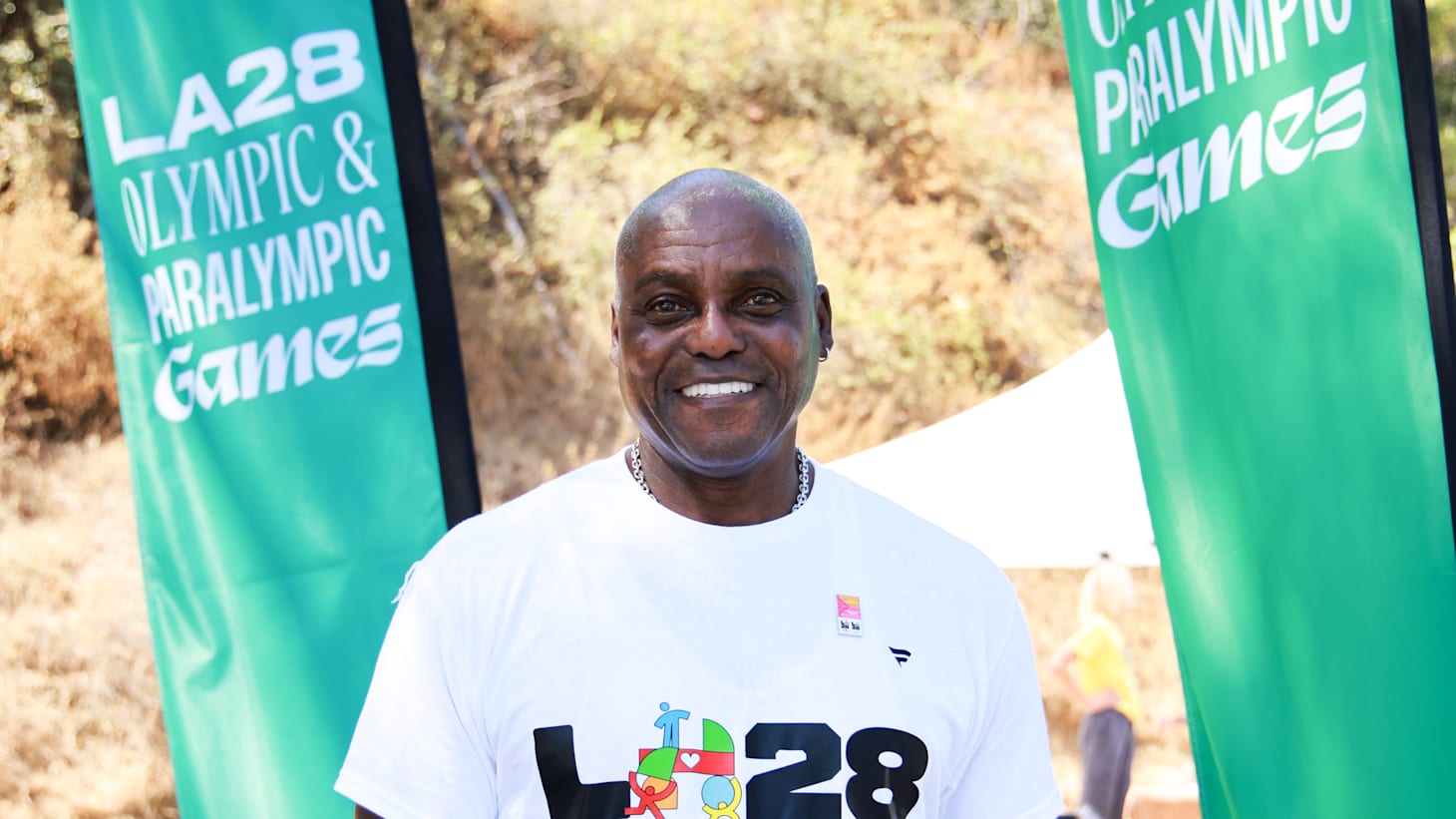
Foto por: Savion Washington/Getty Images for LA28
There are images that remain etched in the collective memory of sport: Carl Lewis taking off in the long jump pit, crossing the finish line of the 100 meters with arms wide open, standing on the podium in Los Angeles with four gold medals hanging from his neck. That was in 1984. Forty-four years have passed and Lewis, now 65, returns to that same city heading toward LA28, but this time he's not wearing spikes: he carries the responsibility of shaping those who will be the next Olympic heroes. And if anything this story reminds us of, it's that an athlete's greatest legacy is not always measured in medals, but in the people he helps build afterward.
The Context
Carl Lewis is not an improvised coach. After a career that included nine Olympic gold medals across four Games, he established himself as a coach at the University of Houston, the same program that shaped him as a young athlete. Today he directs a new generation of international sprinters, including South African Shaun Maswanganyi and Briton Louie Hinchcliffe, both with realistic aspirations of standing on the podium at Los Angeles 2028.
What's interesting about this story is not just the poetic symmetry—the same man, the same city, 44 years later—but the type of coach Lewis chose to be. His athletes don't talk about workouts, times, or technique when describing his influence. They speak of support, of guidance, of an almost paternal figure who understands that athletic performance never happens in a vacuum. Lewis himself has been honest about this: his own career was sustained by the emotional support of his parents and coaches, not just genetics or talent. That personal experience is what he transmits today to those he guides.
In a sport that often reduces success to times and podiums, Lewis represents a different idea: that building champions starts with building people.
What the Science Says
Elite running and track and field have advanced tremendously in recent decades in terms of technology, nutrition, and performance monitoring. We know, for example, that personalized nutrition can measurably optimize the performance of elite athletes (Sutehall & Pitsiladis, 2025), and that tools like wearables and continuous monitoring are changing the way coaches and athletes adjust training loads (Guppy et al., 2023).
But there's something no sensor measures yet: the effect of human support on an athlete's development. Sports literature increasingly recognizes that sustained performance over time depends on both physiological and psychosocial factors. Perceived fatigue during endurance exercise, for example, is not just a muscular phenomenon: it's deeply influenced by the athlete's mental and emotional state (Azevedo et al., 2021). A coach who generates trust and support reduces the perceived effort load, improves training adherence, and helps the athlete better tolerate the hard moments of a season.
This is exactly what Lewis seems to understand intuitively, after having lived it firsthand: science confirms what he learned as an athlete—that human support is not an accessory to training, it's part of the performance equation.
What It Means for You
You don't have to be an Olympic sprinter to apply this lesson. If you're training for a race, a marathon, or simply for yourself, think about this:
- Surround yourself with people who support you, not just people who demand from you. A coach, a running group, a training partner: emotional support reduces dropout and improves long-term consistency.
- Consistency beats isolated talent. Lewis didn't reach four golds on speed alone; there was structure, guidance, and patience behind it. Apply that same logic to your training plan: long-term, well-supported processes beat shortcuts.
- If you coach others—children, training partners, young athletes—remember that your impact goes beyond the stopwatch. The way you support someone through their difficult moments can define their relationship with the sport for life.
- Value those who shaped you. Carl Lewis, at 65, continues to give back what he received. That chain of mentorship is, perhaps, the true Olympic torch.
References
- Sutehall S, Pitsiladis Y. "Personalized Nutrition for the Enhancement of Elite Athletic Performance." Scand J Med Sci Sports, 2025. https://pubmed.ncbi.nlm.nih.gov/40164953/
- Guppy F, Muniz-Pardos B, Angeloudis K. "Technology Innovation and Guardrails in Elite Sport: The Future is Now." Sports Med, 2023. https://pubmed.ncbi.nlm.nih.gov/37787844/
- Azevedo RA, Silva-Cavalcante MD, Lima-Silva AE. "Fatigue development and perceived response during self-paced endurance exercise: state-of-the-art review." Eur J Appl Physiol, 2021. https://pubmed.ncbi.nlm.nih.gov/33389141/
Original source
Olympics.com ↗Never miss an edition.
Get the running news brief and analysis straight to your inbox. No spam, unsubscribe anytime.