Garmin Introduces 'Step Speed Loss', the New Running Metric for the Forerunner 970
September 28, 2026
garmin.com
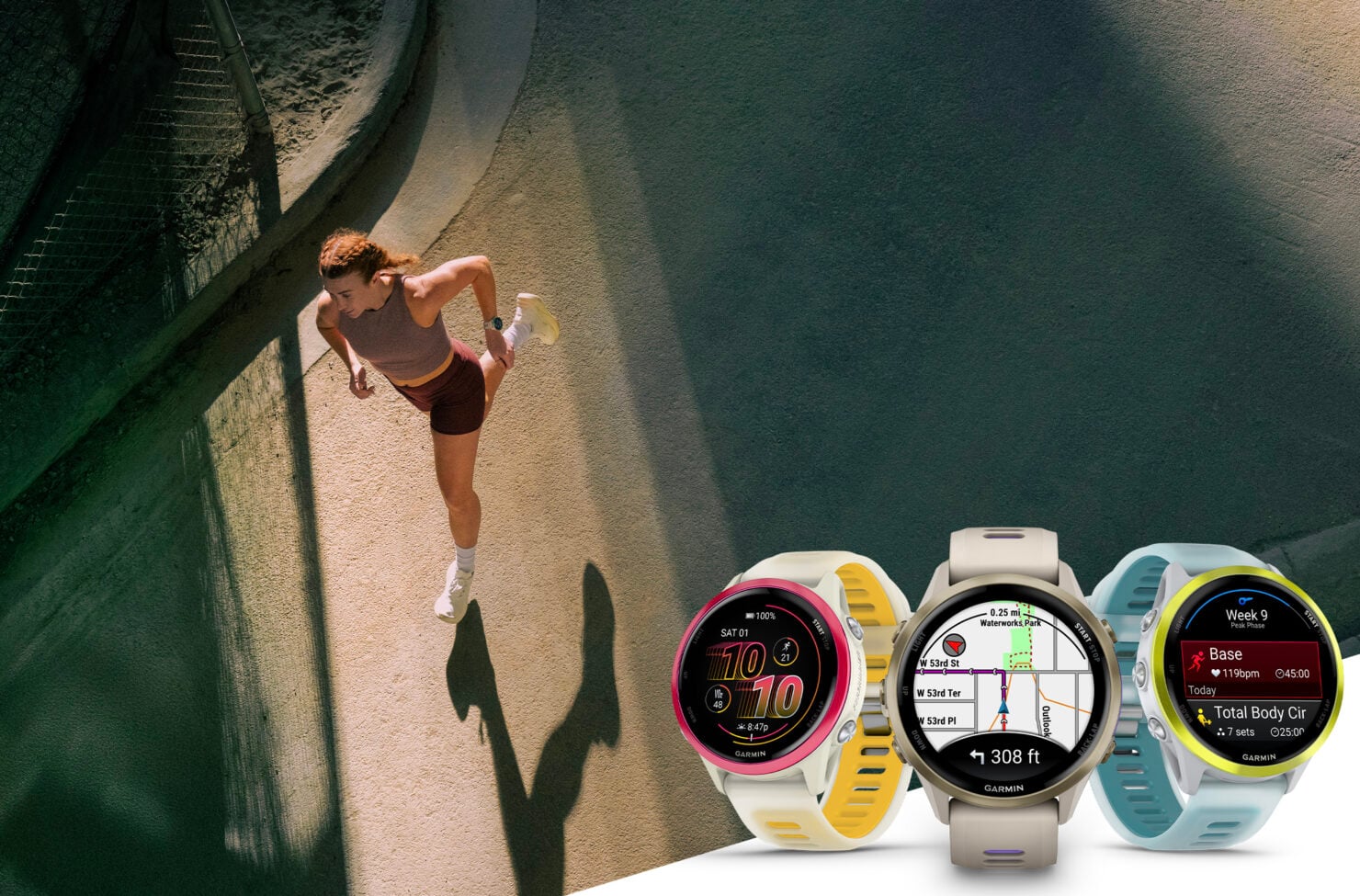
Every demanding runner knows that phantom sensation: kilometer 30, the legs are responding but something doesn't flow the same. Garmin has just launched the Forerunner 970 with a metric that puts hard data behind that intuition: Step Speed Loss, an indicator that quantifies how much you slow yourself down each time your foot touches the ground. It's not just another gadget — it's a serious attempt to measure the efficiency of your running form in real time, and it comes packaged in a watch that also ups the ante in hardware.
The Context
The Forerunner 970 is Garmin's new flagship for high-performance runners, and arrives alongside the Forerunner 570 and a redesigned heart rate monitor, the HRM 600. The latter is not just a simple accessory: it's the key that unlocks the watch's new "running dynamics," a set of three metrics designed for athletes who already master the basics and want to fine-tune that last 5%.
The three are:
- Step Speed Loss: how much your horizontal velocity slows during the instant of ground contact. The more you "brake" with each step, the more energy you waste instead of converting it into forward motion.
- Running Tolerance: a reading of how much training load you're tolerating before compromising your technique.
- Running Economy: the relationship between the oxygen you consume and the speed you generate, the holy grail of every endurance coach.
As for hardware, the 970 comes with an AMOLED display, titanium case and sapphire crystal, a leap in durability and readability compared to previous generations, aimed squarely at those who train outdoors, with strong sun and no mercy on the watch. For now, Step Speed Loss is exclusive to this model and requires the HRM 600 — it's not backward compatible with previous heart rate monitors.
What the Science Says
The logic behind this metric isn't empty marketing. Running economy — how much energy you spend to sustain a given speed — is one of the most solid predictors of endurance performance, and we know it can be trained: a recent controlled trial showed that strength training specifically improves the "durability" of running economy and performance in high-intensity efforts when the body is already fatigued (Zanini et al., Med Sci Sports Exerc, 2025). In other words, the efficiency of your stride isn't fixed: it degrades with fatigue, and training properly can slow that decline.
This connects directly to Step Speed Loss: if the watch shows you that your speed loss per stride increases after kilometer 25, you're seeing in numbers the same phenomenon that the literature describes about fatigue and pacing — the development of fatigue alters mechanics and the perceived response to effort during self-paced exercise (Azevedo et al., Eur J Appl Physiol, 2021), and this is reflected in pace variability during marathons, where runners who maintain better pacing tend to perform better (Cuk et al., Medicina, 2024; Nikolaidis et al., Medicina, 2019).
⚖️ PMP Verdict
This metric does work, but not equally for everyone. If you're a competitive runner who already trains with power, cadence, and consistent training zones, Step Speed Loss could be the data point you were missing to understand why you deflate in the second half of a long race — beyond just "I got tired." It's a fine diagnostic tool, not a daily motivation metric.
If you're just starting out or running for health and enjoyment, this metric is unnecessary noise. The cost of the watch and the data interpretation curve don't justify it yet — better invest that effort in consistency and a solid aerobic base.
What It Means for You
- Don't look at the number in isolation. Step Speed Loss makes sense when you compare it within the same race or long workout: look for the point where it starts to spike, not the absolute value.
- Cross-reference it with strength. If your speed loss spikes early, the evidence points to strength work (squats, plyometrics, power circuits) being able to improve your mechanical durability, not just your max strength.
- Use it to design your pacing. If you know at what kilometer your stride starts to "brake," you can adjust your pace strategy before the damage is done, instead of reacting when you've already lost minutes.
- Don't replace your coach's eye. It's one more data point on the dashboard, not an oracle. Combine it with how you feel and your load history.
References
- Zanini M, Folland JP, Wu H, et al. "Strength Training Improves Running Economy Durability and Fatigued High-Intensity Performance in Well-Trained Male Runners: A Randomized Control Trial." Med Sci Sports Exerc, 2025. https://pubmed.ncbi.nlm.nih.gov/40016936/
- Azevedo RA, Silva-Cavalcante MD, Lima-Silva AE. "Fatigue development and perceived response during self-paced endurance exercise: state-of-the-art review." Eur J Appl Physiol, 2021. https://pubmed.ncbi.nlm.nih.gov/33389141/
- Cuk I, Markovic S, Weiss K, et al. "Running Variability in Marathon
Original source
Garmin Newsroom (comunicado oficial) ↗Never miss an edition.
Get the running news brief and analysis straight to your inbox. No spam, unsubscribe anytime.